Contents15 sections
This guide was first published in German on handgetestet.de.
Seven in the morning, minus eight degrees at the campsite. The solar panel lies in the sun, the power station shows a temperature symbol, and nothing flows into the battery. Nothing is broken; the device is protecting its cells. If you also need to charge in freezing weather, look at the charging temperature first. The EU manual of the Jackery Explorer 500 v2 states charging and discharging from minus 20 to plus 45 degrees, while the other stations in this comparison only accept power from zero degrees. We are not aware of an independent measurement on this, so we put things in context here instead of picking a favorite. Before charging in freezing temperatures, always check the manual of your own device.
Two limits that are often confused
The brochure often only says „operation down to minus 20 degrees.“ That almost always means discharging. According to its manual, the Anker SOLIX C1000 delivers power down to minus 20 degrees, but it only charges from 0 to 40 degrees. For the Explorer 3000 v2, the figures are minus 15 and zero. So a station can power your laptop in freezing weather and still refuse the solar power from the canopy.
The reason lies in the cell. Researchers at Sandia National Laboratories describe how, at low temperature, high state of charge and high charging current, metallic lithium can deposit on the graphite anode. That is why the electronics block the input. According to Jackery, the warning on the display goes out by itself as soon as it gets warmer. More on cell chemistry is in our LiFePO4 power station guide, which we will not repeat here.
How much capacity is lost at minus ten degrees?
An honest answer: none of the manufacturers on this list will tell you. Jackery only writes that charging power and capacity may vary with temperature. We are not aware of any independent measurement of complete power stations in freezing weather, and lab values for individual cells cannot be transferred to a device with a housing and electronics.
So plan with a buffer. For the following example calculation, we deduct a quarter. That is purely our own calculation assumption, not a measured value. It comes on top of the 15 percent that ADAC, Germany’s automobile club, found on average as the gap to the printed capacity at room temperature. For the Explorer 500 v2:
- 512 watt-hours on the rating plate
- times 0.85 gives around 435 usable watt-hours
- times 0.75 (our assumption) gives around 325 watt-hours
That is enough for a 60-watt laptop for a good five hours. An electric blanket, which we assume at 60 watts, would reach 480 watt-hours over eight hours and so would not make it through the night. Our guide to power station runtime (in German) shows how to do the math for your own devices.
Output shrinks too
This is less often in the brochure. Under normal conditions, the Explorer 3000 v2 delivers 3,600 watts, but between minus 15 and minus 10 degrees only 2,000. On the older Explorer 3000 Pro, the limit in cold mode also depends on the state of charge: 3,000 watts from 60 percent, 2,000 watts below that, and only 800 watts when less than 30 percent is left.
So output collapses precisely when the battery is running low and it is coldest. A 2,000-watt fan heater would run at the limit and, even on the large device, would have barely an hour. Why that rarely works out anyway is explained in our guide power stations and fan heaters.
May the station stay in a cold car?
For a few weeks, yes; for the whole winter, probably not. The most precise manual here is that of the Explorer 500 v2: it may be left for one month at minus 20 to plus 45 degrees, for three months only from zero degrees, and for twelve months between zero and 25 degrees. According to its manual, the small Explorer 100 Plus tolerates six months at minus 10 to plus 25 degrees. So the days in the trunk on a ski vacation are covered. Overwintering in a carport is not.
The car also has a second side. The same manual warns against heat in a parked vehicle. If you forget the station in the trunk in October, you should take it out before spring. Everything else about state of charge and storage location is covered in our guide storing a power station (in German).
Four tips for winter camping
Charge it fully in the evening while the station is warm. That sounds trivial but saves you the struggle in the morning. During the day, keep it in the vehicle or awning instead of on the snow, because every degree at the device counts for more than the air temperature outside.
Do not wrap it in a wool blanket. The temptation is great, but Jackery requires the vents to stay clear, and a covered station in operation is the greater risk. When it comes in from the cold into the warm interior in the evening, it is better to wait until it has reached room temperature before charging. That is our own precaution because of possible moisture, not a manufacturer requirement.
Also, do not count on much sun in winter. How panels and stations go together is described in our guide power stations with solar panels (in German). If you are freezing in a garden shed rather than a camper, you will find the details under power in the garden shed (in German).
Which devices heat themselves?
Fewer than you might expect. The manuals for the Explorer 500 v2, Explorer 3000 v2 and Anker SOLIX C1000 say nothing about battery heating, and BLUETTI does not mention any for the AC200L either. The manual does not explain how Jackery implements charging at minus 20 degrees on the Explorer 500 v2. Jackery explicitly talks about integrated heating technology for the HomePower 2000 Ultra (in German), a permanently installed storage system that nobody takes camping.
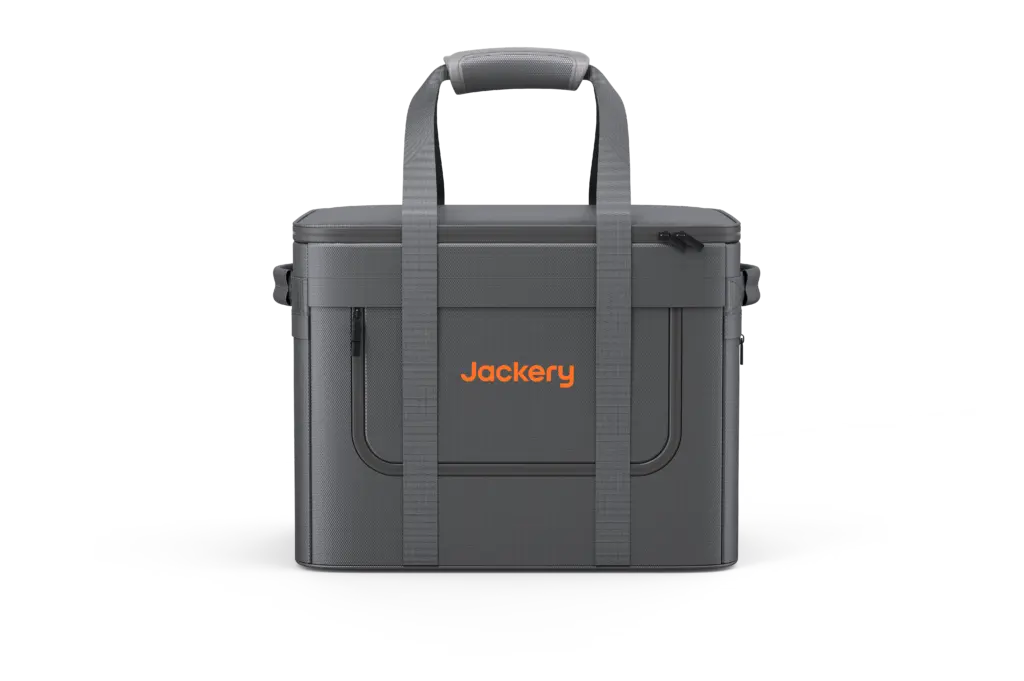
That leaves the retrofit solution. According to Jackery, the Jackery Extreme Guard carrying bag has a USB-C heater. The manufacturer does not state heating output, consumption or the temperature it can reach, nor does it claim that it gets around the charging limit at zero degrees. We would not rely on it, especially since the bag is currently out of stock at Jackery (as of November 13, 2026).
Five stations and a bag, sorted by frost limit
| Model | Charging from | Discharging down to | Capacity, output, weight | Best for |
|---|---|---|---|---|
| Jackery Explorer 500 v2 | −20 °C | −20 °C | 512 Wh, 500 W, 5.7 kg | Winter campers with a solar panel |
| Anker SOLIX C1000 | 0 °C | −20 °C | 1,056 Wh, 1,800 W, 12.9 kg | Charging indoors, using outdoors |
| Anker SOLIX C1000 Gen 2 | 0 °C | −20 °C | 1,024 Wh, 2,000 W, 11.3 kg | Like the C1000, just lighter |
| BLUETTI AC200L | 0 °C | −20 °C | 2,048 Wh, 2,400 W, 28.3 kg | A fixed spot in winter quarters |
| Jackery Explorer 3000 v2 | 0 °C | −15 °C | 3,072 Wh, 3,600 W, 27 kg | Large loads, not in deep frost |
| Jackery Extreme Guard carrying bag | n/a | n/a | Accessory with USB-C heater | Protection for the 3000 v2 |
Jackery Explorer 500 v2
The only one here whose manual explicitly states charging in freezing temperatures, down to minus 20 degrees according to the EU version. The cells are lithium iron phosphate, and the manufacturer specifies 6,000 cycles to 70 percent. The price is little reserve: 500 watts and, by our assumption, around 325 watt-hours in freezing weather. Kettles and heaters are out of the question. There is no independent measurement in freezing temperatures for this device either.
Anker SOLIX C1000
Twice the capacity and usable down to minus 20 degrees, just without charging below zero. If you can get to a charging point or into the house in the evening, you lose little as a result. According to Anker, if the cold symbol appears, the station should not be used any further at all until it disappears.
Anker SOLIX C1000 Gen 2
The successor weighs just 11.3 kilos and delivers 2,000 watts. Nothing changes at the frost limit: charging from 0 to 40 degrees, discharging down to minus 20, and Anker does not mention battery heating here either. One detail concerns cool evenings. According to the manufacturer, when the battery temperature is between 0 and 20 degrees, fast charging runs considerably slower. So let the station thaw first before you expect speed.
BLUETTI AC200L
BLUETTI states the same limits as Anker and expressly advises against charging the station below freezing. According to the manufacturer, storage is rated from minus 10 to plus 45 degrees. At over 28 kilos, it stays where it was put.
Jackery Explorer 3000 v2
Lots of energy, but the narrowest frost limit on this list, and between minus 15 and minus 10 degrees only 2,000 watts. That works for a workshop that cools down at night. Not for a hut in the high mountains.
Jackery Extreme Guard carrying bag
According to Jackery, it fits the Explorer 3000 v2, among others, and protects against splashing water, dust and rain. Jackery does not state an ingress protection rating, and the manufacturer does not list the Explorer 500 v2 among the compatible devices.
Which station suits which winter
- You charge outdoors via solar or in a cold vehicle: Explorer 500 v2, after you have checked the charging limit in your device’s manual.
- You charge indoors and only need power outside: Anker SOLIX C1000 or C1000 Gen 2.
- The device stays in an unheated space for months: none of them; bring it inside.
- You want to heat in freezing weather: don’t, the math does not work out.
Frequently asked questions
Can you charge a power station in sub-zero temperatures?
Usually not. Most stations only accept power from zero degrees, even if they deliver power down to minus 20 degrees. In the cold and with high charging current, metallic lithium can deposit on the anode, which is why the electronics block the input. According to its EU manual, the Jackery Explorer 500 v2 charges down to minus 20 degrees.
How much capacity does a power station lose in the cold?
None of the manufacturers on this list says, and independent measurements of complete stations are lacking. Plan with a buffer. In our calculation assumption, the Explorer 500 v2 has around 325 watt-hours left after a 15 percent deduction and a further quarter, enough for a 60-watt laptop for a good five hours.
Does a power station deliver full output in freezing weather?
Not always. The Explorer 3000 v2 normally delivers 3,600 watts, but only 2,000 in freezing temperatures. On the older Explorer 3000 Pro, the limit in cold mode also depends on the state of charge; below 30 percent, it drops to just 800 watts. Output collapses precisely when it is coldest.
May the power station stay in the car in winter?
For a few weeks, yes; for the whole winter, probably not. Jackery allows the Explorer 500 v2 one month at minus 20 to plus 45 degrees, but three months only from zero degrees. The days in the trunk on a ski vacation are covered; overwintering in a carport is not.
How do you protect a power station when winter camping?
Charge it fully in the evening while it is warm, and during the day keep it in the vehicle or awning instead of on the snow. Do not cover it with a wool blanket, because Jackery requires the vents to stay clear. When it comes in from the cold into the warmth, wait until it has reached room temperature before charging.
Are there power stations with battery heating?
The manuals for the Explorer 500 v2, Explorer 3000 v2 and Anker SOLIX C1000 say nothing about it, and BLUETTI does not mention any for the AC200L either. The Jackery Extreme Guard carrying bag has a USB-C heater, but Jackery does not state its heating output or the temperature it can reach. We would not rely on it.
Sources
- Jackery: Explorer 500 v2 manual (PDF)
- Jackery: Explorer 3000 manual (JE-3000B, PDF)
- Jackery: Explorer 3000 Pro manual (PDF)
- Jackery: Explorer 100 Plus manual (PDF)
- Anker: SOLIX C1000 manual (PDF)
- Anker SOLIX: C1000 Gen 2, product page
- BLUETTI: AC200L, technical specifications
- Preger et al. (Sandia National Laboratories): Degradation of Commercial Lithium-Ion Cells, Journal of The Electrochemical Society 2020
- ADAC: Portable power stations tested (spring 2025)
Where to buy
- Jackery Explorer 500 v2View at JackeryAvailable in Germany: JackeryCheck price at Amazon.deAvailable in Germany: Amazon.de
- Jackery Explorer 3000 v2View at JackeryAvailable in Germany: JackeryCheck price at Amazon.deAvailable in Germany: Amazon.de
- Jackery Extreme Guard TragetascheView at JackeryAvailable in Germany: Jackery
- Anker SOLIX C1000Check price at Amazon.deAvailable in Germany: Amazon.de
- Anker SOLIX C1000 Gen 2Check price at Amazon.deAvailable in Germany: Amazon.de
- BLUETTI AC200LCheck price at Amazon.deAvailable in Germany: Amazon.de