Contents15 sections
This guide was first published in German on handgetestet.de.
A hundred degrees sounds like a hospital. In a robot vacuum’s docking station, it is mainly a number for the packaging. Hot water helps against grease in the mop roller, but it does not make it germ-free, and against odors, the drying afterward matters more than the temperature before. Among the devices compared here, we therefore consider the Roborock Qrevo Curv 2 Flow the most coherent choice: its roller soaks at up to 75 °C, and Roborock discloses where that figure was measured. As an affordable entry point, we see the DEEBOT T80S OMNI. Everything else about mopping is covered in our guide to robot vacuums with mopping (in German).
At what temperature do germs really die?
The German Federal Institute for Risk Assessment (BfR) describes hot-water disinfection like this: items lie for at least two minutes in water at about 82 °C that is continuously reheated. At lower temperatures, pathogens can survive. Going much higher brings no benefit, because adhering protein can form a crust and encapsulate germs. The fact sheet comes from food hygiene; we are not aware of a standard for fabric rollers.
If you apply it anyway, things get tight. Most manufacturers state 60 to 75 °C, often with an „up to“ in front. How long the roller holds this temperature is not stated in any document available to us. Roborock at least notes in a footnote that the 75 °C is measured at the outlet of the heating element. The water does not get any hotter on its way to the roller.
Nor does it have to. The German Environment Agency, the BfR and the Robert Koch Institute, Germany’s public health institute, generally consider disinfectants unnecessary in private households, and according to the BfR, thorough cleaning with a detergent already removes more than 90 percent of surface germs. So you can read percentages with lots of nines calmly.
What the heat is still good for
Grease. Ecovacs and Roborock both cite it as the reason for the hot wash. In a kitchen with cooking splatter and children’s plates, that sounds plausible. It is hardly proven, though: we know of no independent measurement of how much cleaner a roller gets at 75 instead of 45 °C, and Stiftung Warentest, the German consumer testing organization, notes in general that only a few devices mop well. For us, hot water is therefore a kitchen topic. In the hallway outside the bedroom, it would not be a reason to buy.
Where does the odor in the dock come from?
From the moisture. According to the BfR, bacteria multiply very quickly in damp cloths at room temperature, but not on dry surfaces. The German Cosmetic, Toiletry, Perfumery and Detergent Association (IKW) says it directly for mopping robots: moisture promotes microorganisms, so tanks and mop textiles should be clean and completely dry before longer breaks. The Ecovacs manual requires the same for longer breaks.
So look at the drying first and the wash water second. For the T80S, Ecovacs states 63 °C and two hours; for the more expensive T90 MAX PRO, only 45 °C. According to the T80S manual, the dirty water tank should be cleaned once a month and the fresh water tank every three months.
One rule from the BfR fact sheet fits well here: cleaning cloths should be changed at least once a week and washed at at least 60 °C. Kärcher comes closest to this, since its roller may go in the washing machine at up to 60 °C. The Ecovacs manuals say nothing about machine washing; there, the roller is replaced every one to two months.
How much does it cost in electricity?
Surprisingly little. Bringing one liter of tap water from 15 to 75 °C takes about 70 watt-hours. For the T90 MAX PRO, Ecovacs calculates 356 square meters of mopping area per 4-liter tank. For 80 square meters, that would be just under one liter, even if all of it were heated: under 0.07 kilowatt-hours per run.
Drying weighs more heavily. The same manual lists 150 watts, and the standard duration is three hours. If the heater runs the whole time, that is up to 0.45 kilowatt-hours. The manufacturers do not state consumption per cycle; this is our calculation. Warm air is therefore likely to cost more than hot water.
Limescale is more annoying. According to the IKW, in areas with very hard water it builds up in the tank, lines and pump. The association recommends distilled water or descaling according to the manual, but the manuals for the T80S and T90 PRO say not a word about it. How hard your water is, is explained in our water softening guide. Filling it with hot water yourself is out of the question: Ecovacs warns that the tank can deform.
Is 100 °C better than 75?
We doubt it. The BfR sees no benefit above about 82 °C, and the figure itself raises questions. Ecovacs advertises up to 100 °C for the T90 MAX PRO. Its manual, however, lists 150 watts for the hot-water wash, while the T80S manual lists 1,650 watts for up to 75 °C and the T90 PRO manual 2,250 watts. By calculation, 150 watts can only heat about 25 milliliters per minute from 15 to 100 °C. A trickle. How Ecovacs solves this is explained neither on the shop page nor in the manual; the page only speaks of a „premium feature.“
Seven docking stations side by side
| Model | Wash water according to the manufacturer | Drying | Roller or pads in the washing machine? | Best for |
|---|---|---|---|---|
| Roborock Qrevo Curv 2 Flow | up to 75 °C at the heating element, roller soaked | 55 °C | not specified | Kitchen, documented specs matter |
| DEEBOT T80S OMNI | up to 75 °C, roller immersed | 63 °C, 2 hours | not provided for in the manual | Tighter budget |
| DEEBOT T90 MAX PRO OMNI | up to 100 °C, 150 W according to the manual | 45 °C | not provided for in the manual | Interest in the device, not the number |
| eufy HydroJet S2 | 60 °C | no temperature stated for drying | not specified | High end with electrolyzed water |
| Narwal Flow 2 | 45 to 100 °C for self-cleaning | 60 °C according to retailer information | not specified | Warm water during mopping too |
| Kärcher RVF 7 Comfort Extra | warm, no temperature stated | Warm air | yes, up to 60 °C | Machine washing wanted |
| Kärcher RVM 4 Comfort Extra | cold | Hot air | Pads yes, up to 60 °C | Little grease in the household |
Roborock Qrevo Curv 2 Flow
According to Roborock, the roller is completely soaked and washed in both directions, then dried with air at 55 °C. According to a footnote, TÜV Rheinland certifies that over 99 percent of bacteria are removed in the normal self-cleaning mode. What share of that is due to the temperature is not stated. At 11.9 centimeters, the device is tall, which is a lot for low sofas.
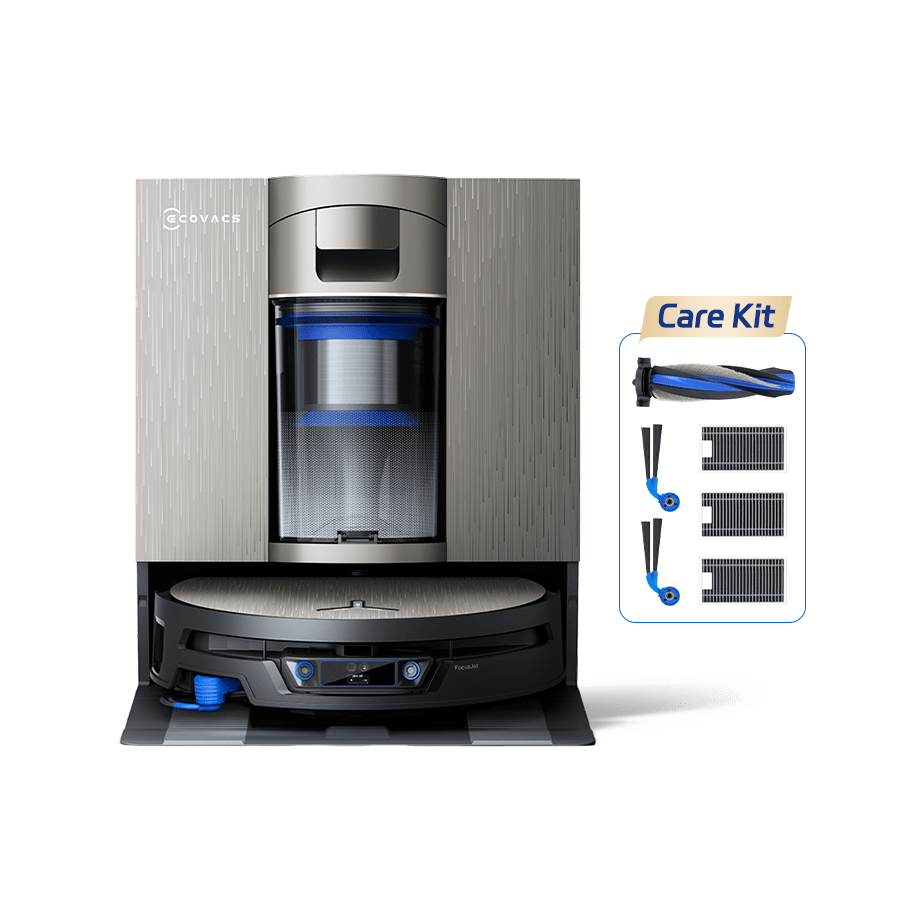
DEEBOT T80S OMNI
Ecovacs immerses the roller in water at up to 75 °C and wrings it out. Soaking time counts, which is why we prefer this to a short jet. The 63 °C for drying is the highest value stated. However, Ecovacs cites no bacteria test for the wash, the roller is the older generation, and a new one is due every one to two months.
DEEBOT T90 MAX PRO OMNI
The 100 °C is the eye-catcher and at the same time the weakest claim in this comparison. Drying stays at 45 °C. According to the manual, the antibacterial mop pad is also treated with the biocide silver nitrate. We would not buy this device for the temperature.
eufy HydroJet S2
Eufy washes the 29-centimeter-wide roller at 60 °C after every run and also relies on electrolyzed water, which according to the manufacturer reduces germs by 99.99 percent. How this was measured is not explained on the product page. For the high end, that is thin.
Narwal Flow 2
Narwal advertises 60 °C during mopping itself and 45 to 100 °C for self-cleaning the tank, scraper and lines. For the highest setting, the same caveat applies as with Ecovacs; we did not have technical documentation. An option with a question mark.
Kärcher RVF 7 Comfort Extra
Kärcher does not state a temperature; washing is done with warm water, drying with warm air. Two rollers are included, so one can be in the washing machine while the other works. The fresh water container holds 3 liters.
Kärcher RVM 4 Comfort Extra
This robot washes its mop discs cold and dries them with hot air against odors. It is included here as a counter-check for households where grease rarely ends up on the floor. According to Kärcher, the pads may go in the washing machine at 60 °C. For the rare grease stain, a mop with hot water from the tap will do.
How we would decide
- Kitchen with lots of grease, children at the dining table: Roborock Qrevo Curv 2 Flow, for its soak, drying and disclosed testing.
- The same on a tighter budget: DEEBOT T80S OMNI, with spare rollers factored in.
- Hygiene matters more to you than automation: Kärcher RVF 7 Comfort Extra, with the roller regularly going into the washing machine at 60 °C.
- Dust rather than grease: Kärcher RVM 4 Comfort Extra. Cold water and hot air are then enough.
If you no longer want to fill the docking station by hand, you will find requirements, installation and risks in the guide robot vacuums with a permanent water connection.
Frequently asked questions
Does hot water make the mop roller germ-free?
No. The German Federal Institute for Risk Assessment (BfR) describes hot-water disinfection as at least two minutes in water at about 82 °C. Most manufacturers state 60 to 75 °C, often with an "up to," and none say how long the roller holds the temperature. According to the BfR, thorough cleaning with a detergent already removes more than 90 percent of surface germs.
What is a hot-water wash on a robot vacuum good for?
Mainly against grease in the mop roller; Ecovacs and Roborock both cite this as the reason. There is no independent measurement of how much cleaner a roller gets at 75 instead of 45 °C. Hot water is therefore a kitchen topic. In a hallway or bedroom, it would not be a reason to buy.
Why does a mopping robot's dock smell?
Because of the moisture. According to the BfR, bacteria multiply very quickly in damp cloths at room temperature. The German Cosmetic, Toiletry, Perfumery and Detergent Association (IKW) advises keeping tanks and mop textiles clean and completely dry before longer breaks. So look at the drying first; for the T80S, Ecovacs states 63 °C and two hours.
Is 100 °C better than 75 °C?
That is doubtful. The BfR sees no benefit above about 82 °C. Ecovacs advertises up to 100 °C for the T90 MAX PRO, but its manual lists only 150 watts for the hot-water wash. By calculation, that can only heat about 25 milliliters per minute that much.
How much electricity does the hot-water wash use?
Very little. Bringing one liter of water from 15 to 75 °C takes about 70 watt-hours, and just under one liter is enough for 80 square meters of mopping area. Drying weighs more heavily: on the T90 MAX PRO, it is 150 watts over a standard three hours, so up to 0.45 kilowatt-hours. This is a rough calculation.
Which mopping robot allows machine washing of the roller?
Kärcher. With the RVF 7 Comfort Extra, the roller may go in the washing machine at up to 60 °C, and two rollers are included, so one works while the other is being washed. With the RVM 4 Comfort Extra, this applies to the pads. The Ecovacs manuals do not provide for machine washing; there, the roller is replaced.
Sources
- BfR: Food hygiene, cleaning and disinfection (in German)
- BfR: Protection against foodborne infections in private households (in German)
- German Environment Agency: Hygiene in the home (in German)
- IKW: Vacuum and mopping robots for hard floors and carpets (in German)
- Stiftung Warentest: Robot vacuums and mopping robots (in German)
- Roborock: Qrevo Curv 2 Flow
- Ecovacs: DEEBOT T80S OMNI
- Ecovacs: T80S OMNI manual
- Ecovacs: DEEBOT T90 MAX PRO OMNI
- Ecovacs: T90 MAX PRO manual
- Ecovacs: T90 PRO manual
- eufy: HydroJet S2
- Narwal: Model overview
- Kärcher: RVF 7 Comfort Extra
- Kärcher: RVM 4 Comfort Extra
Where to buy
- Roborock Qrevo Curv 2 FlowCheck price at Amazon.deCheck price at Amazon.co.ukCheck price at Amazon.nlCheck price at Amazon.com.beCheck price at Amazon.frCheck price at Amazon.itCheck price at Amazon.esCheck price at Amazon.plCheck price at Amazon.seAvailable in Germany: Amazon.de
- DEEBOT T80S OMNIView at EcovacsAvailable in Germany: EcovacsCheck price at Amazon.deCheck price at Amazon.co.ukCheck price at Amazon.nlCheck price at Amazon.com.beCheck price at Amazon.frCheck price at Amazon.itCheck price at Amazon.esCheck price at Amazon.plCheck price at Amazon.seAvailable in Germany: Amazon.de
- DEEBOT T90 MAX PRO OMNIView at EcovacsAvailable in Germany: EcovacsCheck price at Amazon.deCheck price at Amazon.co.ukCheck price at Amazon.nlCheck price at Amazon.com.beCheck price at Amazon.frCheck price at Amazon.itCheck price at Amazon.esCheck price at Amazon.plCheck price at Amazon.seAvailable in Germany: Amazon.de
- eufy HydroJet S2Check price at Amazon.deCheck price at Amazon.co.ukCheck price at Amazon.nlCheck price at Amazon.com.beCheck price at Amazon.frCheck price at Amazon.itCheck price at Amazon.esCheck price at Amazon.plCheck price at Amazon.seAvailable in Germany: Amazon.de
- Narwal Flow 2Check price at Amazon.deCheck price at Amazon.co.ukCheck price at Amazon.nlCheck price at Amazon.com.beCheck price at Amazon.frCheck price at Amazon.itCheck price at Amazon.esCheck price at Amazon.plCheck price at Amazon.seAvailable in Germany: Amazon.de
- Kärcher RVF 7 Comfort ExtraCheck price at Amazon.deCheck price at Amazon.co.ukCheck price at Amazon.nlCheck price at Amazon.com.beCheck price at Amazon.frCheck price at Amazon.itCheck price at Amazon.esCheck price at Amazon.plCheck price at Amazon.seAvailable in Germany: Amazon.de
- Kärcher RVM 4 Comfort ExtraCheck price at Amazon.deCheck price at Amazon.co.ukCheck price at Amazon.nlCheck price at Amazon.com.beCheck price at Amazon.frCheck price at Amazon.itCheck price at Amazon.esCheck price at Amazon.plCheck price at Amazon.seAvailable in Germany: Amazon.de