Contents12 sections
This guide was first published in German on handgetestet.de.
Many people buy a radar presence sensor for the hallway and end up paying for a capability nobody needs there. A battery-powered infrared sensor switches on the light in seconds and, according to the manufacturers, runs for years without a cable. Millimeter-wave radar has its place where people sit still for long periods: in the office, at the dining table, in the bathroom.
That settles the first fork in the road. Everything else depends on the system already running in your home.
First question: do you move around the room, or do you sit there?
A passive infrared sensor (PIR) reacts to heat moving through its field of view. At a desk, you type but barely move. After a few minutes, the light goes out. An mmWave radar, by contrast, detects even breathing and the slightest movements. That has two consequences: radar needs constant power, usually from a USB-C power adapter. And it generally costs noticeably more.
Second question: which hub is already in your home?
Hue communicates via Zigbee and Bluetooth, Eve via Thread with Matter, Homematic IP via its own wireless protocol, and the Aqara FP2 and Shelly via Wi-Fi. A sensor that doesn’t match your existing hub remains an outsider in your setup. If you are still undecided here, it is best to start with our overview of the control hub for the connected home.
After that, three details decide between satisfaction and annoyance. Without a brightness sensor, the light comes on at midday too; almost all the models below have a twilight or daylight function, and a look at the spec sheet clarifies this. For outdoors: IP20 means indoors only, and on an exterior wall it should have at least splash protection (IPX3, IP44, IP54). And range is not the same as width. A long hallway calls for range, a square room more for a wide angle. Manufacturer figures usually apply to a mounting height of around two meters.
One more point to draw the line. Motion sensors complement contacts on doors and windows well, but they don’t replace them. Only a door and window sensor tells you whether a window is open.
Six sensors side by side
| Model | Technology and power | Detection per manufacturer | Use | Best for |
|---|---|---|---|---|
| Philips Hue Motion Sensor | Infrared, 2 × AAA, Zigbee/Bluetooth | up to 5 m | indoors (IP20) | Hue households with a Bridge |
| Philips Hue Outdoor Sensor | Infrared, 2 × AA, Zigbee/Bluetooth | up to 10 m | outdoors (IP54), −20 to 45 °C | Hue lighting on driveway and garden |
| Eve Motion (Matter) | Infrared, 2 × AAA, Thread | 120°, up to 9 m | indoors and outdoors (IPX3) | Matter households, Apple, Google, Alexa |
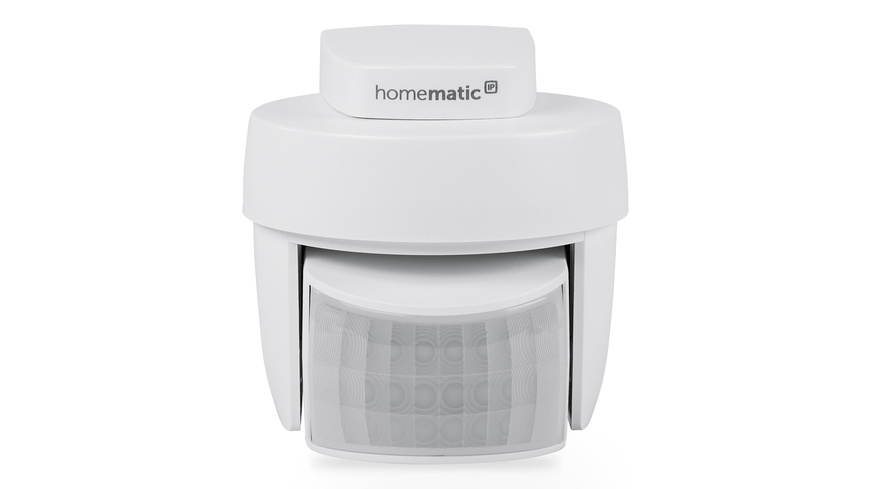
| Homematic IP Bewegungsmelder außen (HmIP-SMO-2) | Infrared, 2 × AA, Homematic IP | 90°, 8 m | outdoors (IP44) | Homematic systems, long battery life |
| Aqara Presence Sensor FP2 | mmWave radar, USB-C power adapter, Wi-Fi | room up to 40 m², up to 30 zones | indoors, bathroom (IPX5) | Presence at a seat, zones in the living space |
| Shelly Presence Gen4 | mmWave radar, USB-C, Wi-Fi/Zigbee/Matter | rooms up to 8 × 8 m | indoors | Shelly users, Home Assistant |
Philips Hue Motion Sensor
The classic for Hue households. Philips quotes a detection range of up to five meters, two AAA batteries and a built-in daylight sensor. Philips requires a Hue Bridge. In a hallway or storage room, that is enough. In a large living room, probably not.
Philips Hue Outdoor Sensor
The counterpart for the exterior wall is rated IP54, reaches up to ten meters and, according to the spec sheet, works from −20 to 45 °C. Two AA cells power it. It comes into its own with Hue outdoor lights, like those featured in our article on smart outdoor lighting. We would plan it with a Bridge, even though Hue now allows quite a bit via Bluetooth.
Eve Motion (Matter)
Eve relies on Thread and Matter. If there is a Thread border router in your home, the sensor works with Apple Home, Google Home, Alexa, SmartThings and Home Assistant. According to the manufacturer, the field of view is 120 degrees, the range nine meters, and the light sensor can be set from 0 to 15,000 lux. With IPX3, it can also go under the porch roof. Outdoors, some buyers complain about false triggers from direct sunlight. A shaded spot is therefore the smarter choice.
Homematic IP outdoor motion sensor
For the HmIP-SMO-2, Homematic IP advertises a typical battery life of six years; none of the other manufacturers here quotes a higher figure. The lens can be rotated and tilted, and the detection angle is 90 degrees. On range, the manufacturer’s figures contradict each other (8 m in the spec sheet, up to 12 m in the body text). We assume eight meters. The sensor is only of interest to households that already run a Homematic IP system.
Aqara Presence Sensor FP2
Now it gets serious. Using millimeter-wave radar, the FP2, according to Aqara, detects up to five people at once and divides a room of up to 40 square meters into up to 30 zones. That way, the reading light by the sofa, for example, only switches on when someone is sitting there. It needs a USB-C power adapter plugged into an outlet, communicates via Wi-Fi and works without an Aqara hub. According to the manufacturer, the fall detection with ceiling mounting is expressly not a medical device.
In a hallway, that would be a pure waste.
Shelly Presence Gen4
According to the manufacturer, Shelly’s presence sensor works with 60 GHz radar, also detects people sitting still and is intended for indoor rooms up to eight by eight meters. It speaks Wi-Fi, Zigbee and Matter, has a light sensor and runs on a USB-C cable. There are differing figures on the number of people it can detect at once. If you already have Shelly relays in your flush-mounted boxes, it keeps everything with one provider.
Amazon.de also lists the Homematic IP indoor sensors and the wired outdoor sensor with a switch actuator. If the light is to be switched directly at the wall switch, these versions are worth a look.
Outdoors: sensors yes, cameras only with a sense of proportion
A pure infrared or radar sensor does not record images. Things look different as soon as a camera on the house starts recording on motion. The German consumer advice center (Verbraucherzentrale) sums up the situation like this: you may only film your own property. The sidewalk, the street, a shared driveway and the neighboring property generally do not belong in the frame, and even on your own grounds there should be a sign. Fixed-position cameras make it easier to comply. You should also aim the detection area of an outdoor sensor so that passersby don’t keep triggering the light; that is simply a matter of consideration.
Which sensor for which room?
Hallways, stairs and storage rooms with Hue lighting get the Hue Motion Sensor. Done.
In a mixed smart home with Matter, Eve Motion is the most flexible route, indoors as well as under the porch roof, provided there is a Thread border router. Driveways and gardens with Hue outdoor lights belong with the Hue Outdoor Sensor. If a Homematic IP system is already running, the long battery life speaks for the HmIP-SMO-2.
That leaves the home office, living room and bathroom, the rooms where people sit still. That is where radar belongs: the Aqara FP2 or, in a Shelly setup, the Shelly Presence Gen4.
If the sensor should simply switch the outdoor light without an app or hub, our guide to 230-volt outdoor motion sensors will help.
Cameras that tell people apart from cats and branches are compared in our guide to the security camera with person detection.
Frequently asked questions
What is the difference between infrared and radar motion sensors?
A passive infrared sensor reacts to heat moving through its field of view. If you sit still at your desk, you'll be in the dark after a few minutes. An mmWave radar detects even breathing and the slightest movements, but it needs constant power, usually from a USB-C power adapter, and generally costs noticeably more.
Which smart motion sensor suits my system?
It depends on the hub in your home. Hue communicates via Zigbee and Bluetooth, Eve via Thread with Matter, Homematic IP via its own wireless protocol, and the Aqara FP2 and Shelly via Wi-Fi. A sensor that doesn't match your existing hub remains an outsider in your setup.
What should I look for in an outdoor motion sensor?
IP20 means indoors only. On an exterior wall, it should have at least splash protection, such as IPX3, IP44 or IP54. A brightness sensor also matters so that the light doesn't come on at midday. Aim the detection area so that passersby don't keep triggering the light.
Can a presence sensor distinguish zones in a room?
According to Aqara, the Aqara FP2 detects up to five people at once and divides a room of up to 40 square meters into up to 30 zones. That way, the reading light by the sofa, for example, only switches on when someone is sitting there. It needs a USB-C power adapter and works without an Aqara hub.
How long do the batteries in a smart motion sensor last?
According to the manufacturers, infrared sensors run for years without a cable. For the Homematic IP HmIP-SMO-2, the manufacturer quotes a typical battery life of six years; none of the other manufacturers featured gives a higher figure. Radar sensors, on the other hand, need constant power.
Does a motion sensor replace a window sensor?
No. Motion sensors complement contacts on doors and windows well, but they don't replace them. Only a door and window sensor tells you whether a window is open, and the motion sensor is a sensible addition to it.
Sources
- Philips Hue: Hue Motion Sensor
- Philips Hue: Hue Outdoor Motion Sensor
- Eve: Eve Motion
- Homematic IP: outdoor motion sensor with twilight sensor
- Aqara: Presence Sensor FP2
- Shelly: Presence Gen4
- Verbraucherzentrale: only film your own property with security cameras
Where to buy
- Eve Motion (Matter)Check price at Amazon.deCheck price at Amazon.co.ukCheck price at Amazon.nlCheck price at Amazon.com.beCheck price at Amazon.frCheck price at Amazon.itCheck price at Amazon.esCheck price at Amazon.plCheck price at Amazon.seAvailable in Germany: Amazon.de
- Philips Hue Motion SensorCheck price at Amazon.deCheck price at Amazon.co.ukCheck price at Amazon.nlCheck price at Amazon.com.beCheck price at Amazon.frCheck price at Amazon.itCheck price at Amazon.esCheck price at Amazon.plCheck price at Amazon.seAvailable in Germany: Amazon.de
- Philips Hue Outdoor SensorCheck price at Amazon.deCheck price at Amazon.co.ukCheck price at Amazon.nlCheck price at Amazon.com.beCheck price at Amazon.frCheck price at Amazon.itCheck price at Amazon.esCheck price at Amazon.plCheck price at Amazon.seAvailable in Germany: Amazon.de
- Homematic IP Bewegungsmelder außen HmIP-SMO-2View at ELVAvailable in Germany: ELVCheck price at Amazon.deCheck price at Amazon.co.ukCheck price at Amazon.nlCheck price at Amazon.com.beCheck price at Amazon.frCheck price at Amazon.itCheck price at Amazon.esCheck price at Amazon.plCheck price at Amazon.seAvailable in Germany: Amazon.de
- Aqara Presence Sensor FP2Check price at Amazon.deCheck price at Amazon.co.ukCheck price at Amazon.nlCheck price at Amazon.com.beCheck price at Amazon.frCheck price at Amazon.itCheck price at Amazon.esCheck price at Amazon.plCheck price at Amazon.seAvailable in Germany: Amazon.de
- Shelly Presence Gen4Check price at Amazon.deCheck price at Amazon.co.ukCheck price at Amazon.nlCheck price at Amazon.com.beCheck price at Amazon.frCheck price at Amazon.itCheck price at Amazon.esCheck price at Amazon.plCheck price at Amazon.seAvailable in Germany: Amazon.de