Contents13 sections
This guide was first published in German on handgetestet.de.
Bad tires are rarely the problem. More often, the tire type does not match how you drive. If you live in a flat region, drive little and can leave the car at home when it snows, a good all-season tire will get you through the year just fine. If you drive a lot, commute in hilly upland areas or head into the mountains every winter, you should stick with separate summer and winter tires. In the tests by ADAC (Germany’s largest automobile club) and the German car magazine Auto Bild, the Continental AllSeasonContact 2 came out on top across several tire sizes.
First fork in the road: the mountain symbol
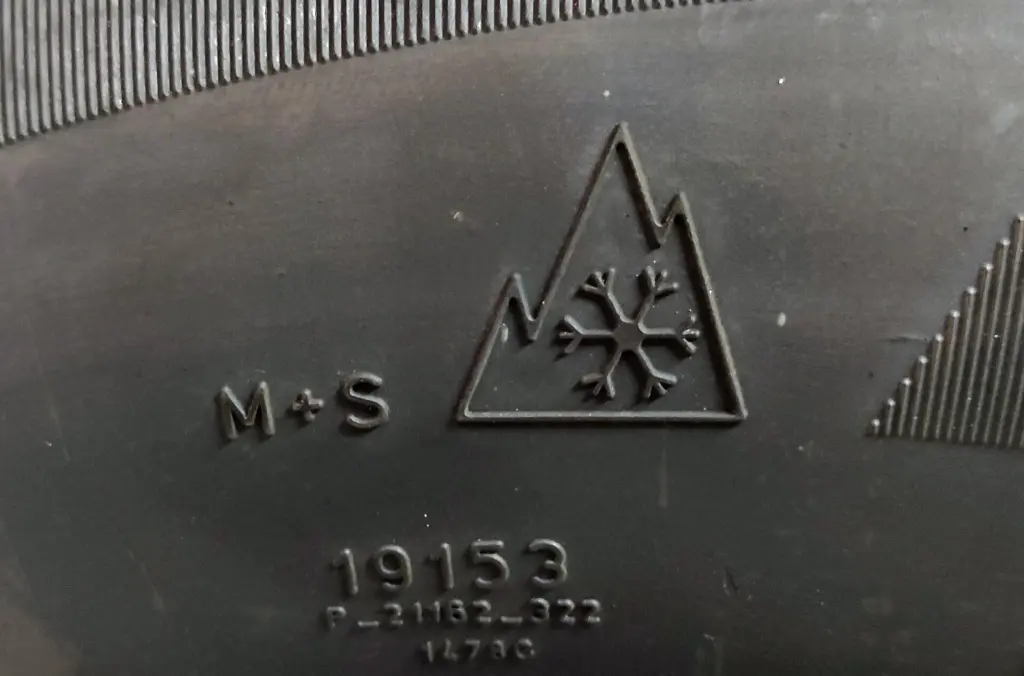
Germany has no calendar-based winter tire requirement. The rule is situational. Under Section 2(3a) of the German Road Traffic Regulations (StVO), a car may only be driven in black ice, packed snow, slush, ice or frost if all wheels have tires as defined in Section 36(4) of the German Road Vehicle Licensing Regulations (StVZO). These are tires with the Alpine symbol, the mountain pictogram with a snowflake (technically 3PMSF). The rule of thumb „from O to O“ (October to Easter, „Ostern“ in German) is a memory aid, not a law.
The M+S marking alone is no longer enough. According to ADAC, older M+S tires manufactured before 2018 could only continue to be used until September 30, 2024. Since October 1, 2024, only the Alpine symbol counts. The same applies to all-season tires. If you are caught driving on snow with the wrong tires, you risk a fine and a penalty point in the German driver register in Flensburg, and the vehicle owner can also be held liable. According to manufacturer and retailer information, all six models on this page carry the Alpine symbol.
Second fork: read the label, but do not overrate it
Since May 2021, the revised EU tire label under Regulation (EU) 2020/740 has applied. It shows the class for rolling resistance and wet grip, each from A to E, as well as the rolling noise in decibels. Two pictograms are new. Only a tire that passes the snow test under UN Regulation 117 gets the snow symbol. A second symbol stands for ice grip. The QR code leads to the data sheet in the European EPREL database.
Braking distance on snow, behavior on dry roads and tread life? Not on the label. Yet that is exactly where all-season tires differ widely. The label works as a first filter; the buying decision should be based on independent tests. ADAC advises the same.
Third fork: the kilometers
An all-season tire rolls for twelve months instead of six. So it wears out twice as fast as a set made up of a summer and a winter pair that share the kilometers. Tread life therefore carries a lot of weight. According to ÖAMTC (the Austrian automobile club), most well-rated tires in the 2025 ADAC test in 225/45 R17 reached a projected tread life of around 50,000 kilometers, and the Goodyear Vector 4Seasons Gen-3 reached 68,000. In the small 185/65 R15 size, the recommended tires in 2026 ranged from just over 41,000 to 44,500 kilometers.
Be careful with cheap tires that promise high tread life. According to ÖAMTC, some poorly rated models achieve their kilometers at the expense of safety.
Your driving profile decides
Small car or second car, mostly city driving, mild climate, a few thousand kilometers a year: that is where the all-season tire fits and saves you changeover appointments and storage. With high annual mileage, commuting on country roads in all weather or living in a snowy region, it is usually not the right fit.
It does not suit ski trips on snow-covered mountain passes at all, with a full load and a roof box. ADAC also recommends dedicated seasonal tires for long summer drives in great heat.
That is physics. An all-season tire remains a compromise, and according to ADAC it does not reach the reserves of a good winter tire in heavy snow or on icy roads. If you are upgrading for a winter trip anyway, our guide to roof boxes (in German) has tips on payload and handling.
Six all-season tires and their test results
All scores come from the tests by ADAC (2025: 225/45 R17, 2026: 185/65 R15) and Auto Bild (all-season tire test 2025: 225/40 R18). They are German school grades: the lower, the better. Results apply only to the tested size.
| Model | ADAC | Auto Bild 2025 (225/40 R18) | Best for |
|---|---|---|---|
| Continental AllSeasonContact 2 | 2025: 2.3 · 2026: 2.3 | 1.2 | Most drivers, from small cars to compacts |
| Michelin CrossClimate 3 | not tested (predecessor CrossClimate 2, 2026: 2.6) | 2.0 | Drivers who value snow performance and long tread life |
| Goodyear Vector 4Seasons Gen-3 | 2025: 2.3 · 2026: 3.1 | not tested | High-mileage drivers with medium to larger tires |
| Bridgestone Turanza All Season 6 | 2025: 2.5 | 1.9 | Compact cars and larger |
| Hankook Kinergy 4S 2 | 2026: 3.0 | 1.5 | Budget-conscious drivers with sportier sizes |
| Vredestein Quatrac | 2026: 2.9 | 1.4 | Drivers who often drive in the wet |
Continental AllSeasonContact 2
No other tire was as consistent in the current tests. In the 2025 ADAC test, it was the only one rated „good“ for driving safety, and on a wet road it stopped from 80 km/h in just under 31 meters. In 2026, it was the only tire in 185/65 R15 with an overall rating of „good.“ Both testers name its weakness: at around 41,300 kilometers in the 2026 ADAC test, it lasts less long than the competition.
Michelin CrossClimate 3
On sale since July 2025, according to Michelin in 66 sizes from 16 to 20 inches. Auto Bild praises its snow performance and long tread life but sees weaknesses in the wet; in return, it earned the „Green Tire“ distinction. Sports cars get the CrossClimate 3 Sport, rated much higher by Auto Bild at 1.3. According to ADAC, Michelin does not offer the new model for 15-inch wheels; the CrossClimate 2 remains the option there.
Goodyear Vector 4Seasons Gen-3
Shared the top spot with Continental in the 2025 ADAC test and, at 68,000 kilometers, had by far the highest tread life in the field. In the 2026 small car size, it only managed 3.1. Worth considering for high-mileage drivers with 17-inch wheels, but not the first choice for a small car.
Bridgestone Turanza All Season 6
In the leading group with 2.5 in the 2025 ADAC test, and sixth place with 1.9 at Auto Bild. Look closely at the model name. The older Weather Control A005 Evo failed the 2026 ADAC test in 185/65 R15 with a rating of „poor.“ According to ADAC, Bridgestone does not offer the newer tire in this size.
Hankook Kinergy 4S 2
Fifth place at Auto Bild with 1.5 and explicitly strong value for money, with slightly longer braking distances on wet and dry roads. In the ADAC small car test, it scored 3.0 and, at 44,500 kilometers, the highest tread life among the better tires.
Vredestein Quatrac
Fourth place at Auto Bild with 1.4, praised for large reserves in the wet. The price is above-average wear. In the 2026 ADAC test, it scored 2.9. Do not confuse it with the Quatrac Pro+, which only received „sufficient“ in the 2025 ADAC test.
At the end of the road: which tire?
- The safe standard: Continental AllSeasonContact 2. It was among the leaders in all three tests, but costs you tread life.
- A little cheaper: Hankook Kinergy 4S 2, if you can live with slightly longer braking distances.
- Lots of kilometers, 17 inches: Goodyear Vector 4Seasons Gen-3.
- Lots of snow, but no desire for two sets: Michelin CrossClimate 3, with compromises in the wet.
Regularly in the mountains or more than 20,000 kilometers a year? Then go for real winter tires. High-mileage drivers buy a lot of compromise with an all-season tire and save little in the process.
Two questions before you order. Is the model offered in your size at all, and is there a test result for exactly that size? If you are upgrading your car right now, we also have a guide to the dashcam.
Deadlines and checkpoints for switching your car insurance at the end of the year are explained in our guide to switching car insurance.
How a reported accident affects your insurance premium is explained in our guide to the no-claims class.
Frequently asked questions
Is there a winter tire requirement in Germany?
Not by calendar; the rule is situational. In black ice, packed snow, slush, ice or frost, all wheels must have tires with the Alpine symbol. The rule of thumb "from O to O" (October to Easter, "Ostern" in German) is only a memory aid. If you are caught with the wrong tires, you risk a fine and a penalty point in the German driver register in Flensburg.
Is the M+S marking still enough for winter?
No. According to ADAC, older M+S tires manufactured before 2018 could only be used until September 30, 2024. Since October 1, 2024, only the Alpine symbol counts, the mountain pictogram with a snowflake. The same applies to all-season tires.
What does the EU tire label tell you, and what does it not?
It shows classes for rolling resistance and wet grip from A to E, the rolling noise in decibels, and symbols for snow and ice grip. Braking distance on snow, behavior on dry roads and tread life are not on it. The label works as a first filter; independent tests should make the decision.
Who should not buy all-season tires?
With high annual mileage, commuting on country roads in all weather or living in a snowy region, they are usually not the right fit. They are also unsuitable for ski trips on snow-covered mountain passes. If you regularly drive into the mountains or cover more than 20,000 kilometers a year, real winter tires are the better choice.
How long do all-season tires last?
They roll for twelve months instead of six and therefore wear out twice as fast as a split set. According to ÖAMTC, well-rated tires in the 2025 ADAC test reached around 50,000 kilometers, and the Goodyear Vector 4Seasons Gen-3 reached 68,000. The Continental lasts less long at around 41,300 kilometers.
Which all-season tire is cheaper than the Continental?
The Hankook Kinergy 4S 2 scored 1.5 at Auto Bild with strong value for money, but brakes slightly longer on wet and dry roads. In the ADAC small car test, it scored 3.0 and, at 44,500 kilometers, achieved the highest tread life among the better tires.
Sources
- Section 2 StVO, German Road Traffic Regulations (gesetze-im-internet.de)
- Section 36 StVZO, German Road Vehicle Licensing Regulations (gesetze-im-internet.de)
- ADAC: Alpine symbol required on winter tires
- ADAC: All-weather tires in winter
- ADAC all-season tire test 2025 (225/45 R17)
- ÖAMTC: All-season tire test 2025
- ADAC all-season tire test 2026 (185/65 R15)
- firmenauto: Scores and tread life, ADAC 2026
- Auto Bild all-season tire test 2025 (225/40 R18)
- Regulation (EU) 2020/740 on tire labeling
- Michelin: New CrossClimate range
Where to buy
- Continental AllSeasonContact 2Check price at Amazon.deCheck price at Amazon.co.ukCheck price at Amazon.nlCheck price at Amazon.com.beCheck price at Amazon.frCheck price at Amazon.itCheck price at Amazon.esCheck price at Amazon.plCheck price at Amazon.seAvailable in Germany: Amazon.de
- Hankook Kinergy 4S 2Check price at Amazon.deCheck price at Amazon.co.ukCheck price at Amazon.nlCheck price at Amazon.com.beCheck price at Amazon.frCheck price at Amazon.itCheck price at Amazon.esCheck price at Amazon.plCheck price at Amazon.seAvailable in Germany: Amazon.de
- Michelin CrossClimate 3Check price at Amazon.deCheck price at Amazon.co.ukCheck price at Amazon.nlCheck price at Amazon.com.beCheck price at Amazon.frCheck price at Amazon.itCheck price at Amazon.esCheck price at Amazon.plCheck price at Amazon.seAvailable in Germany: Amazon.de
- Goodyear Vector 4Seasons Gen-3Check price at Amazon.deCheck price at Amazon.co.ukCheck price at Amazon.nlCheck price at Amazon.com.beCheck price at Amazon.frCheck price at Amazon.itCheck price at Amazon.esCheck price at Amazon.plCheck price at Amazon.seAvailable in Germany: Amazon.de
- Bridgestone Turanza All Season 6Check price at Amazon.deCheck price at Amazon.co.ukCheck price at Amazon.nlCheck price at Amazon.com.beCheck price at Amazon.frCheck price at Amazon.itCheck price at Amazon.esCheck price at Amazon.plCheck price at Amazon.seAvailable in Germany: Amazon.de
- Vredestein QuatracCheck price at Amazon.deCheck price at Amazon.co.ukCheck price at Amazon.nlCheck price at Amazon.com.beCheck price at Amazon.frCheck price at Amazon.itCheck price at Amazon.esCheck price at Amazon.plCheck price at Amazon.seAvailable in Germany: Amazon.de