Contents14 sections
This guide was first published in German on handgetestet.de.
When buying a helmet, people get the size wrong more often than the model. An expensive helmet with rotational protection that wobbles on your forehead will shift in a crash and then does little good. In the city, a well-fitting city helmet with a light such as the Uvex urban planet LED is enough. S-pedelec riders should look at helmets certified to the Dutch standard NTA 8776, for example the ABUS Pedelec 2.0 ACE or the Casco Speedairo2 RS. And off-road, an open-face MTB helmet like the Giro Fixture Mips II is the affordable baseline.
Does a helmet help at all?
Yes, within limits. The German insurers‘ accident research unit (UDV), together with the forensic medicine institute in Munich and the University Hospital Münster, analyzed more than 500 bicycle accidents. According to the study, helmets can prevent or mitigate most life-threatening head injuries. When a cyclist collides with a car, however, every helmet reaches its limits.
How do I find the right size?
With a tape measure, not with the catalog. Uvex and the ADFC (German cyclists‘ association) recommend placing a soft tape about two finger widths above your eyebrows and running it around the back of your head just above your ears; ABUS specifies about 2.5 centimeters above the eyebrows. Compare the measurement with the manufacturer’s chart, because S, M and L mean something different for every brand. If you fall between two sizes, ABUS recommends the larger one.
Put on correctly, the helmet sits level, one to two fingers above your eyebrows, and does not tilt back toward your neck. Below each ear, the straps form a V. According to Giro, about one finger fits between your chin and the closed strap. According to the ADFC, the adjustment dial at the back of the head does not make up for the wrong size. If you wear glasses, bring them along when trying helmets on. Some helmet rims press on the temples.
What else does an everyday helmet need?
EN 1078 is the minimum. The standard is not a mark of quality. A helmet like this is enough for teenagers on e-scooters; where a helmet requirement applies is covered in the guide E-scooters for children and teenagers. The ADAC (German automobile club) recommends an LED on the helmet plus reflectors on the shell and straps, because people often forget to switch the light on. Magnetic buckles can be closed with one hand while wearing gloves.
City helmets with lights weigh around 400 grams. On a short commute to the office, that does not matter; on long summer rides, it does.
After a crash, the helmet is replaced, even if no crack is visible. That is the view of Uvex and ABUS. Uvex also gives an upper limit of eight years from manufacture with no more than five years of use.
Which helmet does the law require on an S-pedelec?
For regular pedelecs up to 25 km/h, there is no helmet requirement in Germany. The S-pedelec up to 45 km/h is a different case. It counts as a motorcycle, and Section 21a (2) of the German Road Traffic Regulations (StVO) requires a „suitable protective helmet.“ The section does not name a standard. The fact sheet of GIB ACHT IM VERKEHR, a road safety campaign in the German state of Baden-Württemberg, cites the motorcycle standard ECE 22.05.
NTA 8776 is a Dutch test specification for fast e-bikes. According to the ADAC, there is no EU standard for S-pedelec helmets. According to Stiftung Warentest (the German consumer testing organization), NTA 8776 tests at an impact speed about 20 percent higher, but only vertically. Whether such a helmet counts as „suitable“ in Germany has not been conclusively settled legally. You are on the safe side with a helmet certified to ECE 22.
The joint 2024 helmet test by the ADAC and Stiftung Warentest is sobering. The three S-pedelec helmets tested did not protect better in crashes than the city helmets. So for a regular e-bike, an NTA helmet is unnecessary. If you are still torn between an e-bike and a scooter, the e-scooter guide (in German) shows the other side.
Is MIPS worth it?
In a crash, the head rarely hits straight on. Usually it strikes at an angle and is twisted. This is where systems like MIPS come in: according to Mips, a slip layer inside the helmet gives the head 10 to 15 millimeters of movement in all directions and is meant to redirect rotational forces away from the brain.
Stiftung Warentest simulates such angled impacts on a 45-degree surface. The result is clear. MIPS or comparable systems do not guarantee better protection; some helmets without a slip layer protected well, and some with one did not. With an equal fit, MIPS is a plus. Nothing more.
Six bike helmets for city, S-pedelec and trail
| Model | Use and standard | Sizes according to manufacturer | Light and special features | Best for |
|---|---|---|---|---|
| Uvex urban planet LED | City, EN 1078 | 54–58 and 58–61 cm | Rechargeable plug-in LED, one-hand buckle | Commuters with a small budget for extras |
| Giro Escape Mips | City, EN 1078, MIPS | 51–55, 55–59, 59–63 cm | Front and rear lights (LED version) | City riders who want to be seen |
| ABUS Pedelec 2.0 ACE | E-bike and S-pedelec, NTA 8776 | 51–55, 52–57, 56–62 cm | Rear light, visor, built-in rain cover | Year-round e-bike commuters |
| Casco Speedairo2 RS | S-pedelec, NTA 8776 (S and M) | 52–56, 54–59, 59–62 cm | Self-tinting visor, 340 g | Fast commuters on an S-pedelec |
| Giro Fixture Mips II | MTB and touring, EN 1078, MIPS | Universal size 54–61 cm, XL 58–65 cm | No light, women’s and XL versions | Beginners off-road |
| Livall EVO21 | City, EN 1078 | 54–58 and 58–62 cm | Front and rear lights, turn signals, crash detection | Tech fans in city traffic |
Uvex urban planet LED: simple and strong in testing
A city helmet without gimmicks. Uvex states 406 grams, two sizes and a rechargeable plug-in LED. According to the ADAC, this model offered the best crash protection in the comparison in the 2024 helmet test by the ADAC and Stiftung Warentest.
Giro Escape Mips: lights front and rear
Giro builds the MIPS slip layer into this classic urban helmet. According to the manufacturer, the LED version has a white light at the front and a red one at the rear, both rechargeable. With three sizes up to 63 centimeters, large heads fit too. Because the helmet is also available without lights, look for the „LED“ designation when ordering.
ABUS Pedelec 2.0 ACE: for commuters in the rain
ABUS describes a high-mounted rear light with 180-degree visibility and two light modes, plus a rain cover stored inside the helmet. According to the product description, it meets NTA 8776 in addition to EN 1078. At 390 to 430 grams, it is not light. And in the ADAC test, the MIPS version pressed on the temples of wide glasses.
Casco Speedairo2 RS: visor instead of glasses
The Speedairo is the only Casco model certified to NTA 8776, though according to the manufacturer only in sizes S and M. Large heads miss out. The RS package includes the self-tinting Vautron visor, which can replace a separate pair of glasses.
Giro Fixture Mips II: getting started off-road
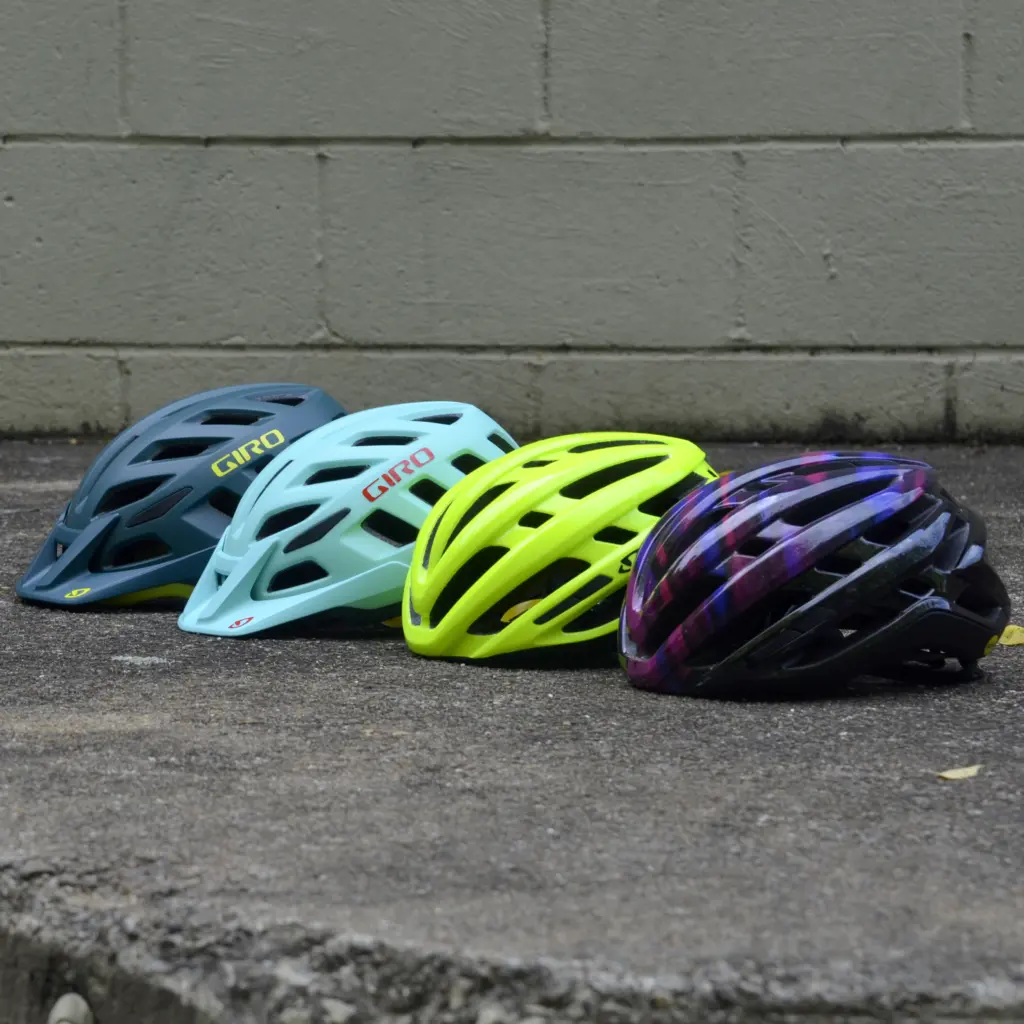
An open-face trail helmet with MIPS at a fair price. Giro offers it in a universal size from 54 to 61 centimeters, as well as in women’s and XL versions. There is no light. On a forest trail, you can live with that. For downhill runs in a bike park, on the other hand, you need a full-face helmet.
Livall EVO21: more signal system than helmet
Livall lists front and rear lights, turn signals via a handlebar remote, an automatic brake light and crash detection that notifies an emergency contact via the app. Protection is to EN 1078; Livall does not mention rotational protection anywhere. To us, this much electronics seems excessive for the little benefit it brings. None of it cushions an impact.
Which helmet for which ride?
If you ride in the city every day, the Uvex urban planet LED serves you well. If you want MIPS and a front light, the Giro Escape Mips in the LED version is the right fit. For e-bike riding in any weather, the rain cover and visor of the ABUS Pedelec 2.0 ACE make the case. On an S-pedelec with a small to medium head, the Casco Speedairo2 RS is the choice, and on forest trails and tours the Giro Fixture Mips II. Turn signals and an emergency call come with the Livall EVO21, with the caveat mentioned above.
If the bike is coming along on vacation, read here what matters with a bike rack for the tow hitch.
What accident data says about falls and how to get back on the bike successfully is covered in the guide E-bikes for seniors (in German).
What private accident insurance pays after a crash and where its limits lie is explained in the guide Accident insurance (in German).
Frequently asked questions
How do I find the right helmet size?
With a tape measure: place it about two finger widths above your eyebrows and run it around the back of your head just above your ears. Compare the measurement with the manufacturer's chart, because S, M and L mean something different for every brand. If you fall between two sizes, ABUS recommends the larger one.
How should a bike helmet fit?
Level, one to two fingers above your eyebrows, without tilting back toward your neck. Below each ear, the straps form a V, and according to Giro about one finger fits between your chin and the closed strap. According to the ADFC, the adjustment dial does not make up for the wrong size.
Is a helmet with MIPS worth it?
With an equal fit, MIPS is a plus, nothing more. The slip layer is meant to redirect rotational forces in an angled impact. However, Stiftung Warentest found that such systems do not guarantee better protection: some helmets without a slip layer protected well, and some with one did not.
Which helmet do I need for an S-pedelec?
For S-pedelecs up to 45 km/h, Section 21a of the German Road Traffic Regulations (StVO) requires a suitable protective helmet without naming a standard. NTA 8776 is a Dutch test specification; whether such a helmet counts as suitable has not been conclusively settled legally. You are on the safe side with a helmet certified to ECE 22.
When does a bike helmet need to be replaced?
After every crash, even if no crack is visible; that is the view of Uvex and ABUS. Uvex also gives an upper limit of eight years from manufacture with no more than five years of use.
Do I need an NTA helmet for a regular e-bike?
No. There is no helmet requirement for pedelecs up to 25 km/h, and in the 2024 helmet test by the ADAC and Stiftung Warentest, the three S-pedelec helmets tested did not protect better in crashes than the city helmets. A well-fitting city helmet with a light is enough.
Sources
- ADAC: Bike helmets for adults (2024)
- Stiftung Warentest: Bike helmets for adults
- UDV: Study on the protective effect of bike helmets
- Section 21a StVO: Seat belts, protective helmets
- GIB ACHT IM VERKEHR: S-pedelec fact sheet
- ADFC: What to know about bike helmets
- Uvex: When do I need to replace my helmet?
- Uvex urban planet LED
- ABUS: Adjusting a bike helmet correctly
- ABUS Pedelec 2.0 ACE
- Giro Escape Mips LED
- Giro Fixture Mips II
- Giro: Size chart
- Casco Speedairo2 RS
- Livall EVO21
- Mips: How the technology works
Where to buy
- Uvex urban planet LEDCheck price at Amazon.deCheck price at Amazon.co.ukCheck price at Amazon.nlCheck price at Amazon.com.beCheck price at Amazon.frCheck price at Amazon.itCheck price at Amazon.esCheck price at Amazon.plCheck price at Amazon.seAvailable in Germany: Amazon.de
- Giro Escape Mips LEDCheck price at Amazon.deCheck price at Amazon.co.ukCheck price at Amazon.nlCheck price at Amazon.com.beCheck price at Amazon.frCheck price at Amazon.itCheck price at Amazon.esCheck price at Amazon.plCheck price at Amazon.seAvailable in Germany: Amazon.de
- ABUS Pedelec 2.0 ACECheck price at Amazon.deCheck price at Amazon.co.ukCheck price at Amazon.nlCheck price at Amazon.com.beCheck price at Amazon.frCheck price at Amazon.itCheck price at Amazon.esCheck price at Amazon.plCheck price at Amazon.seAvailable in Germany: Amazon.de
- Casco Speedairo2 RSCheck price at Amazon.deCheck price at Amazon.co.ukCheck price at Amazon.nlCheck price at Amazon.com.beCheck price at Amazon.frCheck price at Amazon.itCheck price at Amazon.esCheck price at Amazon.plCheck price at Amazon.seAvailable in Germany: Amazon.de
- Giro Fixture Mips IICheck price at Amazon.deCheck price at Amazon.co.ukCheck price at Amazon.nlCheck price at Amazon.com.beCheck price at Amazon.frCheck price at Amazon.itCheck price at Amazon.esCheck price at Amazon.plCheck price at Amazon.seAvailable in Germany: Amazon.de
- Livall EVO21Check price at Amazon.deCheck price at Amazon.co.ukCheck price at Amazon.nlCheck price at Amazon.com.beCheck price at Amazon.frCheck price at Amazon.itCheck price at Amazon.esCheck price at Amazon.plCheck price at Amazon.seAvailable in Germany: Amazon.de