Contents14 sections
This guide was first published in German on handgetestet.de.
If you fill jars with crates of beans, cherries or goulash every year, buy a canning machine with a stainless steel pot, a drain spigot and a timer that only starts counting once the temperature is reached. The WECK WAT25-A has exactly this combination. A more affordable route is the Klarstein Biggie Digital, which also holds 14 one-liter jars in a single run. Everything else is a question of space and of mulled wine.
Before you order, it is worth looking at the brands you probably have in mind. According to its own product page, Rommelsbacher no longer carries its KA 2004/E stainless steel fully automatic canner. Kochstar has stopped production and closed its own online shop as of December 1, 2025. And according to the listing on Amazon, the Severin EA 3655 is currently unavailable. That rules out three well-known names for now. What remains is essentially Weck and Klarstein.
How big does the pot need to be?
The usual countertop units hold 27 to 30 liters. According to the manufacturers, that fits 14 jars of one liter each in the pot, with Klarstein noting that no more than 20 liters of water should be filled in. You stack smaller jars on a second rack.
A single-person household with herbs on the balcony and the occasional batch of applesauce does not need that. A 9-liter unit for three one-liter jars is enough here. According to Klarstein, it weighs around 2.2 kilograms and fits in a kitchen cabinet. A 27-liter pot, by contrast, is almost half a meter tall and wide. Plan a permanent spot for it in the basement or pantry.
Enamel, stainless steel or plastic?
Enameled pots are the classic and usually the cheaper choice. A chipped spot on the rim does show, though. Stainless steel is easier to clean and resistant to knocks, but costs noticeably more at Weck. Plastic housings are the lightest solution. Weck offers a five-year warranty on them, according to the manufacturer; buyers of the WAT35A nevertheless report leaking bottoms. For a unit meant to run every fall for ten years, we would rather go with metal.
Thermostat and timer: what really matters?
The timer is the underrated point. Processing times in recipes apply from the moment the water reaches the target temperature. On Weck and Rommelsbacher units, the timer only starts then, according to the manufacturers. Other units count from the moment they are switched on, and then the entire heat-up time of a full pot is subtracted from the processing time. If you have a unit like that, you simply have to set the timer yourself as soon as the temperature is reached.
For the thermostat, continuously variable control from about 30 degrees Celsius is enough. No pot with an open water bath gets above 100 degrees anyway. With simple on/off thermostats, buyers report fluctuations of three to five degrees. For fruit, that is not critical.
Is 100 degrees enough for beans and meat?
Not in a single run. The German Federal Institute for Risk Assessment (BfR) explains that the spores of Clostridium botulinum only die above 100 degrees, and that a large share of reported botulism cases can be traced back to home-canned food. Meat and vegetables such as beans should therefore be heated to 100 degrees twice within one to two days, ideally standing at room temperature in between. The German Federal Center for Nutrition (BZfE) likewise advises always canning meat and vegetables twice.
The BfR names two more points. Jars with a bulging lid are not opened; they are thrown away. And if you bring canned vegetables or meat completely to 100 degrees once more before eating, you render any toxin that may have formed harmless. No machine does that for you. Not even one with a display.
Is the spigot worth it even without a Christmas market?
Yes, and for an unromantic reason: a full pot with 20 liters of hot water can hardly be tipped out safely. Via the spigot, it drains into a bucket after cooling. For mulled wine, punch or tea at a garden party, it is a must anyway. Buyers criticize slow draining on some units, and Rommelsbacher itself points out that some water remains in the pot below the spigot.
Which jars fit?
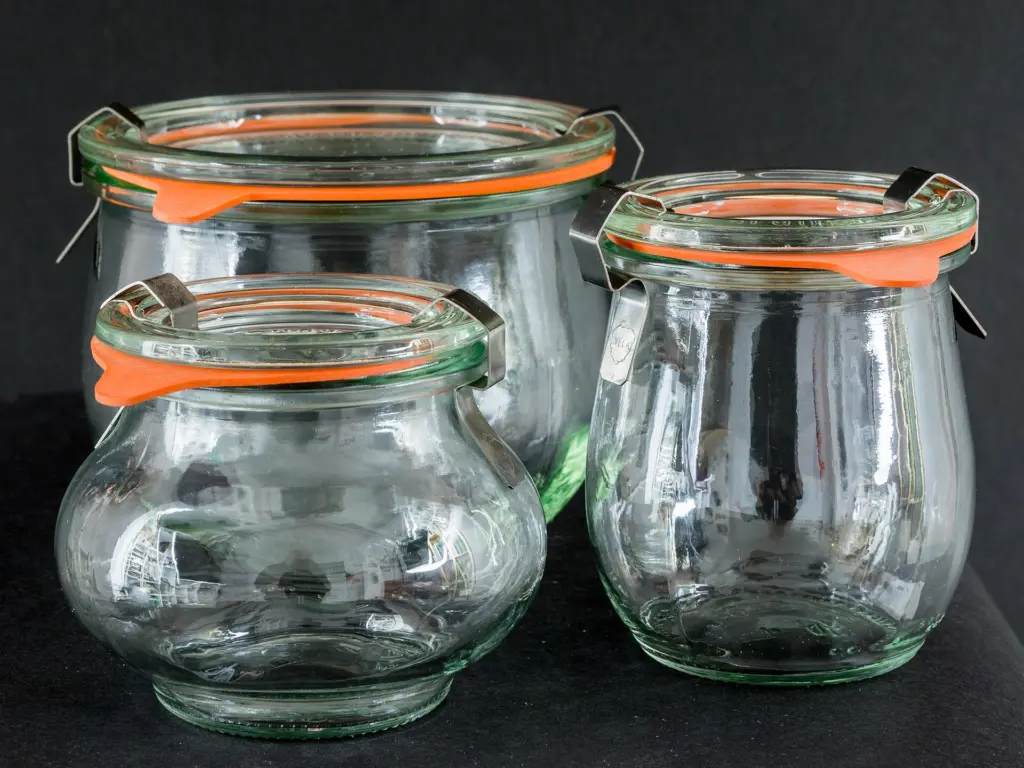
Classic rounded-rim jars with rubber rings and clips as well as screw-top jars. Klarstein explicitly names both types. The BZfE allows twist-off jars and above all requires one thing: jars, lids and rubber rings must be intact and very clean. Used screw lids with rust spots or a cracked seal belong in the trash.
Five canning machines you can currently buy
WECK WAT25-A
The stainless steel unit from the well-known jar manufacturer. According to Weck, the pot holds 30 liters and has a drain spigot and a timer that only runs once the temperature is reached. According to retailer information, the predecessor WAT25 without the „A“ is no longer produced. So pay attention to the suffix. Weck itself also offers it as a set with 18 jars.
WECK WAT14A
Enameled 29-liter pot with a precision thermostat and drain spigot, but no timer. Weck itself calls it a semi-automatic unit. For mulled wine, the missing timer does not matter; for canning, it does. If you work with a kitchen timer anyway, you save a price class here compared with the WAT25-A.
WECK WAT35A
The plastic version with 29 liters, thermostat, drain spigot and timer. On paper, it is fully equipped. The ratings on Amazon are weak, however, with several buyers describing a leaking bottom. We would rather advise against it as long as the WAT14A with a metal pot is available in the same price class.
Klarstein Biggie Digital 27 liters
According to Klarstein: 2,000 watts, 30 to 100 degrees, timer up to 120 minutes with automatic shut-off, display for target and actual temperature as well as remaining time, plus a low-water warning. That is a lot of equipment for the mid-price range. Whether the timer only counts from the target temperature is not clear from the description; if in doubt, set it only once the display reports the temperature. Careful when comparing: according to Klarstein, the white, enameled 27-liter version only has 1,800 watts.
Klarstein Biggie Eco 9 liters
The smallest unit in the lineup. Three one-liter jars, 1,000 watts, continuously variable from 30 to 100 degrees and a spigot, according to the manufacturer. That is enough for a few jars of jam in summer or a pot of punch for six guests. For the bean harvest from the raised bed, probably not.
How we would decide
- You do several rounds of canning every fall, including meat and vegetables: WECK WAT25-A, because the timer only counts from the target temperature and the stainless steel pot is easy to clean.
- Same quantity, tighter budget: Klarstein Biggie Digital 27 liters, knowing that you keep an eye on the timer yourself.
- Mainly mulled wine, juice and keeping things warm: WECK WAT14A.
- Little space, small quantities: Klarstein Biggie Eco 9 liters.
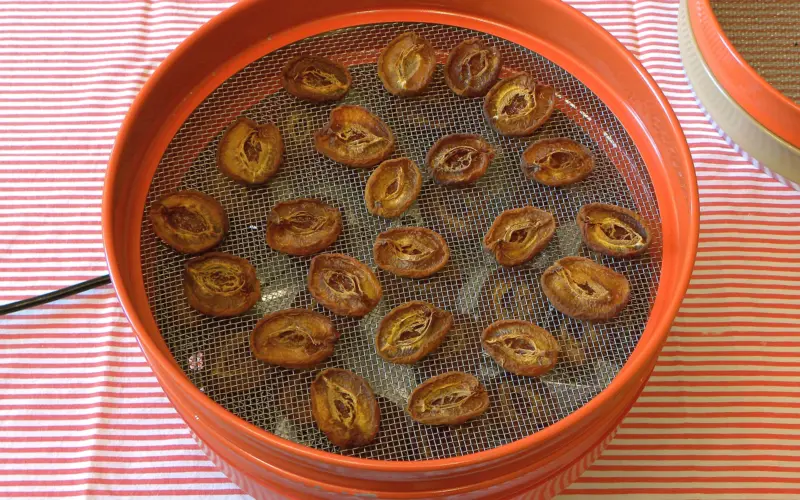
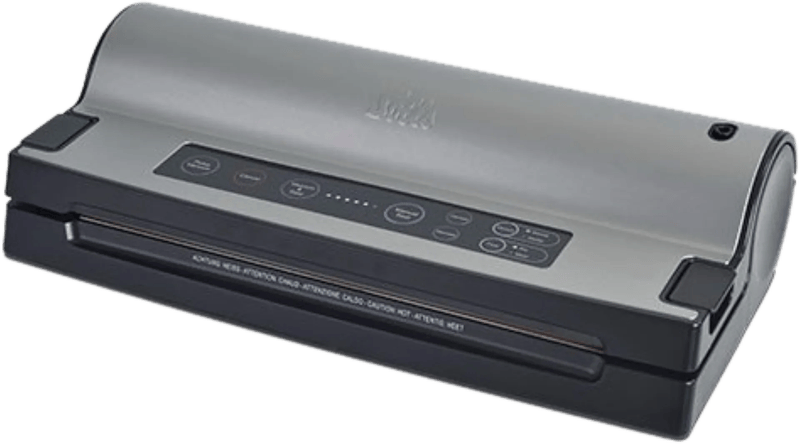
If you would rather dry fruit than can it, our food dehydrator guide offers a space-saving alternative. For meat and fish in the freezer, take a look at our vacuum sealer guide (in German).
Frequently asked questions
How big should a canning machine be?
The usual countertop units hold 27 to 30 liters, which according to the manufacturers fits 14 one-liter jars. A 27-liter pot, however, is almost half a meter tall and wide and needs a permanent spot. For a single-person household with the occasional batch of applesauce, a 9-liter unit for three one-liter jars is enough, such as the Klarstein Biggie Eco.
Why is the timer on a canning machine so important?
Processing times in recipes apply from the moment the water reaches the target temperature. On Weck units, the timer only starts then, according to the manufacturer. Other units count from the moment they are switched on, and the heat-up time of a full pot is subtracted from the processing time. With such units, only set the timer once the temperature is reached.
Is 100 degrees enough for canning beans and meat?
Not in a single run. According to the German Federal Institute for Risk Assessment (BfR), spores of Clostridium botulinum only die above 100 degrees Celsius. Meat and vegetables such as beans should therefore be heated to 100 degrees twice within one to two days. The German Federal Center for Nutrition (BZfE) gives the same advice.
What should you do with canning jars with a bulging lid?
Do not open them; throw them away, says the BfR. In addition, heating canned vegetables or meat completely to 100 degrees before eating renders any toxin that may have formed harmless. According to the BZfE, jars, lids and rubber rings must be intact and very clean; rusty screw lids belong in the trash.
Enamel, stainless steel or plastic for a canning machine?
Enameled pots are the classic and usually cheaper, but chipped spots on the rim show. Stainless steel is easier to clean and resistant to knocks, but costs noticeably more at Weck. Plastic is the lightest, but buyers of the WECK WAT35A report leaking bottoms.
Does a canning machine need a drain spigot?
Yes, and not just for mulled wine. A full pot with 20 liters of hot water can hardly be tipped out safely; via the spigot, it drains into a bucket after cooling. Buyers criticize slow draining on some units, and some water remains in the pot below the spigot.
Sources
- BfR: Protection against foodborne botulism (consumer tips)
- BZfE: Canning
- Weck: Canning machines
- Klarstein: Biggie Digital 27 liters
- Klarstein: Biggie Eco 9 liters
- Rommelsbacher: Einkochvollautomat KA 2004/E (fully automatic canner)
- Kochstar: Customer notice on the end of production
Where to buy
- WECK WAT25-ACheck price at Amazon.deCheck price at Amazon.co.ukCheck price at Amazon.nlCheck price at Amazon.com.beCheck price at Amazon.frCheck price at Amazon.itCheck price at Amazon.esCheck price at Amazon.plCheck price at Amazon.seAvailable in Germany: Amazon.de
- Klarstein Biggie Digital 27 LiterCheck price at Amazon.deCheck price at Amazon.co.ukCheck price at Amazon.nlCheck price at Amazon.com.beCheck price at Amazon.frCheck price at Amazon.itCheck price at Amazon.esCheck price at Amazon.plCheck price at Amazon.seAvailable in Germany: Amazon.de
- WECK WAT14ACheck price at Amazon.deCheck price at Amazon.co.ukCheck price at Amazon.nlCheck price at Amazon.com.beCheck price at Amazon.frCheck price at Amazon.itCheck price at Amazon.esCheck price at Amazon.plCheck price at Amazon.seAvailable in Germany: Amazon.de
- WECK WAT35ACheck price at Amazon.deCheck price at Amazon.co.ukCheck price at Amazon.nlCheck price at Amazon.com.beCheck price at Amazon.frCheck price at Amazon.itCheck price at Amazon.esCheck price at Amazon.plCheck price at Amazon.seAvailable in Germany: Amazon.de
- Klarstein Biggie Eco 9 LiterCheck price at Amazon.deCheck price at Amazon.co.ukCheck price at Amazon.nlCheck price at Amazon.com.beCheck price at Amazon.frCheck price at Amazon.itCheck price at Amazon.esCheck price at Amazon.plCheck price at Amazon.seAvailable in Germany: Amazon.de
Still undecided?
Keep comparing at your own pace – every article in this category is checked monthly for new and discontinued models.