Contents7 sections
This guide was first published in German on handgetestet.de.
The letter from the metering point operator announces a new electricity meter, and the question comes up right away: Do I have to? What does it cost? The short answer: in many cases yes, and the costs are capped by law as long as the locally responsible operator supplies the meter. A smart meter is also the prerequisite for dynamic electricity tariffs. According to the Verbraucherzentrale (German consumer advice center), though, that pays off mainly where a lot of consumption can be shifted.
Two meters, two terms
First, the terms. They sound similar.
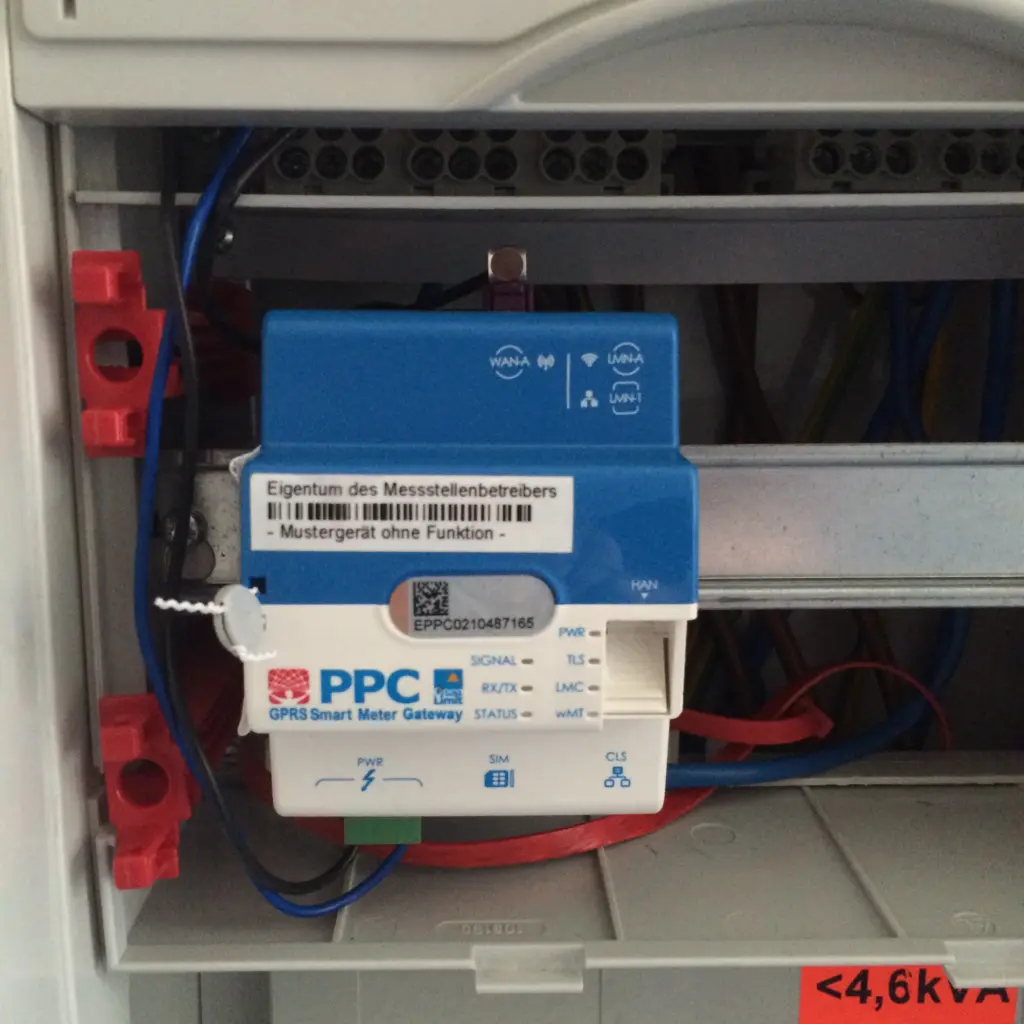
The Verbraucherzentrale draws a clear distinction. The modern metering device is a digital meter that displays consumption but does not send any data. According to the Bundesnetzagentur (German Federal Network Agency), all households are to have such a meter by 2032. The intelligent metering system, colloquially called a smart meter, consists of this meter plus a communication module, the smart meter gateway. It can send and receive data, so on-site meter reading is no longer necessary.
Who has to get one
The intelligent metering system is mandatory with an annual consumption of more than 6,000 kilowatt hours, with a photovoltaic system with a rated output of more than 7 kilowatts and with controllable consumer devices under Section 14a of the German Energy Industry Act (EnWG), such as a heat pump or wallbox. According to the Verbraucherzentrale, the average of the last three years is what counts; otherwise, the grid operator’s forecast. Below that, the metering point operator can order an installation. In that case, you cannot object.
Since January 2025, you can also request the installation yourself. It must then take place within four months. For this early installation, a one-time fee of 100 euros is considered appropriate, plus up to 30 euros a year. According to the Verbraucherzentrale, however, this is not a fixed upper limit; whether more is permitted is considered disputed.
What it may cost per year
| Case | Annual price cap, gross | Context |
|---|---|---|
| Digital meter without data transmission | 25 euros | Standard for households without a smart meter requirement |
| Smart meter at 6,000 to 10,000 kWh | 40 euros | Mandatory, allows dynamic tariffs |
| Smart meter with heat pump or wallbox | 50 euros, plus 50 euros for control | Mandatory, but lower grid fees in return |
At 10,000 to 20,000 kilowatt hours, the cap is 50 euros a year, according to the Verbraucherzentrale. If a house has several metering points, for example one for the household and one for the heat pump, the amounts are added together. The Bundesnetzagentur gives an example of 40 plus 50 plus 50 euros, a total of 140 euros a year.
These caps apply only to the locally responsible metering point operator. If other providers court you, their prices are not regulated, so read such letters carefully. You do not have to reply to them. It can get expensive if the meter cabinet has to be rebuilt. According to the Verbraucherzentrale, additional costs in the four-digit range can then arise. According to the Bundesnetzagentur, this conversion is not included in the metering fee. Ask beforehand.
How the installation works
- Notice: for the first smart meter, the responsible operator informs you at least three months in advance and points out that you may choose a different operator.
- Appointment: if someone needs to enter your home, you receive written notice at least two weeks in advance, with at least one alternative date.
- On the day itself: according to the Bundesnetzagentur, always ask to see ID. Record the old meter’s reading with a photo.
- Afterward: check your next bill for the correct metering fee.
If you want to switch operators, write to your current one with your name, address, meter number, new operator and preferred date. According to the Bundesnetzagentur, the switch itself is free of charge. After a smart meter has been installed by the responsible operator, however, this is only possible after two years.
When it pays off
With an intelligent metering system, you have access to a dynamic electricity tariff, which every supplier has been required to offer since 2025 under Section 41a of the German Energy Industry Act. The price follows the power exchange. If you charge an electric car at night or run a heat pump, you can shift a lot of consumption into cheap hours. But then you bear the full price risk yourself, the Verbraucherzentrale warns, and a dynamic tariff is not automatically the cheapest. For a small household without such devices, a good regular tariff is what counts most.
With a heat pump or wallbox, there is also a lower grid fee. How that works is explained in the guide Electricity for heat pumps and wallboxes (in German). You can find the right tariff with the guide Switching electricity providers.
The intelligent metering system also makes an exchange-price electricity tariff possible. Who it pays off for is covered in the guide Dynamic electricity tariff (in German).
For a balcony battery to release only as much power as the house currently needs, it needs a reading from the meter; optical reading heads and DIN-rail meters are explained in the guide to zero feed-in.
For gas consumption, there are separate solutions; see the guide Reading your gas meter.
Frequently asked questions
What data does the smart meter send?
Consumption values in 15-minute intervals, once a day to the metering point operator. According to the Verbraucherzentrale, only the data needed for the contract and legal obligations may be passed on. More detailed data only if you expressly agree to it in your electricity contract. The devices must be certified by the German Federal Office for Information Security.
I am a tenant. Can I choose the operator myself?
In principle, yes. However, if the landlord bundles electricity with another utility such as gas or district heating, the choice can pass to the landlord under certain conditions. According to the Verbraucherzentrale, this must not result in additional costs for you.
What does the display do for you in everyday life?
With a smart meter, you receive a free monthly statement of consumption and costs. How to check your annual bill is explained in the guide Checking your electricity bill.
My old smart meter is not certified. Do I have to keep it?
According to the Verbraucherzentrale, such a device may continue to operate for up to eight years after installation. If you want a certified device, you can withdraw your consent to the old one.
Frequently asked questions
What is the difference between a modern metering device and a smart meter?
The modern metering device is a digital meter that displays consumption but does not send any data. The intelligent metering system, colloquially called a smart meter, consists of this meter plus a smart meter gateway. It can send and receive data, so on-site meter reading is no longer necessary.
Who has to have a smart meter installed?
It is mandatory with an annual consumption of more than 6,000 kilowatt hours, with a photovoltaic system of more than 7 kilowatts and with controllable consumer devices such as a heat pump or wallbox. The average of the last three years is what counts. Below that, the metering point operator can order an installation, and you cannot object.
Can I request a smart meter myself?
Yes, since January 2025. The installation must then take place within four months. For this early installation, a one-time fee plus an annual amount is considered appropriate, but according to the Verbraucherzentrale this is not a fixed upper limit.
What additional costs can arise with a smart meter?
It gets expensive if the meter cabinet has to be rebuilt; according to the Verbraucherzentrale, additional costs in the four-digit range are then possible. According to the Bundesnetzagentur (German Federal Network Agency), this conversion is not included in the metering fee. The capped prices also apply only to the locally responsible operator; other providers are not regulated.
What data does a smart meter send?
Consumption values in 15-minute intervals, once a day to the metering point operator. According to the Verbraucherzentrale, only data needed for the contract and legal obligations may be passed on, and more detailed data only by express agreement. The devices must be certified by the German Federal Office for Information Security.
How does the installation of a smart meter work?
For the first smart meter, the operator informs you at least three months in advance. If someone needs to enter your home, you are notified at least two weeks in advance, with an alternative date. According to the Bundesnetzagentur, always ask to see ID and take a photo of the old meter's reading.
Sources
- Verbraucherzentrale: Smart meters, what you need to know about the electricity meters
- Section 41a EnWG: dynamic electricity tariffs
- Bundesnetzagentur: metering devices and meters
Where to buy
- Digitaler Zähler ohne DatenversandView at CHECK24Available in Germany: CHECK24
- Smart Meter bei 6.000 bis 10.000 kWhView at CHECK24Available in Germany: CHECK24
- Smart Meter mit Wärmepumpe oder WallboxView at CHECK24Available in Germany: CHECK24