Contents14 sections
This guide was first published in German on handgetestet.de.
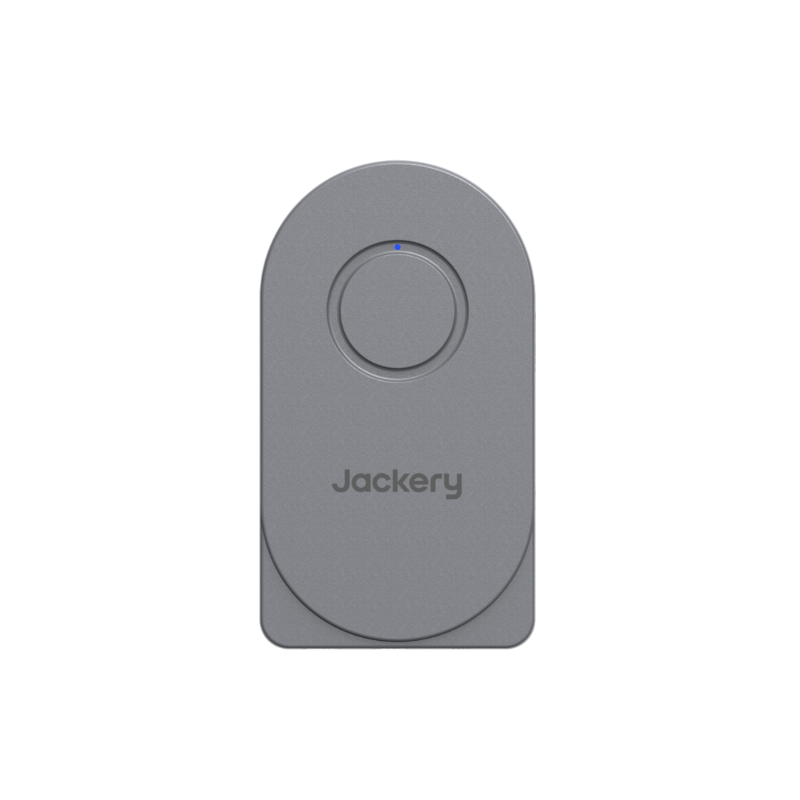
A battery that does not know what is currently running in the house is guessing. It then discharges a fixed output and, at night, sends part of it into the grid, or it still lets the grid supply the electric kettle. Only a meter at the grid connection turns this into demand-based feed-in. For a Jackery SolarVault 3 on a digital meter with an infrared interface, we recommend the Jackery Smart Meter D0 Reader because it does not require an electrician; if the interface is missing, the Smart Meter in the meter cabinet remains the option.
What does zero export actually mean?
It usually does not mean a strict ban on feeding power into the grid, but a control scheme. The battery discharges exactly as much as the house is drawing at that moment, so that as little as possible flows in either direction at the meter. An example makes the difference clear. If you set the battery to a fixed 200 watts and the house needs 120 watts at night, 80 watts go into the grid. Hour after hour. If someone switches on the coffee machine during the day, the output stays at 200 watts, and the grid supplies the rest.
With a meter, the battery follows the load. Jackery states that the HomePower 2000 Ultra adjusts within 3 seconds to an accuracy of 10 watts. You still never get all the way to zero: when an appliance switches off, battery power flows out for a moment until the control catches up.
Do I even have to register a zero-export system?
Yes. The German Federal Network Agency (Bundesnetzagentur) makes it clear that systems that feed into the household grid, and whose feed-in into the public grid is technically prevented, are indirectly connected to the grid and must be registered. Only a system that is permanently and technically disconnected from the grid counts as an off-grid system. This also applies to the battery itself, which is entered in the German Core Energy Market Data Register (Marktstammdatenregister), within one month of commissioning. According to the German consumer advice center (Verbraucherzentrale), the battery must also be reported to the grid operator, even on a balcony solar system; some grid operators waive this, and a quick inquiry will clarify it.
And the meter? According to the Federal Network Agency, the metering point operator installs a bidirectional meter whenever feed-in is not permanently and at all times technically ruled out. A battery control that only aims for zero as far as possible does not rule it out at all times. A meter replacement is therefore likely; ask your metering point operator.
Reading head on the meter or meter in the distribution board?
That depends on the meter. A reading head sits on the outside of the optical interface and reads what the meter measures anyway. This requires a modern metering device with a digital display. It does not work with the old rotating-disc meter, Tibber writes about its own reading head. Often the interface first has to be unlocked: in the meter menu, INF is then set to ON and PIN to OFF, and the four-digit PIN for this is issued by the metering point operator.
The meter in the distribution board works differently. It sits on the DIN rail, takes its voltage from the phases and measures current via transformers clamped around the conductors. This is more accurate and independent of the meter model, but it means working on live parts. In the manual for the Pro 3EM, Shelly states that installation and connection may only be carried out by a qualified electrician.
Does the smart meter gateway help me with this?
Only indirectly. The German Metering Point Operation Act (Messstellenbetriebsgesetz) distinguishes the modern metering device, meaning the digital meter, from the intelligent metering system, in which a smart meter gateway sends the data to the market participants. According to the Federal Network Agency, households with an annual consumption of more than 6,000 kWh will receive one in any case. None of the devices in our table reads the gateway; they work with the optical interface or their own current transformers. Tibber describes its reading head as suitable for both types of meter. What the gateway costs and who gets one is explained in our smart meter guide (in German).
Single-phase or three-phase measurement?
According to Jackery, a three-phase connection is common in single-family homes. For the HomePower 2000 Ultra, the manufacturer recommends the Shelly Pro EM 50 for small apartments with a single-phase connection and the Pro 3EM for three-phase houses. If you only measure one phase in the house, you may not see the refrigerator if it is connected to another one.
Five meters for battery control
| Model | Installation | Measurement according to the manufacturer | Suitable for |
|---|---|---|---|
| Jackery Smart Meter D0 Reader | Reading head, magnetic on the meter | via infrared interface | Jackery SolarVault 3 |
| Jackery Smart Meter | DIN rail, one module slot | Household consumption in real time | Jackery SolarVault 3 only |
| Shelly Pro 3EM 120A | DIN rail, three current transformers | 3 phases up to 120 A, ±1 % | Jackery HomePower 2000 Ultra, home automation |
| Shelly Pro EM 50 | DIN rail, two current transformers | 1 phase, 2 channels up to 50 A | HomePower 2000 Ultra in an apartment |
| Shelly 3EM-63 Gen3 | above or below the circuit breaker | 3 phases up to 63 A, ±1 % | Home automation with little space |
Jackery Smart Meter D0 Reader
According to Jackery, the reading head is attached magnetically to the infrared interface and transmits to the battery via 2.4 GHz Wi-Fi or Bluetooth; an external antenna is meant to make the wireless connection more stable. No electrician, no power shutdown. The limit is set by the meter: if the interface is locked or not present, the head is useless. Clarify this before you order.
Jackery Smart Meter
The DIN-rail counterpart, which according to Jackery is only compatible with the SolarVault 3 series. It needs one module slot and has a wireless range of up to 30 meters in the house. Jackery also states that it detects power outages in under 3 seconds. Because it is connected to the phases in the meter cabinet, installation belongs in the hands of a qualified electrician.
Shelly Pro 3EM 120A
A three-phase meter for the DIN rail, listed by Jackery as an accessory for the HomePower 2000 Ultra. It measures three phases and the neutral conductor, according to Shelly stores at least 45 days of data at one-minute intervals, and speaks MQTT, HTTP and WebSocket. That also makes it suitable for Home Assistant and other control systems. It draws less than 3 watts.
Shelly Pro EM 50
The single-phase version with two channels. One channel measures the grid connection, the second, for example, the generation. Shelly includes a potential-free relay that can switch a contactor. For a three-phase house, it is the wrong choice.
Shelly 3EM-63 Gen3
Small enough to sit above or below a circuit breaker when there is no room left on the rail. It measures up to 63 amps per phase and keeps data for seven days. Shelly does not say which battery it works with directly. Check your battery manufacturer’s list; otherwise it remains a pure energy meter.
Isn’t a Tibber Pulse enough?
For display, yes. According to Tibber, the Pulse sends consumption values to the app every two seconds. However, the associated bridge can only control hybrid inverters from certain brands; Tibber names KOSTAL, SAJ, Solis and SolaX. It does not control a balcony battery. If you already use a dynamic electricity tariff (in German), it still gives you a good view of the load curve.
Which meter for which battery?
- SolarVault 3 and a digital meter with a free infrared interface: Jackery Smart Meter D0 Reader.
- SolarVault 3, but a Ferraris (rotating-disc) meter or a locked interface: Jackery Smart Meter, installed by an electrician.
- HomePower 2000 Ultra in a house with three phases: Shelly Pro 3EM 120A.
- HomePower 2000 Ultra in an apartment with one phase: Shelly Pro EM 50.
- Your own control system, full distribution board: Shelly 3EM-63 Gen3.
Still looking for the battery itself? Then start with our buying guide for balcony solar systems with battery.
Which batteries can be coupled to an existing system is compared in the guide Retrofitting a home battery.
What needs to be entered in the register is explained step by step in the guide Registering a balcony solar system.
What the control looks like on a specific device is shown in the guide to the Jackery HomePower 2000 Ultra.
Frequently asked questions
What does zero export mean for a battery?
It usually does not mean a strict ban on feeding power into the grid, but a control scheme: the battery discharges as much as the house is currently drawing. You still never get all the way to zero. When an appliance switches off, battery power flows into the grid for a moment until the control catches up.
Does a zero-export system have to be registered?
According to the German Federal Network Agency (Bundesnetzagentur), yes, because such systems are indirectly connected to the grid. The battery is also entered in the German Core Energy Market Data Register (Marktstammdatenregister) within one month of commissioning. According to the German consumer advice center (Verbraucherzentrale), it must also be reported to the grid operator, though some grid operators waive this.
What is the difference between a reading head and a meter in the distribution board?
A reading head sits on the outside of a digital meter's optical interface and reads its values; it does not work with a rotating-disc meter. The DIN-rail meter measures via current transformers and is independent of the meter model, but according to Shelly it belongs in the hands of a qualified electrician.
How do you unlock the infrared interface on the meter?
In the meter menu, INF must be set to ON and PIN to OFF. The four-digit PIN for this is issued by the metering point operator. If the interface is locked or not present, a reading head is useless, so clarify this before ordering.
Do I need a single-phase or three-phase meter?
According to Jackery, a three-phase connection is common in single-family homes, and for that the manufacturer recommends the Shelly Pro 3EM for the HomePower 2000 Ultra. For small apartments with one phase, it names the Shelly Pro EM 50. If you only measure one phase, a refrigerator on another phase, for example, goes unnoticed.
Is a Tibber Pulse enough to control a battery?
It is enough to display consumption; according to Tibber, it sends values to the app every two seconds. However, the bridge can only control hybrid inverters from certain brands such as KOSTAL, SAJ, Solis and SolaX. It does not control a balcony battery.
Sources
- German Federal Network Agency: Registration requirement in the Marktstammdatenregister, off-grid systems
- German Federal Network Agency: Solar systems, zero-export systems and meter replacement
- German Federal Network Agency: Modern metering devices and intelligent metering systems
- Verbraucherzentrale (German consumer advice center): Plug-in solar and battery storage
- Shelly: Pro 3EM, technical data
- Shelly: Pro EM-50, technical data
- Shelly: 3EM-63 Gen3, technical data
- Tibber: Pulse IR
- Product information from Jackery on the Smart Meter, Smart Meter D0 Reader, Shelly accessories and HomePower 2000 Ultra
Where to buy
- Jackery Smart Meter D0 ReaderView at JackeryAvailable in Germany: JackeryCheck price at Amazon.deCheck price at Amazon.co.ukCheck price at Amazon.nlCheck price at Amazon.com.beCheck price at Amazon.frCheck price at Amazon.itCheck price at Amazon.esCheck price at Amazon.plCheck price at Amazon.seAvailable in Germany: Amazon.de
- Jackery Smart MeterView at JackeryAvailable in Germany: JackeryCheck price at Amazon.deCheck price at Amazon.co.ukCheck price at Amazon.nlCheck price at Amazon.com.beCheck price at Amazon.frCheck price at Amazon.itCheck price at Amazon.esCheck price at Amazon.plCheck price at Amazon.seAvailable in Germany: Amazon.de
- Shelly Pro 3EM 120AView at JackeryAvailable in Germany: JackeryCheck price at Amazon.deCheck price at Amazon.co.ukCheck price at Amazon.nlCheck price at Amazon.com.beCheck price at Amazon.frCheck price at Amazon.itCheck price at Amazon.esCheck price at Amazon.plCheck price at Amazon.seAvailable in Germany: Amazon.de
- Shelly Pro EM 50View at JackeryAvailable in Germany: JackeryCheck price at Amazon.deCheck price at Amazon.co.ukCheck price at Amazon.nlCheck price at Amazon.com.beCheck price at Amazon.frCheck price at Amazon.itCheck price at Amazon.esCheck price at Amazon.plCheck price at Amazon.seAvailable in Germany: Amazon.de
- Shelly 3EM-63 Gen3Check price at Amazon.deCheck price at Amazon.co.ukCheck price at Amazon.nlCheck price at Amazon.com.beCheck price at Amazon.frCheck price at Amazon.itCheck price at Amazon.esCheck price at Amazon.plCheck price at Amazon.seAvailable in Germany: Amazon.de