Contents13 sections
This guide was first published in German on handgetestet.de.
When you charge an e-bike from a power station, the watt-hour is what counts, not the watt. A charger with 4 amps draws about 150 to 220 watts, which any station with a 230-volt outlet rated at 500 watts or more can handle. For two bikes, we therefore consider the BLUETTI AC180P the right choice: 1,440 watt-hours, top of the ADAC comparison from 2025 with a grade of 2.0 (German grading scale, lower is better), and enough to fill two 500 Wh batteries once each.
How much power station does one battery charge take?
The label shows the gross capacity. The ADAC, Germany’s largest automobile club, measured it and found 10 to 15 percent less in everyday use. After that, the charger loses a bit more, for which we assume 10 percent. That is an assumption. The magazine CamperVans calculates 20 percent for the path from the leisure battery through the inverter and charger; there, 500 Wh in the battery cost 600 Wh from the leisure battery.
Our rule of thumb sits below that, with a margin: rated capacity times 0.75 gives what reaches the e-bike battery. A station with 1,024 Wh thus puts about 770 Wh into the bike. That is enough for one and a half charges of a 500 Wh battery, but for exactly one of a 750 Wh battery. And the large batteries are the point at which buying decisions tip.
So calculate with your own value; it is printed on the battery. For 625 Wh, you need about 830 Wh of rated capacity, for 750 Wh exactly 1,000. Two bikes double that. If you only top up from 20 to 80 percent, which CamperVans considers easier on the battery anyway, a 750 Wh battery gets by with 450 Wh in the battery, meaning 600 Wh at the station. How to calculate such values for other devices is shown in our guide to the runtime of a power station.
Six stations, calculated in battery charges
| Model | Capacity, continuous output | Weight | Charges 500 / 750 Wh | Best for |
|---|---|---|---|---|
| BLUETTI AC180P | 1,440 Wh, 1,800 W | 17 kg at most | 2.2 / 1.4 | two bikes, car nearby |
| EcoFlow DELTA 3 Plus | 1,024 Wh, 1,800 W | 12.5 kg | 1.5 / 1.0 | one bike, carried often |
| Anker SOLIX C800 Plus | 768 Wh, 1,200 W | 10.9 kg | 1.2 / 0.8 | one bike, 500 Wh battery |
| Jackery Explorer 500 v2 | 512 Wh, 500 W | 5.7 kg | 0.8 / 0.5 | top-up at midday |
| Jackery Explorer 1000 Plus v2 | 1,024 Wh, 1,800 W | 10.8 kg | 1.5 / 1.0 | one bike, expandable later |
| Jackery Explorer 2000 Plus v2 | 2,048 Wh, 2,400 W | 19.1 kg | 3.1 / 2.0 | two large batteries, motorhome |
The charges are our calculation with a factor of 0.75, not a manufacturer figure. For the weight of the AC180P, we give the upper limit that the ADAC states for its test field.
Is the charger compatible with the station’s outlet?
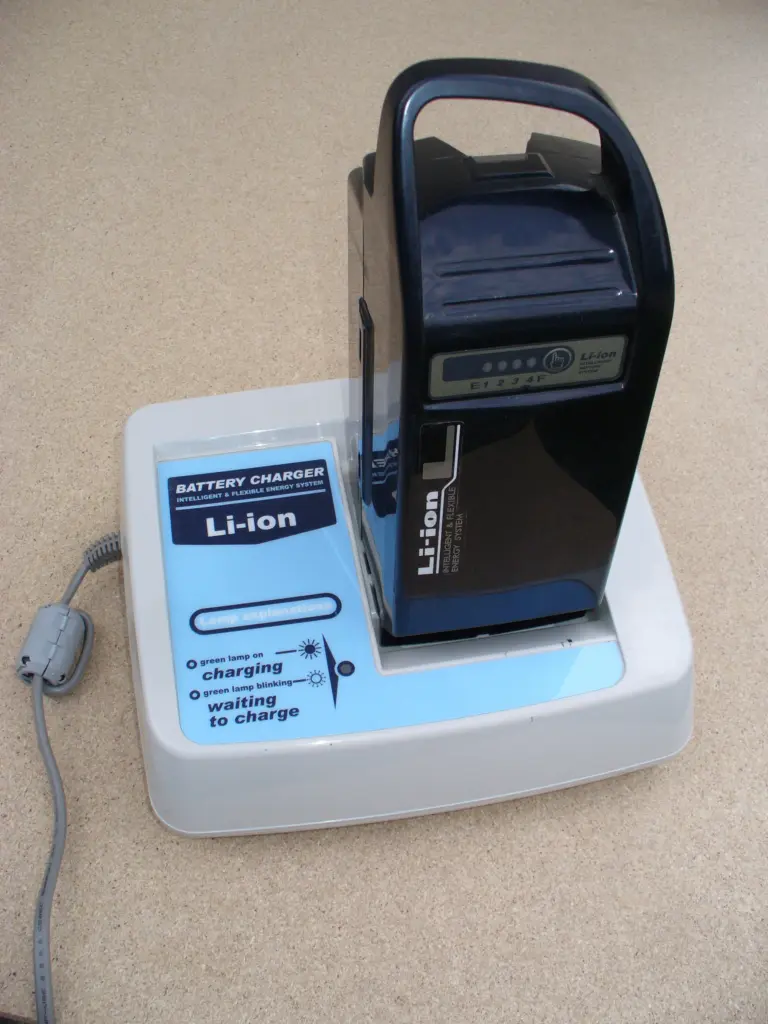
Usually yes, and output is the smallest concern. According to retailer information, the Bosch 4A Charger delivers a maximum of 4 amps and fills a PowerTube 750 in about six hours. At 36 volts, that is 144 watts at the output. A blog for mountain bikers calculates 221 watts for a 48-volt system with 4 amps and 15 percent loss. Check the value on your charger’s rating plate and you will know exactly. Two chargers side by side fit even on 500 watts.
The waveform is trickier. E-bikes charge with the original charger, and it expects 230 volts. The magazine allmountain.ch explicitly calls for a pure sine wave, and Jackery states one for the Explorer 500 v2. Inverters with a modified sine wave are cheaper; our guide to the 12 V to 230 V inverter explains the difference.
There is a trap on the shelf next to it. The Explorer 300D looks like the handy solution, but according to Jackery it only has USB-C, USB-A and a 12-volt socket. Without an AC outlet, the charger stays dark.
The silent loss overnight
The ADAC measured that a switched-on inverter can use as much as 30 watts by itself. That sounds like little. But if the outlet stays on for ten hours after charging ends, 300 Wh are gone, more than half a charge of a 500 Wh battery. Two simple habits follow from this.
Charge two bikes at the same time instead of one after the other, if you have two chargers with you. The inverter then runs once for six hours instead of twice, which at these 30 watts saves about 180 Wh. And switch the outlet off as soon as the battery is full. Some stations help with that: according to Jackery, the Explorer 500 v2 switches itself off in energy-saving mode after six hours below 25 watts.
Campsite, motorhome, solar: where does the top-up come from?
With a hookup post at the campsite, you do not need a station. The charger goes into the outlet, done. The power station is for pitches without a hookup, for the vacation home without an outdoor outlet at the shed, or for the lunch break at the trailhead parking lot.
In a motorhome, it is worth looking at the leisure battery. CamperVans shows that two 500 Wh batteries take almost 80 percent out of a 120 Ah lithium battery. A station separates this load from the vehicle electrical system, which our guide to the power station in a motorhome covers in more detail. Recharging from the car socket does take time, though. For the 1000 Plus v2, the retailer GreenDrive states about 12 hours, for the 2000 Plus v2 about 24, and with Jackery’s DC-DC charger 2 hours 35 minutes for the smaller model.
A warning belongs here. In 2025, the ADAC downgraded the Jackery Explorer 1000 v2 to „poor,“ because its two DC inputs are not decoupled and the 12-volt vehicle electrical system can be damaged when charging from solar and the car at the same time. That is why the model is not in our table. We know of no such test for the Plus v2 series. So with any station, never charge from solar and the car socket at the same time.
Going directly from the solar panel into the e-bike battery does not work; the energy has to go into storage first. For planning, we assume that a foldable 200-watt panel delivers half its rated output for six hours on a good day, so 600 Wh. About 450 Wh of that reaches the bike. One panel thus covers just under one battery a day, considerably less when it is cloudy. Which size makes sense is covered in our guide to the foldable solar panel.
BLUETTI AC180P
Top of the ADAC test, with good handling, the most extensive features in the field and cables for the car battery and solar in the box. Capacity is the argument here, because it covers two bikes. The fan was noticeably loud at maximum load, which hardly matters at a charging draw of about 200 watts. It is heavy, and it was the most expensive device in the comparison. For a single bike, you are paying for reserves you will rarely need.
EcoFlow DELTA 3 Plus
Grade 2.1 from the ADAC, quiet fan, lots of ports. On paper, it fills a 750 Wh battery once. A solar cable was missing from the box, and the ADAC found the buttons a bit fiddly.
Anker SOLIX C800 Plus
Light and compact according to the ADAC, with car and solar cables, and also rated well. The 1,200 watts are easily enough for charging. With a 750 Wh battery, though, it gets tight: about 80 percent goes in, and for two bikes it is too small.
Jackery Explorer 500 v2
At 5.7 kilograms, the only station here that you carry to the picnic table without a second thought, and the affordable class in Jackery’s range. It does not quite fill an empty 500 Wh battery. It is enough for about 380 Wh at midday, and with a half-empty battery that is already a lot. We know of no independent measurement for this device.
Jackery Explorer 1000 Plus v2
On paper almost level with the DELTA 3 Plus and, according to the retailer, lighter at 10.8 kilograms. If you want to start small, you can connect additional batteries later, according to GreenDrive; more on this in our guide to the expansion battery (in German). We do not have an independent test, which is why it is not at the top.
Jackery Explorer 2000 Plus v2
Filling two 750 Wh batteries once each is something only this device manages here. At 19.1 kilograms, it stays in the vehicle. Here too, the data are based on retailer information.
One question, three answers
- Two bikes with 500 to 625 Wh, car nearby: BLUETTI AC180P.
- Two bikes with 750 Wh, plus a motorhome: Jackery Explorer 2000 Plus v2, if retailer data are enough for you.
- One bike, station carried often: EcoFlow DELTA 3 Plus or, with a 500 Wh battery, the Anker SOLIX C800 Plus.
- Only a top-up for the afternoon: Jackery Explorer 500 v2.
For care of the batteries themselves, read our guide to the e-bike battery.
Frequently asked questions
How many times can a power station charge an e-bike battery?
As a rule of thumb, rated capacity times 0.75 gives what reaches the battery. A station with 1,024 Wh puts about 770 Wh into the bike, so one and a half charges of a 500 Wh battery or exactly one of a 750 Wh battery. For 750 Wh in the battery, you need about 1,000 Wh of rated capacity; two bikes double that.
Is the e-bike charger compatible with a power station?
Usually yes, and output is the smallest concern. The Bosch 4A Charger needs about 144 watts at the output, so two chargers fit even on 500 watts. The waveform matters more: the original charger expects 230 volts, and allmountain.ch calls for a pure sine wave. A station without an AC outlet, such as the Explorer 300D, is out.
How do you avoid losses when charging overnight?
According to the ADAC, a switched-on inverter can use as much as 30 watts. If the outlet stays on for ten hours after charging ends, 300 Wh are gone. Charge two bikes at the same time instead of one after the other, and switch the outlet off as soon as the battery is full.
Can you charge e-bikes from a solar panel via a power station?
Yes, with the station as storage; directly into the bike does not work. Our assumption: a foldable 200-watt panel delivers 600 Wh on a good day, and about 450 Wh reach the bike. That covers just under one battery a day, considerably less when it is cloudy.
What should you watch for when charging the power station in a motorhome?
Never charge from solar and the car socket at the same time. In 2025, the ADAC downgraded the Jackery Explorer 1000 v2 because DC inputs that are not decoupled can damage the 12-volt vehicle electrical system. Recharging from the car socket takes time: for the 1000 Plus v2, GreenDrive states about 12 hours, and 2 hours 35 minutes with a DC-DC charger.
Do you need a power station for your e-bike at a campsite?
Not with a hookup post; the charger goes straight into the outlet. The station is for pitches without a hookup, for the vacation home without an outdoor outlet or for the lunch break at the trailhead parking lot. In a motorhome, it also takes the load off the leisure battery.
Sources
- ADAC: Portable power stations tested (2025)
- CamperVans magazine: Charging e-bike batteries in the camper on the road
- allmountain.ch: Charging an e-bike battery in a motorhome
- MHW Bike-House (German retailer): Bosch 4A Charger (retailer information)
- Anker: SOLIX C800 Plus
- GreenDrive: Jackery Explorer 1000 Plus v2 (retailer information)
- GreenDrive: Jackery Explorer 2000 Plus v2 (retailer information)
- Product information from Jackery on the Explorer 500 v2 and Explorer 300D
Where to buy
- BLUETTI AC180PCheck price at Amazon.deAvailable in Germany: Amazon.de
- Jackery Explorer 500 v2View at JackeryAvailable in Germany: JackeryCheck price at Amazon.deAvailable in Germany: Amazon.de
- EcoFlow DELTA 3 PlusCheck price at Amazon.deAvailable in Germany: Amazon.de
- Anker SOLIX C800 PlusCheck price at Amazon.deAvailable in Germany: Amazon.de
- Jackery Explorer 1000 Plus v2View at JackeryAvailable in Germany: JackeryCheck price at Amazon.deAvailable in Germany: Amazon.de
- Jackery Explorer 2000 Plus v2View at JackeryAvailable in Germany: JackeryCheck price at Amazon.deAvailable in Germany: Amazon.de