Contents12 sections
This guide was first published in German on handgetestet.de.
If you are only buying a single filter, go for a polarizer. It is the only one whose effect cannot be recreated on a computer: reflections on water and glass disappear, and a pale sky gains depth. Our pick for this is the Hoya HD Nano MkII CIR-PL, because its coating and price class are a good match. Only after that is it worth looking at ND filters, and there the brand matters less than whether you shoot video or stills.
What a filter in front of the lens still has to do today
Color filters, soft-focus filters, star filters: editing software has taken over much of that. Three types have survived because they do something physical that no software can.
The polarizer only lets through light vibrating in one direction. When you rotate it, reflections on foliage, paint and water surfaces disappear, and the blue of the sky becomes richer, most strongly at a right angle to the sun. For cameras with autofocus, the circular design (CIR-PL) is the standard. It always costs some light. For its high-transmission polarizers, B+W states a filter factor of 2 to 3, or about 1 to 1.5 stops.
The ND filter (neutral density) darkens neutrally. Its strength is usually printed on the ring as a factor: ND8 is 3 stops, ND64 is 6, ND1000 is 10. With ND1000, 1/60 second becomes an exposure of around 17 seconds. That is exactly how you get the silky waterfall or the deserted pedestrian street. When shooting video, you need ND for a different reason: if you shoot at 25 frames per second and 1/50 second and still want to stay wide open, you cannot manage in sunlight without darkening the image.
That leaves the UV or clear filter. On a digital camera, it hardly changes the image visibly. It is a protective glass, nothing more. On the beach, in sea spray or with sand in the wind, that has its place; in the living room, not so much. A cheap, poorly coated glass in front of an expensive lens, on the other hand, causes flare in backlight. If you use a protective filter, make it a properly coated one.
Screw-in, slot-in, magnetic: three ways onto the lens
Before you choose a model, look at the front of your lenses. That is where the filter thread is marked, for example „⌀ 67“. If you own several lenses with 58, 67 and 77 millimeters, buy the filter for the largest thread and use adapter rings (step-up) for the smaller ones. A good 77 mm polarizer plus two rings costs less than three individual filters.
Screw-in filters are light and quick to mount. They only become a nuisance when you want to switch between ND8 and ND64 outdoors and are fiddling with the thread with cold fingers. Magnetic systems such as the Kase Revolution system solve exactly that: a ring stays on the lens, the filters attach by magnet and, according to the manufacturer, can be stacked. Slot-in filter systems with 100 mm wide plates (Haida M10-II, NiSi V7) are the choice for landscapes. Only with these can you slide graduated filters freely up and down, so the bright sky gets darker but the foreground does not. In return, you carry more weight and a bulkier kit.
Drones have their own rules, because every gram there puts a load on the gimbal. We have a separate guide on ND filters for drones (in German).
Seven filters and systems compared
| Model | Type | Key specs according to manufacturer or retailer | Best for |
|---|---|---|---|
| Hoya HD Nano MkII CIR-PL | Polarizer, screw-in thread | 16 coating layers, water- and oil-repellent | First filter for almost any camera |
| B+W Master HTC Käsemann CIR-PL | Polarizer, screw-in thread | MRC nano on both sides, brass ring, filter factor 2 to 3 | Lots of wide-angle work, high demands on the ring |
| B+W Master UV-Haze MRC nano | Protective filter | Brass ring, 30.5 to 95 mm | Beach, dust, sea spray |
| K&F Concept Nano-X ND2-400 | Variable ND | 1 to 9 stops, 28-layer coating (retailer information) | Getting started with ND for video |
| NiSi Swift True Color VND 1-5 | Variable ND with clip-on filter | 1 to 5 stops, up to 9 stops with ND16 | Video in changing light |
| Kase KW Revolution-Set | Magnetic filter | Screw-in ring on the lens, filters attach by magnet | Quick changes on the go |
| Haida M10-II | Slot-in filter system 100 mm | Drop-in polarizer, adapters 67 to 82 mm in the kits | Landscapes with graduated filters |
Hoya HD Nano MkII CIR-PL
For this polarizer, Hoya specifies 16 anti-reflective layers and a very hard nano coating that is said to repel water and grease. That matters more outdoors than you might think: a drop on a poorly coated filter stays behind as a streak. The filter sits in the upper mid-range and is available on Amazon in the common sizes from 49 to 82 mm.
B+W Master HTC Käsemann
For this Käsemann polarizer in the Master line, B+W relies on MRC nano coating on both sides, a brass ring and a rotating mechanism without grease. It is, however, more expensive than the Hoya. If you mostly work with ultra-wide-angle lenses and keep filters for years, you get the sturdier ring for your money. The same filter is even slimmer in the T-Pro line, which B+W advertises as the thinnest polarizer made in Germany.
B+W Master UV-Haze
A protective glass with the same coating and brass ring as the polarizers in the series. If you only want protection and do not need UV, you will also find the 007 clear glass in the Master range. One of the two is enough. Stacking two protective glasses makes no sense.
K&F Concept Nano-X ND2-400
Variable ND filters consist of two polarizing layers that you rotate against each other. According to the Amazon listing, the K&F Nano-X covers 1 to 9 stops and is listed there in sizes from 37 to 95 mm. It costs considerably less than the NiSi kits, making it the affordable choice for anyone who first wants to find out whether shooting video with ND is their thing. At the very dark end, variable filters like this tend to produce a dark cross in the image due to their design. So it is better to plan with the middle range.
NiSi Swift True Color VND 1-5
NiSi takes the opposite approach and limits the variable part to 1 to 5 stops, where the colors stay neutral, according to the manufacturer. If you need more, you clip the included ND16 onto the front and get 5 to 9 stops. According to retailer information, with one clip-on filter attached, it does not vignette down to a focal length of 18 mm. The kit is in the upper price range. For pure stills photographers, it is overkill; for videographers who switch between forest shade and open slopes on a hike, it is the more convenient solution.
Kase KW Revolution magnetic system
With Kase, a thin ring is screwed into the lens’s fine thread, and after that all filters attach by magnet. On Amazon, the system comes in various sets, for example with a polarizer, ND8 and ND64. Changing filters is faster than with any screw-in filter. The drawback: you tie yourself to one system, and according to the manufacturer, smaller lenses also need a step-up adapter.
Haida M10-II
A holder for 100 mm wide slot-in filters, into which Haida can also fit round drop-in filters such as a polarizer. According to the manufacturer, the kits include adapter rings from 67 to 82 mm. For long exposures by the sea or in the mountains, a system like this is the most flexible tool. For traveling light, it is overkill. Without a stable tripod, it makes little sense anyway; tips on that are in our guide to the travel tripod.
How we would decide
- If you photograph travel, cities and landscapes without a tripod, a polarizer in the largest thread of your lenses is enough, for example the Hoya HD Nano MkII.
- If you work a lot with ultra-wide-angle lenses or want to use the filter for ten years, the B+W Master HTC is worth it.
- For your first videos with the aperture wide open, the K&F Nano-X will do. If you shoot regularly, you will have less trouble with color casts with the NiSi Swift.
- Long exposures and graduated filters call for a slot-in system such as the Haida M10-II; quick changes without screwing call for the Kase magnetic system.
- You only need a UV filter if the lens is regularly exposed to sand, salt water or flying sparks.
No suitable camera yet? Our guide to the mirrorless camera (in German) helps you choose, and keeps the filter thread of the lenses in view at the same time.
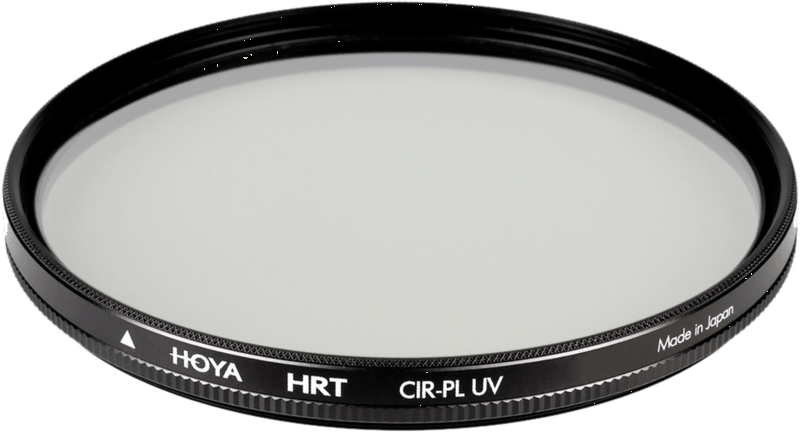
According to Hoya, the Hoya HRT CIR-PL UV combines a polarizer and UV blocking in an aluminum ring, has a filter factor of 2.2 and, according to the manufacturer, lets through about one third of a stop more light than a typical circular polarizer.
How a fast prime lens performs on the Lumix S1 is shown in our hands-on check of the Sigma 35mm F1.4 DG HSM Art.
Frequently asked questions
Which lens filter is the most important?
The polarizer, because its effect cannot be recreated on a computer. When you rotate it, reflections on foliage, paint and water disappear and the blue of the sky becomes richer, most strongly at a right angle to the sun. For cameras with autofocus, the circular CIR-PL design is standard. It always costs some light.
What do ND8, ND64 and ND1000 mean?
The number is the factor by which the ND filter darkens. ND8 equals 3 stops, ND64 is 6, ND1000 is 10. With ND1000, 1/60 second turns into an exposure of around 17 seconds, which is how you get silky water or empty pedestrian streets. When shooting video, ND helps you stay wide open in sunlight.
Do you need a UV filter on a digital camera?
Usually not. On a digital camera, it hardly changes the image visibly; it is a protective glass. On the beach, in sea spray or with sand in the wind, that has its place. A cheap, poorly coated glass, on the other hand, causes flare in backlight. If you use a protective filter, make it a properly coated one, and never stack two.
Which filter size should you buy for several lenses?
The filter thread is marked on the front of the lens, for example "⌀ 67". If you have several lenses with 58, 67 and 77 millimeters, buy the filter for the largest thread and use step-up rings for the smaller ones. A good 77 mm polarizer with two rings costs less than three individual filters.
What is the drawback of a variable ND filter?
Variable ND filters consist of two polarizing layers that are rotated against each other. At the very dark end, the design tends to produce a dark cross in the image, so it is better to plan with the middle range. That is why NiSi limits the variable part of the Swift to 1 to 5 stops and includes a clip-on ND16 for more.
Screw-in filter, magnetic filter or slot-in filter system?
Screw-in filters are light, but changing them outdoors is tedious. Magnetic systems such as the Kase Revolution let you swap filters quickly by magnet, but tie you to one system. Slot-in filter systems with 100 mm wide plates, such as the Haida M10-II, allow sliding graduated filters for landscapes, but add weight and bulk.
Sources
- Hoya: HD nano MkII and other filter series
- Schneider-Kreuznach: B+W filter lines Basic and Master
- B+W: Press release on the HTC Käsemann polarizer (PDF)
- Kase: KW Revolution Entry Set
- Haida: M10-II Filter Holder System
- Foto Erhardt (German retailer, retailer information): NiSi Swift System
- Hoya HRT polarizing filter with UV coating 67 mm: product information
Where to buy
- Hoya HD Nano MkII CIR-PLCheck price at Amazon.deCheck price at Amazon.co.ukCheck price at Amazon.nlCheck price at Amazon.com.beCheck price at Amazon.frCheck price at Amazon.itCheck price at Amazon.esCheck price at Amazon.plCheck price at Amazon.seAvailable in Germany: Amazon.de
- B+W Master HTC Käsemann CIR-PLCheck price at Amazon.deCheck price at Amazon.co.ukCheck price at Amazon.nlCheck price at Amazon.com.beCheck price at Amazon.frCheck price at Amazon.itCheck price at Amazon.esCheck price at Amazon.plCheck price at Amazon.seAvailable in Germany: Amazon.de
- B+W Master UV-Haze MRC nanoCheck price at Amazon.deCheck price at Amazon.co.ukCheck price at Amazon.nlCheck price at Amazon.com.beCheck price at Amazon.frCheck price at Amazon.itCheck price at Amazon.esCheck price at Amazon.plCheck price at Amazon.seAvailable in Germany: Amazon.de
- K&F Concept Nano-X ND2-400Check price at Amazon.deCheck price at Amazon.co.ukCheck price at Amazon.nlCheck price at Amazon.com.beCheck price at Amazon.frCheck price at Amazon.itCheck price at Amazon.esCheck price at Amazon.plCheck price at Amazon.seAvailable in Germany: Amazon.de
- NiSi Swift True Color VND KitCheck price at Amazon.deCheck price at Amazon.co.ukCheck price at Amazon.nlCheck price at Amazon.com.beCheck price at Amazon.frCheck price at Amazon.itCheck price at Amazon.esCheck price at Amazon.plCheck price at Amazon.seAvailable in Germany: Amazon.de
- Kase KW Revolution-SetCheck price at Amazon.deCheck price at Amazon.co.ukCheck price at Amazon.nlCheck price at Amazon.com.beCheck price at Amazon.frCheck price at Amazon.itCheck price at Amazon.esCheck price at Amazon.plCheck price at Amazon.seAvailable in Germany: Amazon.de
- Haida M10-II FilterhalterCheck price at Amazon.deCheck price at Amazon.co.ukCheck price at Amazon.nlCheck price at Amazon.com.beCheck price at Amazon.frCheck price at Amazon.itCheck price at Amazon.esCheck price at Amazon.plCheck price at Amazon.seAvailable in Germany: Amazon.de
- Hoya HRT Polarisationsfilter und UV-Beschichtung 67 mmView at CoolblueAvailable in Germany: Coolblue