Contents13 sections
This guide was first published in German on handgetestet.de.
What decides how a recording sounds is, first of all, the room. Only then comes the microphone. If you speak in an ordinary living space, you are better off with a dynamic model, because it picks up much less room sound and background noise. A large-diaphragm condenser microphone only plays to its strengths in a quiet, treated room or a vocal booth.
That is what our comparison test of the Shure SM7B and Neumann TLM 103 showed. We assess the remaining models based on manufacturer specs.
Clap your hands once
If it echoes, you already have your answer. In our comparison of the Shure SM7B and Neumann TLM 103, the Neumann sounded clearly better in a treated room. In an ordinary, echoey living space, the picture flipped. While the dynamic SM7B largely blocked out reverb and background noise, the sensitive condenser microphone simply picked up everything.
If you do not have a quiet room, you can recreate one to some extent with a head booth. How well that works is shown in our review of the Vocal Head Booth.
USB, XLR or both?
- USB: The microphone connects directly to a computer or tablet. No further equipment is needed; getting started hardly gets easier.
- XLR: Here, an audio interface or mixer is a must. In return, the setup grows with you and fits into any studio.
- Both: Several current models have USB-C and XLR. So start on the computer and switch to an interface later.
Five microphones, two of them from our comparison test
| Type | Connection | Best for | Our source | |
|---|---|---|---|---|
| Shure SM7B | dynamic | XLR | Podcasts and speech in a normal room, with a powerful preamp | our own comparison test |
| Shure SM7dB | dynamic, with built-in preamp | XLR (needs phantom power) | like the SM7B, but also on basic interfaces | researched |
| Shure MV7+ | dynamic | USB-C and XLR | Starting on a computer, moving to an interface later | researched |
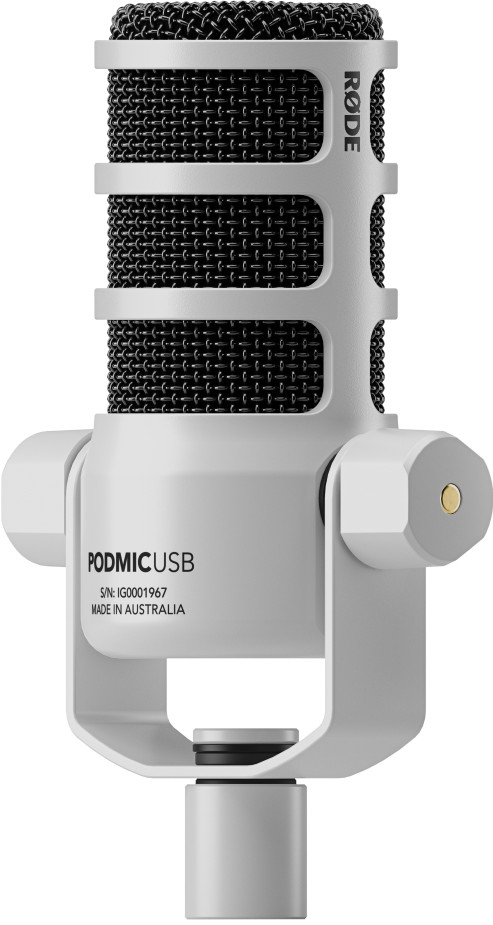
| RØDE PodMic USB | dynamic | USB-C and XLR | Getting into podcasting with sound processing via software | researched |
| Neumann TLM 103 | large-diaphragm condenser | XLR (needs phantom power) | Voice-over and vocals in a treated room or booth | our own comparison test |
Shure SM7B: the classic for noisy rooms
The SM7B consistently keeps ambient noise and room reverb out. Next to the Neumann, it sounded hollower in our test. Something else weighs more heavily: the low output level. Without a powerful, low-noise preamp, the recording ends up quiet. Or noisy.
Shure SM7dB: the SM7B without the preamp worries
This is exactly the problem Shure solves here. The SM7dB has a built-in preamp, switched on via a switch and powered by the interface’s phantom power, so even a basic audio interface is enough. The convenience is not cheap. The SM7dB costs considerably more than the SM7B, and if you already own a strong preamp, you can save yourself the extra cost.
Shure MV7+ and RØDE PodMic USB: USB and XLR in one
Two dynamic microphones, both with USB-C and XLR connections. On a computer, they record without any extra device; the manufacturers‘ software includes sound processing, such as automatic level adjustment. If an interface comes along later, the cable simply moves to the XLR output. There is no less complicated way to start.
Neumann TLM 103: studio sound, if the room is right
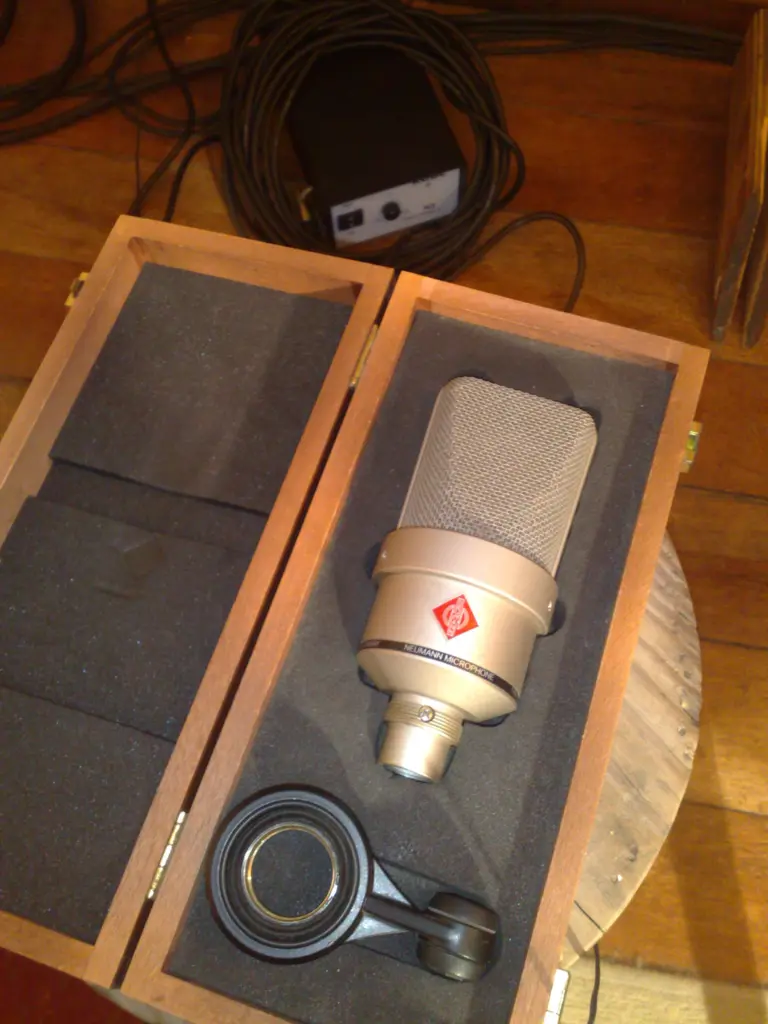
Extremely low noise, very sensitive. In our comparison, the large-diaphragm microphone delivered clearly better sound, but only in a treated room. Without acoustic treatment, reverb, fans and outside noise were clearly audible on the recording. You need an interface with phantom power.
What the spec sheets reveal
Two numbers explain why the Neumann picks up so much in a living room. According to the manufacturer, its sensitivity is 23 millivolts per pascal, with self-noise of just 7 dB(A). So the microphone listens very closely and barely produces any noise itself. In a treated room, that is an advantage. In an echoey room, the refrigerator in the kitchen ends up on the track too.
According to the manufacturers, the SM7B, SM7dB and TLM 103 have a cardioid pickup pattern. They mainly pick up what comes from the front and attenuate sound from behind. That leads to a simple rule: speak into it from the front and up close, and point the back of the microphone toward the loudest source of noise in the room.
Phantom power and gain
Condenser microphones need power. According to Neumann, the TLM 103 requires 48-volt phantom power per the IEC 61938 standard, which the interface supplies through the XLR cable. The SM7dB needs it as well, but for its built-in preamp. Shure states selectable gain of plus 18 or plus 28 dB for it. For loud sources, the manufacturer recommends the lower setting or bypass, in which case the SM7dB works like a classic SM7B.
So before you buy, check your interface. If it has no 48-volt phantom power, the Neumann and the SM7dB stay silent. Which devices provide enough gain and phantom power is covered in our guide Audio interface for the home studio.
Three bad purchases you can avoid
The first: a large-diaphragm condenser for an echoey room. It does not sound expensive there, it sounds like a bathroom. The second: an SM7B on a weak interface. The recording ends up quiet or noisy, as described above. The third: no pop protection. According to the manufacturer, Shure includes a detachable windscreen with the SM7B and describes a built-in pop filter; the SM7dB comes with a windscreen for close-up speech. With the other models, check before buying whether a pop filter is included.
How to improve an echoey room without a booth is explained in our guide Acoustic panels.
Which microphone suits your room
Are you starting out on a computer and recording in a normal room? Then go for a dynamic USB and XLR microphone like the Shure MV7+ or the RØDE PodMic USB. If there is already an interface on your desk, the Shure SM7dB or the SM7B with a powerful preamp are worth considering.
The Neumann TLM 103 belongs in a treated room or a booth. That is where it sounded best in our comparison. Everywhere else, it is out of place.
Our own listening experience with a podcast microphone is in our review of the RØDE PodMic USB: robust, quick to set up, strong at handling background noise.
Frequently asked questions
Do I need special headphones for monitoring?
Monitor through headphones, not speakers, otherwise the sound feeds back into the microphone. Studio models are compared in our guide Studio headphones.
Is a podcast microphone also good for streaming?
Yes, the requirements are similar. Our guide USB microphone for streaming (in German) goes into detail specifically for the computer.
What does bass roll-off on the SM7B mean?
A switch on the microphone that attenuates low frequencies. Shure lists a switchable bass roll-off and a presence boost. They help when the voice sounds too muffled or too boomy.
Can I use the SM7dB without the preamp?
Yes. According to Shure, with the bypass switch it works like a classic SM7B.
Frequently asked questions
Dynamic or condenser microphone for a podcast?
It depends on the room. A dynamic microphone like the Shure SM7B largely blocks out reverb and background noise. The sensitive Neumann TLM 103 sounds clearly better in a treated room, but in an echoey living space it picks up reverb, fans and outside noise too. Clapping your hands shows whether the room echoes.
USB or XLR for a podcast microphone?
USB connects directly to a computer or tablet; no further equipment is needed. XLR requires an audio interface or mixer, but grows with you and fits into any studio. Models like the Shure MV7+ and RØDE PodMic USB have both, so you can start on the computer and switch to an interface later.
Why does the Shure SM7B need a powerful preamp?
The SM7B has a low output level. Without a powerful, low-noise preamp, the recording ends up quiet or noisy. The SM7dB solves this with a built-in, switchable preamp that, according to Shure, delivers plus 18 or plus 28 dB and is powered via phantom power.
What is phantom power and who needs it?
Phantom power is supplied by the interface through the XLR cable. According to the manufacturer, the Neumann TLM 103 requires 48 volts per IEC 61938, and the SM7dB needs it for its built-in preamp. If the interface has no 48-volt phantom power, both stay silent.
How do you position a microphone with a cardioid pattern?
According to the manufacturers, the SM7B, SM7dB and TLM 103 have a cardioid pickup pattern. They mainly pick up what comes from the front and attenuate sound from behind. So speak into it from the front and up close, and point the back toward the loudest source of noise in the room.
Which bad purchases are common with podcast microphones?
Three are typical: a large-diaphragm condenser for an echoey room, where it sounds like a bathroom; an SM7B on a weak interface; and no pop protection. According to the manufacturer, Shure includes a windscreen with the SM7B; with other models, check before buying whether a pop filter is included.
Sources
- handgetestet.de: Shure SM7B vs. Neumann TLM 103
- handgetestet.de: Vocal Head Booth from t.akustik
- Neumann: TLM 103, technical data
- Shure: SM7B
- Shure: SM7dB
Where to buy
- Shure SM7BCheck price at Amazon.deAvailable in Germany: Amazon.de
- Shure SM7dBCheck price at Amazon.deAvailable in Germany: Amazon.de
- Shure MV7+Check price at Amazon.deAvailable in Germany: Amazon.de
- RØDE PodMic USBCheck price at Amazon.deAvailable in Germany: Amazon.de
- Neumann TLM 103Check price at Amazon.deAvailable in Germany: Amazon.de