Contents14 sections
This guide was first published in German on handgetestet.de.
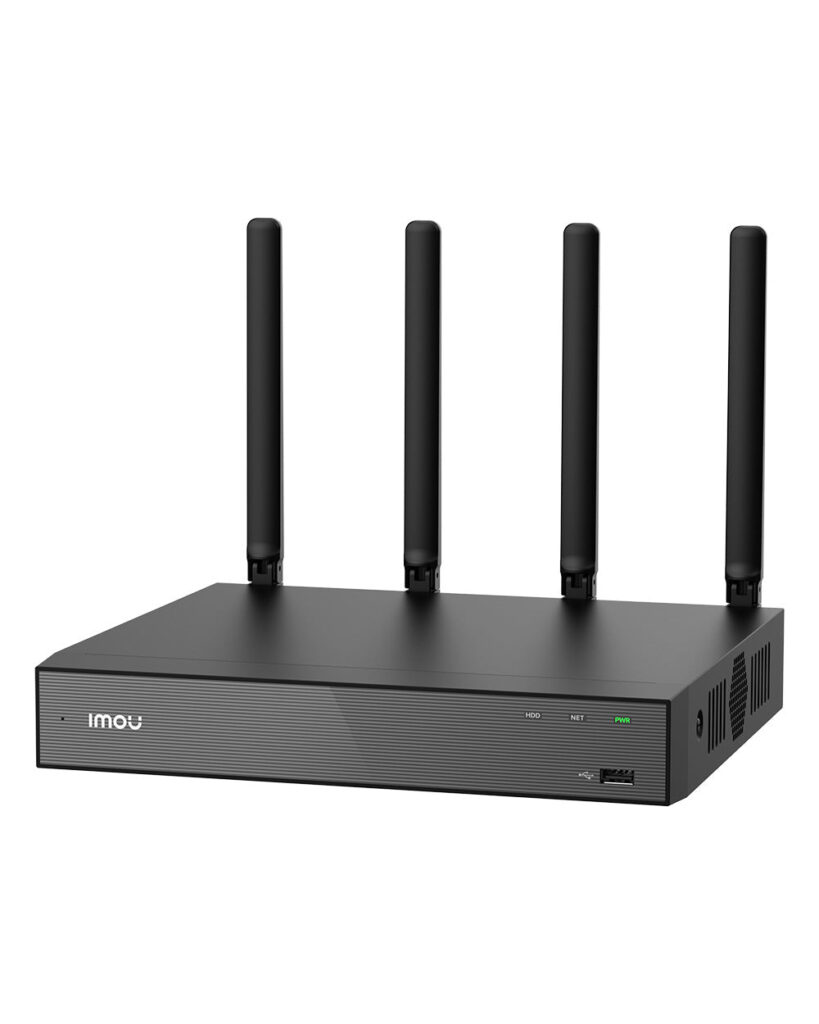
The memory card sits inside the camera. If the camera is torn down, the video of the culprit goes with it. That is why, for houses with three or more cameras, we consider a recorder inside the house the more sensible solution, for example the Imou 10-Kanal Wi-Fi-6-NVR (10-channel Wi-Fi 6 NVR) with its own hard drive. For a single camera, a card is enough, but please one that is built for continuous operation.
How much storage does a camera eat up?
The rule of thumb is simple: bitrate in megabits per second times 10.8 gives gigabytes per day. For its 4K camera RLC-810A, Reolink states a factory setting of 6,144 kilobits per second in the main stream. That is around 66 GB a day with continuous recording. Reolink itself gives 97.1 hours for a 256 GB card, so a good four days.
Sounds tight? It is not. In its guidance, the German Data Protection Conference (Datenschutzkonferenz) generally considers a retention period of 72 hours permissible; the longer footage is kept, the more justification is needed. Three days at 66 GB come to just under 200 GB. If you only record on events, you need many times less. For the Cruiser Triple in its economical AOR mode, Imou states 97 days on 512 GB, based on its own lab tests.
Much more important than capacity, therefore, is how long the card withstands constant overwriting.
Card, cloud, recorder: six options compared
| Model | Type | Sizes | Endurance according to manufacturer | Best for |
|---|---|---|---|---|
| Imou 10-Kanal Wi-Fi-6-NVR | Recorder, 10 channels | 1 hard drive up to 16 TB | hard drive not included | Three or more Imou or ONVIF cameras |
| Imou microSD card | microSD | 32 to 512 GB | not specified | Imou camera with event recording |
| Imou Protect | Cloud subscription | 7 or 30 days of history | not applicable | Off-site copy |
| SanDisk High Endurance | microSD, U3, V30 | 32 to 512 GB | 10,000 h Full HD at 128 GB | One camera, continuous recording |
| Samsung PRO Endurance | microSD, U3, V30 | 32 to 256 GB | 70,080 h at 128 GB and 26 Mbit/s | Camera under the eaves, heat up to 85 °C |
| WD Purple SC QD101 | microSD, U1 | 32 GB to 1 TB | 64 TBW at 128 GB | Cameras that report card health |
Imou 10-Kanal Wi-Fi-6-NVR
The recorder takes a SATA hard drive of up to 16 TB and, according to the retailer, handles 90 Mbit/s of incoming bandwidth. Up to ten cameras connect over Wi-Fi in the 5 GHz band, eight in the 2.4 GHz band. Besides Imou cameras, the retailer names Dahua and ONVIF. Four cameras at around 6.1 Mbit/s each write a good 265 GB a day, so a 4 TB surveillance hard drive lasts for about two weeks. Drawbacks: the drive costs extra, and there is no browser access, only an app and a PC program. And the recorder should be hidden.
Imou microSD card
Convenient, because it matches the camera and is sold in the same shop. However, Imou does not state any write endurance online. For continuous recording, we would therefore prefer an endurance card with a documented number of hours.
Imou Protect
The subscription stores event videos in the cloud for 7 days (Basic) or 30 days (Plus) and unlocks additional cloud-based detection. According to Imou, one subscription covers a single camera or up to five, and each new camera gets a trial period. Licenses are available for one to twelve months, separately for cameras with two lenses. The advantage: the copy is off-site. The drawback: images of your own property sit on someone else’s servers.
SanDisk High Endurance
A card that SanDisk designs for dashcams and home cameras. SanDisk states 2,500 hours at 32 GB up to 40,000 hours at 512 GB, based on Full HD; less with 4K. Writes at up to 40 MB/s, two-year warranty.
Samsung PRO Endurance
Samsung discloses how it calculates: Full HD at 26 Mbit/s. That results in 70,080 hours at 128 GB, or eight years nonstop. Operation from minus 25 to plus 85 degrees Celsius, five-year warranty for 128 and 256 GB. Samsung offers it up to 256 GB.
WD Purple SC QD101
Western Digital specifies endurance in terabytes written: 64 TBW at 128 GB under the JEDEC client workload profile. At 66 GB a day, that would mathematically be a good two and a half years. Compatible cameras report the card’s health status. Rated U1, it is classified as slower than the other two.
And the NAS?
An existing NAS can replace the recorder. Reolink names Synology’s Surveillance Station as an option for the RLC-810A. Which devices are suitable is shown in our NAS comparison; ready-made complete kits are in our guide to the camera system with recorder.
What is allowed with the footage
More storage does not mean more rights. According to the German consumer advice center (Verbraucherzentrale), private cameras may only show your own property; the sidewalk, the neighbor’s property and shared driveways are generally off-limits. Posting footage on the internet is not allowed. Under the General Data Protection Regulation (GDPR), there is also an obligation to inform and an obligation to document. You will find a sign for visitors and a template for it in the guidance of the Data Protection Conference, which also names the 72 hours.
Why does that matter for your choice of storage? If you film unlawfully, you risk a fine from the data protection authority and claims for injunctive relief and damages. And according to the Verbraucherzentrale, evidence from unlawful recording may not be admissible in criminal proceedings. Then even the largest hard drive will not help.
Typical storage bad buys
First mistake: a photo card for the camera. Cards for cameras and drones are not designed for constant overwriting. Second: the cloud without a look at the terms. The German Federal Office for Information Security (BSI) advises checking the terms of use for cloud storage, because different legal bases may apply depending on where the provider is located. Third: the card in the only camera as the only copy. If the camera is torn down, everything is gone. A recorder in the house or a copy in the cloud closes this gap.
Frequently asked questions
How long may I keep footage?
The Data Protection Conference generally considers 72 hours permissible. Longer periods need a justification.
How do I calculate my storage needs?
Bitrate in megabits per second times 10.8 gives gigabytes per day, multiplied by the number of cameras and days. With event-only recording, it is considerably less.
May my doorbell camera record continuously?
No. According to the Verbraucherzentrale, door cameras should only transmit after someone rings, should not store footage permanently and should switch off after a few seconds.
How do I secure access to the footage?
A strong password of your own, two-factor sign-in and automatic updates; that is what the BSI advises. The steps are in our guide Setting up a security camera securely.
How we would decide
- One camera, event recording: SanDisk High Endurance with 64 or 128 GB.
- One camera, continuous recording, hot mounting location: Samsung PRO Endurance.
- Three or more cameras at home: Imou 10-Kanal Wi-Fi-6-NVR; the cards in the cameras stay as a backup.
- Vacation home without a recorder: card plus Imou Protect.
Cards for photo cameras and drones are covered in our guide to the memory card for cameras and drones. They are not designed for continuous recording.
What the storage options of two brands look like in everyday use is shown in the comparison Imou or Reolink.
What cloud plans cost over five years and what still works without a plan is explained in our guide Security camera without a subscription.
Frequently asked questions
How much storage does a security camera need per day?
Rule of thumb: bitrate in megabits per second times 10.8 gives gigabytes per day. The Reolink RLC-810A comes to around 66 GB a day with continuous recording. If you only record on events, you need many times less.
How long may I keep security camera footage?
In its guidance, the German Data Protection Conference (Datenschutzkonferenz) generally considers a retention period of 72 hours permissible; the longer footage is kept, the more justification is needed. At 66 GB a day, three days come to just under 200 GB.
Which microSD card is suitable for continuous recording?
What matters is how long the card withstands constant overwriting. Samsung states 70,080 hours for the PRO Endurance at 128 GB and operation up to plus 85 degrees Celsius. SanDisk specifies 2,500 to 40,000 hours for the High Endurance, depending on capacity.
Cloud or local storage: what speaks for which?
A cloud subscription such as Imou Protect stores event videos off-site for 7 or 30 days, so the copy survives a theft. On the other hand, images of your own property sit on someone else's servers. A recorder keeps the data in the house but should be hidden.
How long does a hard drive in the recorder last?
Four cameras at around 6.1 Mbit/s each write a good 265 GB a day. A 4 TB surveillance hard drive is therefore enough for about two weeks. The Imou 10-channel NVR takes a SATA hard drive of up to 16 TB, though the drive costs extra.
Can a NAS replace the recorder?
Yes, an existing NAS can take on this task. Reolink, for example, names Synology's Surveillance Station as an option for the RLC-810A. That saves an additional recorder if the NAS is running anyway.
Sources
- Datenschutzkonferenz: Guidance on video surveillance (PDF)
- Visiotech: Imou NVR-N110W (retailer information)
- Imou: Imou Protect
- Imou: Cruiser Triple (AOR mode)
- Reolink: RLC-810A
- SanDisk: High Endurance microSD
- Samsung: PRO Endurance 128 GB
- Western Digital: WD Purple SC QD101, product brief (PDF)
- Verbraucherzentrale: Only film your own property with security cameras
- BSI: Smart security cameras
Where to buy
- Imou 10-Kanal Wi-Fi-6-NVRView at ImouAvailable in Germany: ImouCheck price at Amazon.deCheck price at Amazon.co.ukCheck price at Amazon.nlCheck price at Amazon.com.beCheck price at Amazon.frCheck price at Amazon.itCheck price at Amazon.esCheck price at Amazon.plCheck price at Amazon.seAvailable in Germany: Amazon.de
- Imou microSD-KarteView at ImouAvailable in Germany: Imou
- Imou ProtectView at ImouAvailable in Germany: Imou
- SanDisk High Endurance (128 GB)Check price at Amazon.deCheck price at Amazon.co.ukCheck price at Amazon.nlCheck price at Amazon.com.beCheck price at Amazon.frCheck price at Amazon.itCheck price at Amazon.esCheck price at Amazon.plCheck price at Amazon.seAvailable in Germany: Amazon.de
- Samsung PRO EnduranceCheck price at Amazon.deCheck price at Amazon.co.ukCheck price at Amazon.nlCheck price at Amazon.com.beCheck price at Amazon.frCheck price at Amazon.itCheck price at Amazon.esCheck price at Amazon.plCheck price at Amazon.seAvailable in Germany: Amazon.de
- WD Purple SC QD101 (128 GB)Check price at Amazon.deCheck price at Amazon.co.ukCheck price at Amazon.nlCheck price at Amazon.com.beCheck price at Amazon.frCheck price at Amazon.itCheck price at Amazon.esCheck price at Amazon.plCheck price at Amazon.seAvailable in Germany: Amazon.de
- Sandisk microSDXC High Endurance 128GB 40 MB/sView at CoolblueAvailable in Germany: Coolblue