Contents11 sections
This guide was first published in German on handgetestet.de.
In the fall, two questions sit side by side at the tire shop that are easily confused. Does my new set of winter wheels need its own sensors? And is a retrofit system worth it for cars that don’t have one from the factory? Our clear answer for cars with a direct TPMS: have programmable universal sensors such as the Schrader EZ-sensor GO fitted and configured for your vehicle by the technician. For a caravan, a standalone system with a display in the towing vehicle is the more sensible route, such as the TireMoni TM-210-2.
First find out which system your car has
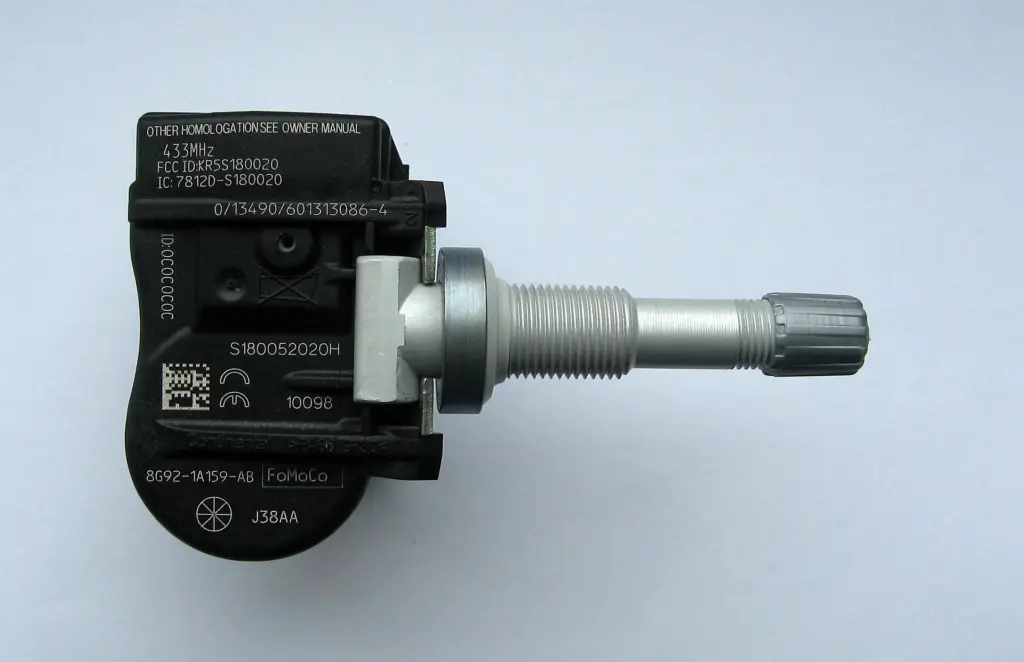
Since 2014, new cars in the EU have had to come with a tire pressure monitoring system. That is according to the German automobile club ADAC, which distinguishes between two designs. Direct systems have a sensor for pressure and temperature in each wheel, usually on the valve. They display the pressure for each wheel and, according to the ADAC, measure to an accuracy of about 0.1 bar. Indirect systems do without a sensor in the wheel. They use the wheel speed sensors to evaluate how the wheels roll, react more slowly and often do not show which tire is affected.
For your purchase, this is the crux of the matter. If you drive with an indirect system, you need nothing for your winter wheels. After changing the wheels and setting the specified pressure, a press of a button to reset the system is enough. If the owner’s manual says, in effect, that the system does not measure the actual inflation pressure, it is an indirect one. If in doubt, ask your dealer.
Direct systems are a different story. Because of the equipment requirement, both sets of wheels must carry sensors according to the ADAC, summer and winter wheels alike. So if you order complete winter wheels online, check before clicking whether sensors are fitted and whether they match your vehicle. How to choose tires and rims for winter is covered in our guide to winter tires (in German).
Replacing and programming sensors: what happens at the shop
Programmable universal sensors come blank. They only work once a TPMS programming tool loads your vehicle’s protocol onto them. The car then learns the new sensors, depending on the model on its own while driving or via a diagnostic tool. According to the ADAC, modern sensors do not need to be reset after every pressure correction once they have been learned for the first time.
Two details decide whether this goes smoothly. The first is the radio frequency. In Europe, the sensors transmit on 433 MHz. The manufacturer Alligator points out in its data sheet that 315 MHz may not be used in the European Economic Area and that the programming tool must therefore be set to the „EU“ region. For vehicles imported from the US, it is worth asking.
The second is the valve. Schrader recommends replacing the service kit at every tire change, meaning the valve core, cap, screw and, on metal valves, the seal and nut. The parts are designed for single use. In short: if you change tires, you pay for the kit as well.
And the battery? It is sealed into the sensor. The ADAC gives five to eight years until most sensors need replacing, and six to ten elsewhere. A set of winter wheels bought with used sensors may therefore already have a good part of its service life behind it.
Six sensors and systems compared
| Model | Type | Key data according to manufacturer | For whom |
|---|---|---|---|
| Schrader EZ-sensor GO | Universal sensor, programmable | Rubber snap-in or aluminum clamp-in (0 to 40 degrees), up to 300 km/h, 99% coverage of the European vehicle fleet | Second set of wheels on cars with direct TPMS |
| Huf IntelliSens | Universal sensor, programmable | Protocols on the sensor, updates via the TPMS tool, over 97% coverage | Shops with Huf equipment, vehicles with Huf original equipment |
| TireMoni TM-150-NST | Retrofit system, 4 sensors | 0 to 5.5 bar, accuracy 0.07 bar (0 to 4 bar), ECE R-64 | Cars without factory TPMS |
| Tymate M12-3 | Retrofit system with valve-cap sensors | 0 to 87 psi, about ±3 psi, solar and USB-C, sensors IP67 | Older cars, second cars |
| TireMoni TM-210-2 | Retrofit system, 2 sensors | up to 11 bar, accuracy 0.14 bar, expandable to 4 sensors | Single-axle caravans |
| TireMoni TM-210 | Retrofit system, 4 sensors | up to 11 bar, accuracy 0.14 bar, 10 g per sensor | Motorhomes and vans up to 4.5 t, tandem-axle caravans |
Schrader EZ-sensor GO
According to its own figures, Schrader supplies the original equipment in around half of all new cars worldwide. The EZ-sensor GO is the current universal generation, available either with a rubber valve or with an aluminum valve in silver, black or titanium gray. According to the manufacturer, it can be programmed with all common independent TPMS tools and covers 99 percent of the European vehicle fleet. For a new set of winter wheels, it is our favorite. The reason is simple. Schrader lists a long range of compatible programming tools, from Bartec and ATEQ to its own ST-1.
Huf IntelliSens
Huf, based in Velbert, Germany, supplies TPMS sensors to car manufacturers and offers the IntelliSens universal sensor for the independent aftermarket, now under the name BH SENS. Protocols are already stored on the sensor; new vehicle models are added via an update through the programming tool. The manufacturer states coverage of over 97 percent of registered vehicles. A real alternative if your shop works with Huf.
TireMoni TM-150-NST
According to the ADAC, the requirement applies to new cars from 2014 on. Older cars can still be retrofitted. According to the manufacturer, this system measures between 0 and 5.5 bar, with an accuracy of 0.07 bar up to 4 bar, at 10 grams per sensor. Warning thresholds for pressure that is too low or too high, as well as for temperature, can be set per axle. It is designed for passenger cars of classes M1 and M1G with four wheels.
Tymate M12-3
The sensors screw on in place of the valve cap; you don’t need a shop for that. The display unit charges via a solar panel or USB-C. According to the manufacturer, the system measures 0 to 87 psi, i.e. up to about 6 bar, with a deviation of around 3 psi. That is a little over 0.2 bar and therefore coarser than the TireMoni units. As an early warning for a slow puncture, that is enough. You should still set the tire pressure with an accurate gauge.
TireMoni TM-210-2
A caravan often sits for months. The ADAC observes that caravan tire pressure is usually checked too rarely and strongly advises checking it before every longer trip. This is exactly where the TM-210-2 comes in. Two sensors for the axle of a single-axle caravan, with the display in the towing vehicle. Measuring range up to 11 bar, accuracy 0.14 bar, and according to the manufacturer, installation takes about five minutes without any initialization. Anti-theft protection for the sensors is included.
TireMoni TM-210
According to the manufacturer, the four-sensor version is aimed at motorhomes and small vans with four wheels up to 4.5 tonnes. It is equally suitable for tandem-axle caravans; alternatively, use the TM-210-2 with two additional sensors. For motorhomes, one detail from the ADAC’s advice matters: the 4.5 bar that base-vehicle manufacturers specify for the rear axle applies to full load. A 3.5-tonne vehicle usually gets by with 3.8 to 3.9 bar.
How we would decide
- Car with direct TPMS, new set of winter wheels: have universal sensors such as the Schrader EZ-sensor GO or Huf IntelliSens programmed by the tire shop, with a service kit at every tire change.
- Car with indirect TPMS: don’t buy sensors; reset the system after changing wheels.
- Older car without TPMS: TireMoni TM-150-NST if accuracy matters to you. The Tymate M12-3 is enough as a simple guard.
- Single-axle caravan: TireMoni TM-210-2. Tandem-axle caravan and motorhome: TM-210 with four sensors.
A system does not replace a look at the pressure gauge. The ADAC recommends checking the pressure at least every 14 days, even with TPMS. If you want to pump up at home, you will find devices in our guide to cordless tire inflators (in German). And if you still need to hitch up the caravan: tips on the right tow bar are in our tow bar guide.
Frequently asked questions
Do winter wheels need their own tire pressure sensors?
That depends on the system. With a direct TPMS, both sets of wheels must carry sensors, according to the German automobile club ADAC. With an indirect system, a press of a button to reset it is enough after changing the wheels and setting the pressure. If the owner's manual says the system does not measure the actual inflation pressure, it is indirect.
What is the difference between direct and indirect TPMS?
Direct systems have a sensor for pressure and temperature in each wheel and, according to the ADAC, measure to an accuracy of about 0.1 bar. Indirect systems use the wheel speed sensors to evaluate how the wheels roll. They react more slowly and often do not show which tire is affected.
How are universal sensors programmed?
They come blank and only work once a TPMS programming tool loads the vehicle's protocol onto them. The car then learns them, depending on the model while driving or via a diagnostic tool. In Europe, the sensors transmit on 433 MHz; for vehicles imported from the US, it is worth asking.
How long does the battery in a tire pressure sensor last?
It is sealed into the sensor and cannot be replaced. The ADAC gives five to eight years until most sensors need replacing, and six to ten elsewhere. A used set of winter wheels bought with sensors may already have a good part of that time behind it.
Can you retrofit an older car without TPMS?
Yes, with a retrofit system. According to the manufacturer, the TireMoni TM-150-NST measures up to 4 bar with an accuracy of 0.07 bar. The Tymate M12-3 screws on in place of the valve cap and is coarser at around 3 psi deviation, but it is enough as a simple guard against a slow puncture.
Which tire pressure system suits a caravan?
For single-axle caravans, the TireMoni TM-210-2 with two sensors and a display in the towing vehicle, measuring range up to 11 bar. Tandem-axle caravans and motorhomes up to 4.5 tonnes take the TM-210 with four sensors. A system does not replace the pressure gauge; the ADAC recommends checking at least every 14 days.
Sources
- ADAC: Tire pressure monitoring system
- ADAC: Tire pressure for motorhomes and caravans
- Schrader: TPMS product brochure (PDF)
- Huf: new generation of IntelliSens
- BH SENS: universal sensors
- Alligator: sens.it RS+ data sheet (PDF)
- TireMoni: TM-150-NST
- TireMoni: TM-210-2
- TireMoni: TM-210
- Tymate: M12-3
Where to buy
- Schrader EZ-sensor GO (1210-GO1, Gummiventil)Check price at Amazon.deCheck price at Amazon.co.ukCheck price at Amazon.nlCheck price at Amazon.com.beCheck price at Amazon.frCheck price at Amazon.itCheck price at Amazon.esCheck price at Amazon.plCheck price at Amazon.seAvailable in Germany: Amazon.de
- Huf IntelliSensCheck price at Amazon.deCheck price at Amazon.co.ukCheck price at Amazon.nlCheck price at Amazon.com.beCheck price at Amazon.frCheck price at Amazon.itCheck price at Amazon.esCheck price at Amazon.plCheck price at Amazon.seAvailable in Germany: Amazon.de
- TireMoni TM-150-NSTCheck price at Amazon.deCheck price at Amazon.co.ukCheck price at Amazon.nlCheck price at Amazon.com.beCheck price at Amazon.frCheck price at Amazon.itCheck price at Amazon.esCheck price at Amazon.plCheck price at Amazon.seAvailable in Germany: Amazon.de
- Tymate M12-3Check price at Amazon.deCheck price at Amazon.co.ukCheck price at Amazon.nlCheck price at Amazon.com.beCheck price at Amazon.frCheck price at Amazon.itCheck price at Amazon.esCheck price at Amazon.plCheck price at Amazon.seAvailable in Germany: Amazon.de
- TireMoni TM-210-2Check price at Amazon.deCheck price at Amazon.co.ukCheck price at Amazon.nlCheck price at Amazon.com.beCheck price at Amazon.frCheck price at Amazon.itCheck price at Amazon.esCheck price at Amazon.plCheck price at Amazon.seAvailable in Germany: Amazon.de
- TireMoni TM-210Check price at Amazon.deCheck price at Amazon.co.ukCheck price at Amazon.nlCheck price at Amazon.com.beCheck price at Amazon.frCheck price at Amazon.itCheck price at Amazon.esCheck price at Amazon.plCheck price at Amazon.seAvailable in Germany: Amazon.de