Contents13 sections
This guide was first published in German on handgetestet.de.
More zinc does not automatically mean more help. If you reach for a zinc paste with 25 or 30 percent, what you mainly get is a thicker, drier protective layer, and that does not suit every spot. According to the package leaflet, a soft 30 percent zinc paste from the pharmacy is intended for sore skin in the diaper area or in skin folds. For cracked skin and small, weeping spots in adults, the classic zinc ointment with 10 percent is often enough, and in Germany it is even sold outside pharmacies.
This guide classifies seven products currently available in Germany, separates medicines from cosmetics and explains when an ointment from the bathroom cabinet is no longer enough.
What zinc oxide actually does on the skin
Zinc oxide is a white powder that is practically insoluble in water. Dispersed in an ointment or paste, it forms a film on the skin. In its active ingredient dossier, the German Society for Dermopharmacy (Gesellschaft für Dermopharmazie) describes the substance as mildly astringent, antiseptic through released zinc ions, and drying, especially in bases that absorb water. It gives 5 to 50 percent as the usual therapeutic concentration.
Astringent means contracting. According to the Mirfulan prescribing information (as of September 2025), zinc oxide seals the wound surface and reduces the discharge of wound secretion, while its antimicrobial effect is slight. That is all it says, and that is honest. Zinc oxide does not disinfect a wound and is no substitute for treatment if there is an infection.
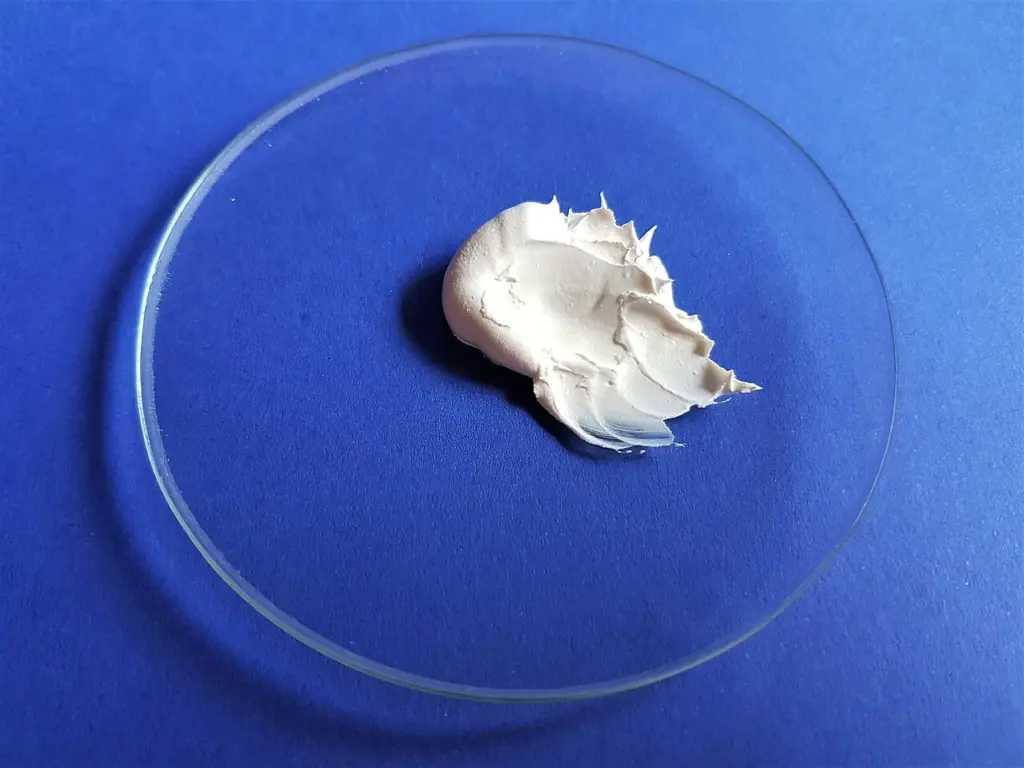
So what role does the percentage play? An ointment with 10 percent stays supple and can be spread thinly. A paste with 25 or 30 percent contains so much powder that it becomes firmer, binds moisture more strongly and covers more visibly. None of the package leaflets and prescribing information we evaluated cite studies showing that 30 percent makes a wound heal faster than 10 percent. „High-strength“ is not a protected term. It describes the formulation, not a stronger healing effect.
Medicine or diaper rash cream: the difference on the tube
Approved zinc ointments and zinc pastes are medicines. They carry a Pharmazentralnummer (PZN, the German pharmacy product number), a package leaflet and an exact active ingredient content, such as „100 g of ointment contain 10 g of zinc oxide.“ Some are sold over the counter outside pharmacies; others are only available at pharmacies.
Diaper rash creams from the baby aisle, on the other hand, are usually cosmetics. Zinc oxide appears in the ingredient list, but a percentage is almost always missing. Weleda, for example, lists zinc oxide in fourth place in its fragrance-free Calendula diaper care cream, after water, almond oil and sesame oil. For care in cases of mild redness, that may be enough. If you are specifically looking for a particular concentration, you will end up with a medicine.
In June 2026, the German consumer magazine Öko-Test examined nineteen diaper rash creams, and eleven were rated „very good.“ Points were deducted for lead, which presumably comes from clay or silica, and for fragrance. According to Öko-Test, it did not test effectiveness; it assessed ingredients, packaging and advertising claims.
Seven zinc products side by side
The price ranges are based on offers from an online pharmacy, the pharmacy retail price or manufacturer’s recommended price listed there and, for Weleda, the manufacturer’s shop. Prices in local pharmacies may be higher.
Zinkpaste weich BW: lots of zinc, still spreadable
With 30 percent zinc oxide, the soft paste from Bombastus-Werke is one of the highest-strength products that can still be spread easily. According to the package leaflet, it is intended for diaper dermatitis, for soreness caused by chafing and moisture in skin folds, as supportive treatment for subacute and chronic eczema, and for covering the skin around a leg ulcer. It contains no wool wax. For people who react to lanolin, that is a real advantage. The manufacturer advises covering the area with gauze, because zinc oxide sets into fabric.
Zinkpaste DAB 25%: protection for the edge, not for the wound
Here it pays to read the leaflet closely. According to Bombastus, this firm paste made to the German Pharmacopoeia (DAB) is meant to cover and protect the healthy skin around heavily weeping rashes, infected wounds and ulcers. It is explicitly not meant for inflamed, weeping skin or for wounds themselves. Paste residue can be removed with a fatty oil such as olive oil. That can make it useful for family caregivers. As a wound ointment for a scraped knee, it is the wrong choice.
Desitin Salbe: 30 percent, but not for babies under one year
Many people associate the name with diapers. The German package leaflet (as of August 2024), however, does not recommend the ointment for children under one year of age and advises against applying it over large areas. It is approved as a traditional medicine „to support wound healing,“ solely on the basis of long-standing experience. It should not be used for longer than five days without medical advice. In addition to 30 percent zinc oxide, it contains cod liver oil, wool wax and methyl salicylate.
Zinksalbe Lichtenstein: the inexpensive classic
Ten percent zinc oxide in petrolatum with wool wax alcohols, sold over the counter and inexpensive even in the large 100 g tube. The package leaflet lists support for wound healing, including for weeping or itchy wounds and cracked skin, as well as use as a protective ointment. If you know cracked heels or split fingertips in winter, this is the simplest solution. If nothing improves after five days, the leaflet says to see a doctor.
Zinkoxidsalbe LAW: 10 percent without wool wax
The ointment from Abanta Pharma gets by with petrolatum, paraffin and two excipients. According to the leaflet, it covers the skin and binds secretions in acute and subacute skin inflammation. No more than one fifth of the body surface should be treated. It is the alternative to the Lichtenstein ointment if wool wax is not tolerated, though it is only available at pharmacies.
Mirfulan: zinc with cod liver oil and urea
Mirfulan also contains 10 percent zinc oxide, plus cod liver oil, urea and witch hazel distillate. According to the package leaflet, it is indicated for non-infected, acute and subacute skin damage with redness, itching and pain; the manufacturer cites diaper dermatitis as an example. It must not be used on infected wounds. The ointment contains a small amount of ethanol, which is why the leaflet explicitly warns about use in premature and newborn babies. It is the most expensive product in this overview. The documents do not show whether the additives make a difference in everyday use.
Weleda Calendula Wundschutzcreme parfümfrei: care, not medicine
A natural cosmetics cream with almond oil, sesame oil, beeswax, wool wax and zinc oxide, without fragrances. According to the manufacturer, it protects the diaper area from moisture and soothes reddened skin. Weleda does not state a zinc content. It is suitable for daily care at diaper changes, but it is neither a high-strength product nor a medicine.
When an ointment is no longer enough
Zinc ointments are intended for superficial skin damage. In our view, deep, heavily bleeding or dirty wounds, bites and larger burns are a matter for a doctor’s office or the emergency room, not the home medicine cabinet. The package leaflets name their own warning signs: yellowish coatings, red skin around the wound with pain or itching, and a lack of improvement. For Desitin and the Lichtenstein ointment, the limit is five days.
With babies, acting sooner is advisable. Apotheken Umschau, a German pharmacy magazine, together with a pediatric dermatologist, advises seeing a pediatrician if the redness has not gone away after two to three days despite ointment, if the child has a fever or is very unsettled, or if small dots appear at the edge of the diaper along with pustules. Whitish pustules can indicate a yeast infection, in which case pure zinc does not help. And for newborns, as well as during pregnancy and breastfeeding, the rule is: check with a doctor first.
Two practical points appear in almost every leaflet. Zinc oxide weakens other ointments meant for the same spot, so remove it thoroughly first. In the genital and anal area, petrolatum and paraffin can also make latex condoms less tear-resistant.
How we would choose
- Diaper rash, soreness in skin folds, wool wax allergy: Zinkpaste weich BW with 30 percent.
- Cracked skin, small weeping spots, small budget: Zinksalbe Lichtenstein with 10 percent.
- The same ointment without wool wax: Zinkoxidsalbe LAW from the pharmacy.
- Protecting the healthy skin around a weeping spot, for example in caregiving: Zinkpaste DAB, not on the wound itself.
- Daily care at diaper changes without a medicine: a fragrance-free diaper care cream such as the one from Weleda.
Desitin and Mirfulan have their fans, but based on the documents they offer no proven advantage that would explain the higher price per 100 g. You will find more on caring for stressed skin in the guide to foot creams for cracked heels (in German) and in the guide to hand creams.
For information on risks and side effects, read the package leaflet and ask your doctor or pharmacist. This guide does not replace medical advice.
Frequently asked questions
Is zinc ointment with 30 percent better than with 10 percent?
Not automatically. A paste with 25 or 30 percent is firmer, binds moisture more strongly and covers more visibly; an ointment with 10 percent stays supple and can be spread thinly. The package leaflets and prescribing information do not cite any studies showing that 30 percent makes a wound heal faster.
How does zinc oxide work on the skin?
It forms a film on the skin and, according to the German Society for Dermopharmacy, has a mild astringent and drying effect. According to the Mirfulan prescribing information, it seals the wound surface and reduces wound secretion; its antimicrobial effect is slight. Zinc oxide does not disinfect a wound.
What is the difference between zinc ointment and diaper rash cream?
Approved zinc ointments and zinc pastes are medicines with a PZN (German pharmacy product number), a package leaflet and an exact active ingredient content. Diaper rash creams from the baby aisle are usually cosmetics; zinc oxide appears in the ingredient list, but a percentage is almost always missing.
Can Desitin be used on babies?
The German package leaflet (as of August 2024) does not recommend Desitin Salbe for children under one year of age and advises against applying it over large areas. It should not be used for longer than five days without medical advice.
Is there zinc ointment without wool wax?
Yes. According to the manufacturers, Zinkpaste weich BW with 30 percent and Zinkoxidsalbe LAW with 10 percent contain no wool wax (lanolin); both are available at pharmacies. Zinksalbe Lichtenstein, by contrast, contains wool wax alcohols.
When is zinc ointment no longer enough?
Zinc ointments are intended for superficial skin damage. According to the package leaflets, warning signs are yellowish coatings, red and painful skin around the wound and a lack of improvement. For babies, Apotheken Umschau advises seeing a pediatrician if the redness has not gone away after two to three days or if fever, small dots at the edge of the diaper or pustules appear.
Sources
- Package leaflet Zinksalbe Lichtenstein 10% (Winthrop/Zentiva)
- Package leaflet Zinkoxidsalbe LAW 10% (Abanta Pharma, as of November 2019)
- Package leaflet Mirfulan (Recordati, as of September 2025)
- Prescribing information Mirfulan (as of September 2025)
- Package leaflet Desitin Salbe (as of August 2024)
- Apotheken Umschau, drug database: Desitin Salbe
- Package leaflet Zinkpaste DAB 25% (Bombastus-Werke, as of June 2025)
- Package leaflet Zinkpaste, weich BW (Bombastus-Werke)
- Weleda: Calendula Wundschutzcreme parfümfrei (fragrance-free diaper care cream)
- German Society for Dermopharmacy: Active ingredient dossier zinc oxide
- Öko-Test: Diaper rash creams tested (June 2026)
- Apotheken Umschau: Diaper rash, what helps?
- Pharmacy offers (prices, availability status), as of 11/08/2026
Where to buy
- Zinkpaste weich BW 50 mlCheck price at Amazon.deCheck price at Amazon.co.ukCheck price at Amazon.nlCheck price at Amazon.com.beCheck price at Amazon.frCheck price at Amazon.itCheck price at Amazon.esCheck price at Amazon.plCheck price at Amazon.seAvailable in Germany: Amazon.de
- Zinksalbe Lichtenstein 100 gCheck price at Amazon.deCheck price at Amazon.co.ukCheck price at Amazon.nlCheck price at Amazon.com.beCheck price at Amazon.frCheck price at Amazon.itCheck price at Amazon.esCheck price at Amazon.plCheck price at Amazon.seAvailable in Germany: Amazon.de
- Zinkpaste DAB 25 % 100 gCheck price at Amazon.deCheck price at Amazon.co.ukCheck price at Amazon.nlCheck price at Amazon.com.beCheck price at Amazon.frCheck price at Amazon.itCheck price at Amazon.esCheck price at Amazon.plCheck price at Amazon.seAvailable in Germany: Amazon.de
- Desitin Salbe 50 gCheck price at Amazon.deCheck price at Amazon.co.ukCheck price at Amazon.nlCheck price at Amazon.com.beCheck price at Amazon.frCheck price at Amazon.itCheck price at Amazon.esCheck price at Amazon.plCheck price at Amazon.seAvailable in Germany: Amazon.de
- Zinkoxidsalbe LAW 10 % 50 gCheck price at Amazon.deCheck price at Amazon.co.ukCheck price at Amazon.nlCheck price at Amazon.com.beCheck price at Amazon.frCheck price at Amazon.itCheck price at Amazon.esCheck price at Amazon.plCheck price at Amazon.seAvailable in Germany: Amazon.de
- Mirfulan Wund- und Heilsalbe 100 gCheck price at Amazon.deCheck price at Amazon.co.ukCheck price at Amazon.nlCheck price at Amazon.com.beCheck price at Amazon.frCheck price at Amazon.itCheck price at Amazon.esCheck price at Amazon.plCheck price at Amazon.seAvailable in Germany: Amazon.de
- Weleda Calendula Wundschutzcreme parfümfrei 75 mlCheck price at Amazon.deCheck price at Amazon.co.ukCheck price at Amazon.nlCheck price at Amazon.com.beCheck price at Amazon.frCheck price at Amazon.itCheck price at Amazon.esCheck price at Amazon.plCheck price at Amazon.seAvailable in Germany: Amazon.de
Still undecided?
Keep comparing at your own pace – every article in this category is checked monthly for new and discontinued models.