Contents12 sections
This guide was first published in German on handgetestet.de.
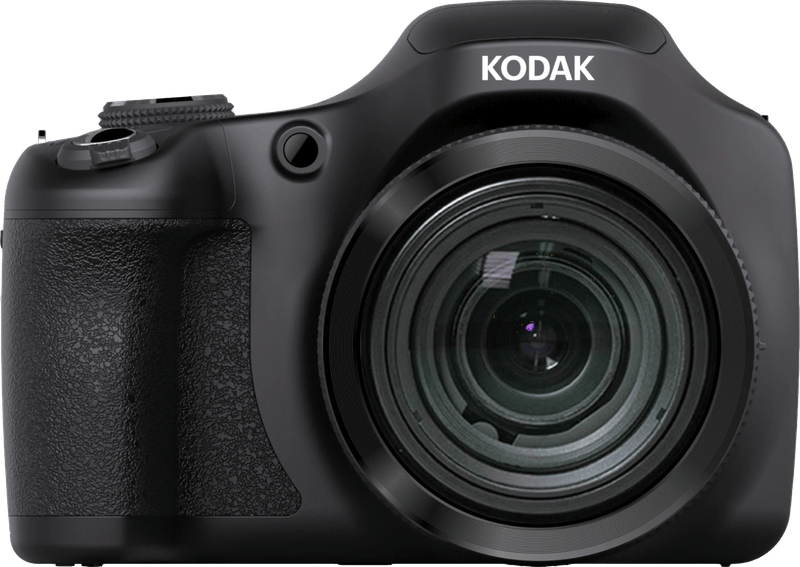
Anyone shopping for a bridge camera usually looks at the zoom factor first. Understandable. But it is the wrong way around. Far more important is how large the sensor behind the lens is, because that determines how pictures turn out at dusk. For most hobby photographers on a mid-range budget, the Kodak PIXPRO AZ653 with viewfinder, RAW and 65x zoom is the right fit. If you want no compromises on image quality, you end up with the Sony RX10 V. And if you want to bring the moon and birds in from a great distance, there is hardly any way around the Nikon Coolpix P1100.
What exactly is a bridge camera?
It looks like a small DSLR but has a permanently built-in zoom lens. No lens changes, no dust on the sensor, no second backpack. That is the appeal. The name comes from the bridge between a compact camera and an interchangeable-lens camera. If you are looking for a camera for your jacket pocket, you are better off reading our guide to compact cameras. If you want to swap lenses later on, a mirrorless camera (in German) will serve you better in the long run.
Why the sensor matters more than the zoom factor
Almost all bridge cameras with extreme zoom use a 1/2.3-inch sensor. Nikon specifies 6.2 × 4.6 millimeters for it, just under 29 square millimeters. According to the manufacturer, the 1-inch sensor of the Sony RX10 V measures 13.2 × 8.8 millimeters. That is roughly four times the area. More area captures more light, and you see that above all in indoor shots, in the woods and in the evening.
Physics also explains the enormous zoom figures. A small sensor only needs a small lens to reach an extreme telephoto focal length. That is how the Nikon P1100 reaches 3000 millimeters (35 mm equivalent) in a body of around 1.4 kilograms. With a large sensor, that would require a lens nobody would want to carry anymore. Hence the rough rule: lots of zoom means a small sensor, and a large sensor means less zoom.
What counts besides the zoom
- Viewfinder. At 1000 millimeters and beyond, every shot shakes. With the camera to your eye, you brace it against your head. At long focal lengths, an electronic viewfinder is therefore more than a convenience.
- Maximum aperture at the telephoto end. A value like f/8 means long exposure times or high ISO values. On a small sensor, that quickly produces noise.
- RAW. If you edit pictures on the computer later, you get significantly more out of a RAW file than out of a JPEG.
- Power supply. Batteries with USB-C can be charged from a power bank on the go. AA batteries, on the other hand, are available at every gas station.
- Weight. More than a kilogram separates the lightest and the heaviest model below.
Six bridge cameras compared
| Model | Sensor and resolution | Focal length (35 mm equiv.) | Weight, power | Best for |
|---|---|---|---|---|
| Kodak PIXPRO AZ653 | 1/2.3 inch, 20 MP, RAW | 24–1560 mm, f/2.9–6.7 | 588 g, rechargeable battery, USB-C | Hobbyists who want a viewfinder and post-processing |
| Sony Cybershot DSC-RX10 V | 1 inch, 20.1 MP, RAW | 24–600 mm, f/2.4–4 | 1111 g, rechargeable battery, USB-C | Image quality, sports, video |
| Nikon Coolpix P1100 | 1/2.3 inch, 16 MP, RAW | 24–3000 mm, f/2.8–8 | 1410 g, rechargeable battery, USB-C | Moon, birds, long distances |
| Kodak AZ528 | 1/2.3 inch, 16 MP | 24–1248 mm, f/2.8–5.6 | 508 g, rechargeable battery | Travel with Wi-Fi transfer |
| Kodak AZ425 | 1/2.3 inch, 20 MP | 24–1008 mm, f/3.0–6.8 | 444 g, rechargeable battery | Getting started with a powerful zoom |
| Kodak AZ255 | 1/2.3 inch, 16 MP | 24–600 mm, f/3.7–6.2 | 336 g, 4 × AA | Occasional photos, family |
Weights according to the manufacturer. For Kodak, they refer to the body alone; for Nikon and Sony, including battery and memory card.
Kodak PIXPRO AZ653: a lot of camera for the mid-range class
Among the Kodak models, the AZ653 is the only one with an electronic viewfinder and RAW files. According to the manufacturer, the viewfinder has diopter adjustment from −4 to +2, so it can be adapted to many eyes. The battery is good for about 400 shots according to the CIPA standard and charges in the camera via USB-C. Video tops out at Full HD at 30 frames per second. If you need 4K, this is not the camera for you. For photos from a day trip, from the sidelines or from a hunting stand, however, it offers everything essential.
Sony Cybershot DSC-RX10 V: the large sensor
The RX10 V is by far the most expensive camera in this comparison. In return, it gets the 1-inch sensor, a fast Zeiss zoom with f/2.4 to f/4 and, according to Sony, up to 30 frames per second with the electronic shutter. The viewfinder resolves around 3.7 million dots, and the monitor is touch-sensitive and tilts. 4K video is possible at up to 120 frames per second, though with a crop. There is no flash. If you only take pictures occasionally, you are paying for reserves you will never need.
Nikon Coolpix P1100: zoom beyond all reason
125x optical. At the long end, that corresponds to a 3000-millimeter focal length (35 mm equivalent). Heavy, though, it is. 1410 grams hang from the strap, and at the telephoto end the maximum aperture drops to f/8. According to Nikon, at full telephoto the camera only focuses from about 7 meters. There is a tripod thread, and you should plan on a tripod for moon shots. On top of that come USB-C, Bluetooth 5.2, 4K video at 30 frames per second and an input for an external microphone. More on shy animals and long focal lengths in our guide to telephoto lenses for wildlife photography.
Kodak AZ528: Wi-Fi and a bright telephoto aperture
At f/5.6 at the telephoto end, the AZ528 is brighter at long focal lengths than the other Kodaks. Photos transfer to your smartphone via Wi-Fi. A 52-millimeter filter thread accepts protective or polarizing filters. It does not save RAW, and Kodak does not list a viewfinder for this model. At 240 shots per battery charge, a spare battery belongs in your bag.
Kodak AZ425: a compact entry point
The AZ425 reaches 1008 millimeters and weighs 444 grams. The monitor is fixed, and it charges via Micro-USB. There is nothing more to it. For many buyers, that is enough. If you mainly use the camera for photos for the family album, you need neither RAW nor a viewfinder.
Kodak AZ255: batteries instead of a rechargeable pack
The lightest camera in the comparison runs on four AA cells. With alkaline batteries, according to Kodak, it manages around 300 photos, and rechargeable NiMH cells can be used. That sounds old-fashioned and has a real advantage when traveling without an outlet. The zoom ends at 600 millimeters, and at f/3.7 the maximum aperture at the wide end is modest. For vacation photos in daylight, at the beach, on a hike or at a children’s birthday party in the garden, this feature set is still enough, as long as nobody expects miracles by candlelight.
How we would decide
- If you are a keen photographer but do not have the budget for a mirrorless camera, get the Kodak PIXPRO AZ653. The viewfinder and RAW make the difference compared with the smaller Kodaks.
- If image quality comes first and money plays a minor role, the Sony RX10 V is the logical choice. Check beforehand whether a mirrorless camera with a travel zoom can do just as much.
- For the moon, migrating birds and animals at long distances, the Nikon P1100 remains the camera with the longest focal length in the comparison. Count on a tripod and some muscle.
- For occasional photos on a small budget, the Kodak AZ255 is enough, especially if there is no outlet waiting on the road.
One last detail. According to Sony, the RX10 V accepts UHS-I and UHS-II SD cards, and Kodak allows cards up to 1.5 terabytes for the AZ653. Which memory card suits which camera is explained in our guide to camera memory cards.
Frequently asked questions
Why is the sensor more important than the zoom on a bridge camera?
More sensor area captures more light, and you see that indoors, in the woods and in the evening. The 1-inch sensor of the Sony RX10 V has roughly four times the area of a 1/2.3-inch sensor. As a rough rule: lots of zoom means a small sensor, and a large sensor means less zoom.
Does a bridge camera need a viewfinder?
At long focal lengths, yes, because at 1000 millimeters and beyond every shot shakes. With the camera to your eye, you brace it against your head. Among the Kodak models, only the AZ653 has an electronic viewfinder, plus RAW files and USB-C charging.
Which bridge camera is suitable for moon shots and birds?
The Nikon Coolpix P1100 with 125x zoom, reaching 3000 millimeters (35 mm equivalent) at the long end. It weighs 1410 grams, the maximum aperture drops to f/8 at the telephoto end, and according to Nikon, at full telephoto it only focuses from about 7 meters. Plan on a tripod.
Is the Sony RX10 V worth it for occasional photographers?
Probably not. It is by far the most expensive camera in this comparison and offers a 1-inch sensor, a fast f/2.4 to f/4 zoom and 4K video. If you only take pictures occasionally, you are paying for reserves you will never need. Also consider a mirrorless camera with a travel zoom.
Which bridge camera runs on AA batteries?
The Kodak AZ255 with four AA cells; with alkaline batteries, according to Kodak, it manages around 300 photos, and NiMH rechargeables can be used. That helps when traveling without an outlet. At 336 g it is the lightest in the comparison; the zoom ends at 600 millimeters and is enough for vacation photos in daylight.
Sources
- Kodak PIXPRO: AZ653, technical specifications
- Kodak PIXPRO: AZ528, technical specifications
- Kodak PIXPRO: AZ425, technical specifications
- Kodak PIXPRO: AZ255, technical specifications
- Nikon: COOLPIX P1100, technical specifications (online manual)
- Sony Japan: DSC-RX10M5, specifications
Where to buy
- Kodak PIXPRO AZ653 Bridge KameraView at CoolblueAvailable in Germany: Coolblue
- Sony Cybershot DSC-RX10 VView at CoolblueAvailable in Germany: Coolblue
- Nikon Coolpix P1100View at CoolblueAvailable in Germany: Coolblue
- Kodak AZ528 SchwarzView at CoolblueAvailable in Germany: Coolblue
- Kodak AZ425 SchwarzView at CoolblueAvailable in Germany: Coolblue
- Kodak AZ255 SchwarzView at CoolblueAvailable in Germany: Coolblue