Contents14 sections
This guide was first published in German on handgetestet.de.
An indoor fan heater off the hardware store shelf, standing next to the watering can in a damp greenhouse: that is the classic mistake. If you have power in the garden, a splash-proof electric fan heater with thermostat is the safest option; for a typical hobby greenhouse, that could be the Bio Green Palma with 2,000 watts. Paraffin (kerosene) and gas have their place where no cable can reach. They do not belong in a garden shed where someone spends extended time.
First fork in the road: power outlet or not
A frost heater is not meant to create a tropical climate. It keeps the temperature a few degrees above zero so that oleander, citrus and young plants make it through the cold nights.
Electric heaters produce no exhaust fumes and can be finely controlled by thermostat. Paraffin heaters need no connection but run with an open flame. Gas heaters deliver plenty of output without a power outlet and require a liquefied gas (LPG) cylinder. This choice comes first; everything else follows from it.
Second fork: control and output
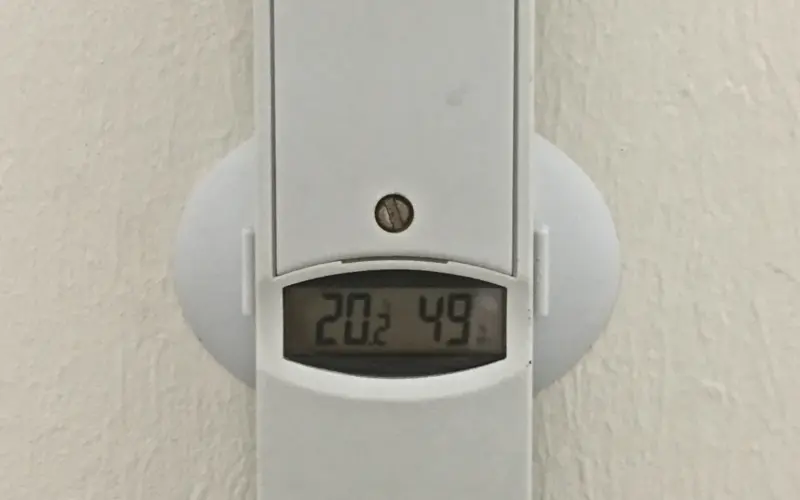
Without a thermostat, a heater keeps running until you switch it off. With a thermostat, it only switches on when needed, saving electricity or fuel. In the manual for its 2 kW fan heater, Vitavia advises determining the right dial setting once with a min-max thermometer, because every greenhouse cools down differently. A smart thermometer with hygrometer even sends the overnight lows to your phone.
For output per area, Vitavia gives a rule of thumb for the 2 kW fan heater of 1,000 watts for about 2 x 3 meters and 2,000 watts for about 3 x 4 meters. According to Vitavia, the 3 kW models Carinae and Antares are intended for up to 40 cubic meters. Single glazing and drafty doors push these figures up.
Third fork: the protection rating
Condensation drips, and you also water the plants. IPX4 means protection against splashing water from all directions. Eurom, for example, sells fan heaters such as the Safe-t-Fanheater 2000 with thermostat and names garages and sheds as places of use, but does not state a protection rating. That may be fine in a garden shed. For a greenhouse, we would choose a device with a stated IPX4 rating.
If the greenhouse is still in the planning stage, our greenhouse guide (in German) has more on glazing. Twin-wall polycarbonate panels retain heat better than single glass, and you will notice that later with every heating bill.
Heating electrically: the outlet comes first
According to the German electrical industry initiative ELEKTRO+, outdoor outlets must be protected against water ingress, which is why they have hinged covers. According to ELEKTRO+, residual current devices (RCDs) with a tripping current of no more than 30 mA limit the risk of a life-threatening heart rhythm disturbance. If the garden circuit lacks such a device, a qualified electrician should retrofit one before winter.
The Vitavia manual also requires that no other devices be connected to the same outlet, that the fan heater not be operated via a timer and that any extension cord be as short as possible and fully unrolled. Oddly, the same manual describes the device as unsuitable for wet or damp environments despite its IPX4 rating. So read your device’s manual in full before you set it up.
Heating with a flame: take carbon monoxide seriously
This is where it gets serious. The Bonn professional fire department warns against operating gas radiant heaters, patio heaters and gas grills indoors; they belong outside. Carbon monoxide can be neither smelled nor tasted. The German Fire Brigade Association (Deutscher Feuerwehrverband) names sudden headaches while gas-powered devices are running as the first warning sign. If that happens, leaving the room, ventilating and, if in doubt, calling 112 (the emergency number in Germany and across Europe) is the right response.
In the manual for the Vit Fire paraffin heater, Vitavia writes that the device is intended only for greenhouses and not for living spaces; it requires adequate ventilation and at least 60 cm clearance from anything flammable. In the manual for its Frosty gas heater, Bio Green points out that the device is not connected to a flue and that suitable ventilation measures are necessary.
Our position is clear. In a garden shed where you work or sit, a flame without a flue has no place; there you heat electrically. If you still use gas or paraffin in the greenhouse, hang up a carbon monoxide detector that sounds the alarm when you walk in.
Six frost heaters for greenhouse and cold frame
Bio Green Palma: the solid standard choice
2,000 watts, electric fan heater, IPX4 according to the listing. The Palma is available with a manual thermostat (Palma Basic) and with a digital thermostat. Its fan circulates 163 cubic meters per hour, carrying the heat into the corners as well. For greenhouses with an outlet, this is the class we would start with.
Bio Green Phoenix: reserve for large greenhouses
Three heat settings up to 2,800 watts, 460 cubic meters of air per hour and a thermostat from 0 to 26 °C. In summer, the fan also runs without heating. At full power it draws a good 12 amps, which leaves little headroom on a garden circuit with a 16 A fuse for a pump or lighting. A 6 m² greenhouse does not need that much output.
Bio Green Frostwächter 135: warmth at ground level
A tubular heater with 135 watts, also available as a smaller 80-watt version, splash-proof to IPX4 according to the listing. There is no built-in thermostat; for controlled operation, Bio Green recommends its separate Thermo 2. The tube fits well under shelves or in a cold frame. It will not keep an entire greenhouse warm in hard frost.
Vitavia Vit Fire: when there is no cable
According to Vitavia, the paraffin heater delivers 300 watts, holds 4.5 liters and burns for about seven days per fill, intended for greenhouses up to 4 m². Only premium paraffin is permitted, no lamp oil. Because the flame gives off CO₂, Vitavia considers the device unsuitable for orchids and cacti. On Amazon, it is listed as the Vitavia Paraffinheizung.
Bio Green Warmax Power 5: twice the flame
600 watts, double that of the Vit Fire, specified for greenhouses up to 5 m². According to buyer reports, the heat becomes marginal in a greenhouse of about 6 m². For larger areas, electricity or gas is the better option.
Bio Green EcoPilot ECP 4500: gas for large areas
4,500 watts from an LPG cylinder, stainless steel housing, a thermostat from 0 to 20 °C and, according to the listing, suitable for greenhouses up to 22 m². Large greenhouses without a power connection are its territory. Ventilation and placement as specified in the manual are non-negotiable here. It does not belong in a garden shed.
Where the forks lead
- Greenhouse with an outlet, up to about 12 m²: Bio Green Palma with thermostat.
- Large greenhouse with a strong circuit: Bio Green Phoenix; check the circuit protection first.
- Cold frame or a single shelf: Frostwächter 135 with a separate thermostat.
- Small greenhouse without power: Vitavia Vit Fire, with ventilation and clearance as specified in the manual.
- Large area without power: EcoPilot ECP 4500, only with ventilation and a CO detector.
- Garden shed where you spend time: electric only, on a protected outdoor outlet.
Frequently asked questions
Electric, paraffin or gas in the greenhouse?
Electric heaters produce no exhaust fumes and can be finely controlled by thermostat. Paraffin heaters need no connection but run with an open flame. Gas heaters deliver plenty of output without a power outlet and require a liquefied gas (LPG) cylinder. If you have power in the garden, heat electrically.
How many watts does a greenhouse frost heater need?
For its 2 kW fan heater, Vitavia gives a rule of thumb of 1,000 watts for about 2 x 3 meters and 2,000 watts for about 3 x 4 meters. Single glazing and drafty doors push these figures up; twin-wall polycarbonate panels retain heat better.
What should I look for in the protection rating?
In a greenhouse, condensation drips and you also water the plants. IPX4 means protection against splashing water from all directions. A fan heater without a stated protection rating may be fine in a garden shed, but for a greenhouse we would choose a device rated IPX4.
What does the power outlet for a fan heater need?
According to the German electrical industry initiative ELEKTRO+, outdoor outlets must be protected against water ingress. A residual current device (RCD) rated at no more than 30 mA belongs in the garden circuit. Vitavia also requires that no other devices be connected to the same outlet, that no timer be used and that an extension cord be fully unrolled.
Is a gas or paraffin heater in the greenhouse dangerous?
Carbon monoxide can be neither smelled nor tasted; according to the German Fire Brigade Association (Deutscher Feuerwehrverband), sudden headaches are the first warning sign. If you heat with a flame, provide ventilation as specified in the manual and hang up a carbon monoxide detector. Such a device does not belong in a garden shed where you spend time.
Which frost heater suits a cold frame?
A tubular heater such as the Bio Green Frostwächter 135 with 135 watts, protected to IPX4 according to the listing. It has no built-in thermostat; Bio Green recommends its separate Thermo 2 for that. The tube will not keep an entire greenhouse warm in hard frost.
Sources
- Vitavia: Vitavia 2 kW electric heater with manual
- Vitavia: Carinae electric heater
- Vitavia: Antares electric heater
- Vitavia: Vit Fire paraffin heater with manual
- Bio Green: Frosty greenhouse heater manual (PDF)
- Eurom: Safe-t-Fanheater 2000
- Haus & Grund Bonn/Rhein-Sieg: Carbon monoxide advice from the Bonn professional fire department and the German Fire Brigade Association
- ELEKTRO+: The residual current device
- ELEKTRO+: Outdoor electrical installation
Where to buy
- Bio Green PalmaCheck price at Amazon.deCheck price at Amazon.co.ukCheck price at Amazon.nlCheck price at Amazon.com.beCheck price at Amazon.frCheck price at Amazon.itCheck price at Amazon.esCheck price at Amazon.plCheck price at Amazon.seAvailable in Germany: Amazon.de
- Bio Green PhoenixCheck price at Amazon.deCheck price at Amazon.co.ukCheck price at Amazon.nlCheck price at Amazon.com.beCheck price at Amazon.frCheck price at Amazon.itCheck price at Amazon.esCheck price at Amazon.plCheck price at Amazon.seAvailable in Germany: Amazon.de
- Bio Green Frostwächter 135Check price at Amazon.deCheck price at Amazon.co.ukCheck price at Amazon.nlCheck price at Amazon.com.beCheck price at Amazon.frCheck price at Amazon.itCheck price at Amazon.esCheck price at Amazon.plCheck price at Amazon.seAvailable in Germany: Amazon.de
- Vitavia Vit FireCheck price at Amazon.deCheck price at Amazon.co.ukCheck price at Amazon.nlCheck price at Amazon.com.beCheck price at Amazon.frCheck price at Amazon.itCheck price at Amazon.esCheck price at Amazon.plCheck price at Amazon.seAvailable in Germany: Amazon.de
- Bio Green Warmax Power 5Check price at Amazon.deCheck price at Amazon.co.ukCheck price at Amazon.nlCheck price at Amazon.com.beCheck price at Amazon.frCheck price at Amazon.itCheck price at Amazon.esCheck price at Amazon.plCheck price at Amazon.seAvailable in Germany: Amazon.de
- Bio Green EcoPilot ECP 4500Check price at Amazon.deCheck price at Amazon.co.ukCheck price at Amazon.nlCheck price at Amazon.com.beCheck price at Amazon.frCheck price at Amazon.itCheck price at Amazon.esCheck price at Amazon.plCheck price at Amazon.seAvailable in Germany: Amazon.de
Still undecided?
Keep comparing at your own pace – every article in this category is checked monthly for new and discontinued models.