Contents11 sections
This guide was first published in German on handgetestet.de.
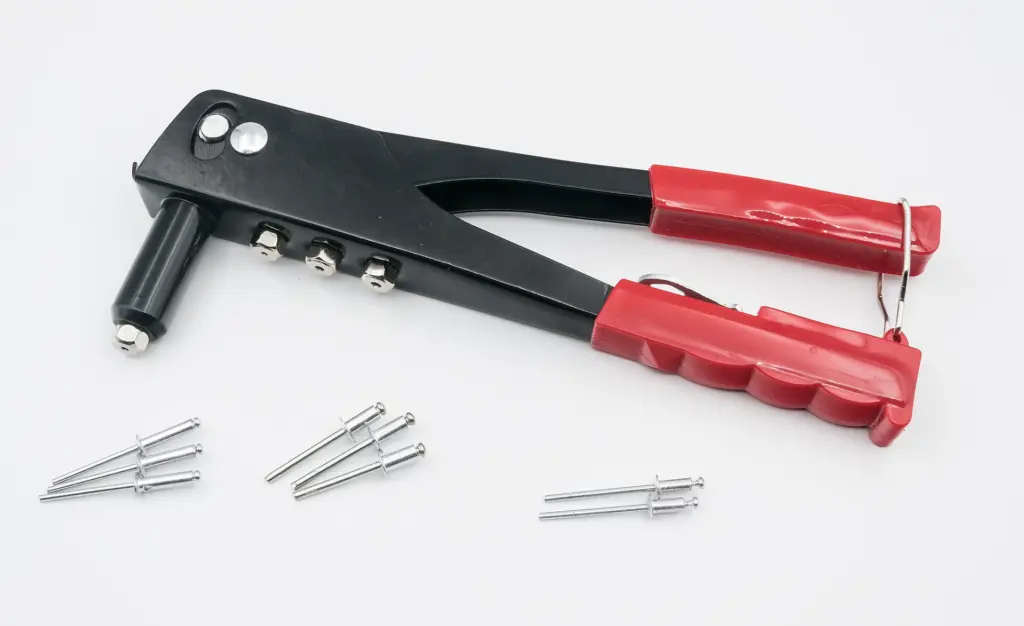
If you buy a rivet tool for aluminum rivets and later want to patch a stainless steel panel on your trailer, you often end up with a tool that simply is not up to the job. For occasional jobs up to 4.8 mm, including stainless steel, we consider a force-reducing hand riveter such as the Rapid RP100 Multi the sensible place to start. A cordless rivet gun only pays off once you regularly set dozens of rivets in one go or need 6 mm rivets.
The decision comes down to three numbers. Rivet diameter, material, quantity.
Choose the rivet first, then the tool
Blind rivets with diameters of 3.2, 4.0 and 4.8 mm are common. An aluminum rivet gives way easily when set, while a stainless steel rivet requires considerably more pulling force before its mandrel snaps at the break point. That is why manufacturers separate their specifications by material. With the Gesipa NTX, for example, the limit is 5 mm for aluminum and 4 mm for steel and stainless steel. The length depends on the material being joined. Gesipa gives a rule of thumb: material thickness plus rivet diameter. Two sheets of 3 mm each and a 4 mm hole result in a 4 × 10 mm rivet. According to Gesipa, the drill hole should be about 0.1 mm larger than the rivet, so 4.9 mm for a 4.8 mm rivet, clean and free of burrs. A shank that is too long sticks out unattractively and, according to the manufacturer, can even cause injuries. A decent cordless drill is enough for the holes; tips on that are in our cordless drill/driver guide.
That leaves force. Cordless tools state a setting or pulling force in newtons and a stroke, meaning the distance the tool pulls the mandrel back in one pull. Hand riveters work with levers. On the NTX, the stroke is 8 mm; the cordless tools in our table pull between a good 20 and 30 mm. The longer the stroke, the less often you have to reset with long mandrels.
Six rivet tools and their key specs
All values come from the manufacturers‘ data sheets and manuals.
For a few rivets a year: Gesipa NTX
According to Gesipa, the NTX consists of a die-cast aluminum housing and forged handles made of chrome vanadium steel. An intermediate lever is designed to reduce the required hand force and cushion the jolt when the mandrel snaps. The slim head reaches into corners where a cordless tool will not fit. Three nosepieces are included.
This version has no opening spring, so the riveter has to be pulled open again by hand. If you work a lot with 4.8 mm stainless steel, this is the wrong tool.
For DIYers working with stainless steel: Rapid RP100 Multi
Rapid specifies the RP100 Multi for 3.2, 4.0 and 4.8 mm rivets made of aluminum, stainless steel and copper. The nosepiece does not need to be changed. Useful in everyday work is the built-in gauge, which lets you check material thickness and rivet diameter before the wrong rivet ends up in the hole. There is also a mandrel collector and a belt clip. Rapid states a five-year warranty. For the garage, the trailer or an aluminum rain gutter, this is in our view the most sensible choice.
For installation and overhead work: Milwaukee M12 BPRT
According to Milwaukee, the smallest cordless tool in this selection measures 165 mm without the collection container. It handles aluminum, steel, stainless steel and copper rivets up to 4.8 mm, with a stroke of 20.32 mm. A single 2.0 Ah charge is said to be good for up to 325 stainless steel rivets of 4.8 mm. If you already have M12 batteries, this takes a lot of strain off your hand.
For Makita owners: Makita DRV150
Makita states 10 kN of setting force, a 25 mm stroke and rivets from 2.4 to 4.8 mm. A mechanical holder keeps the rivet in the nosepiece, so your hand does not have to guide it. According to the manufacturer, one battery manages up to 2,800 riveting cycles. The mandrel container must be fitted; otherwise, according to the manual, the tool will not work.
For 6 mm rivets, Makita offers the larger DRV250, which we have not included here.
For the workshop: Gesipa AccuBird Pro
Gesipa builds the AccuBird Pro on the cross-brand CAS battery system, so an existing CAS battery will fit. Key specs according to the data sheet: 13,000 N setting force, 25 mm stroke, brushless motor, 2.10 kg with battery. The tool sets stainless steel rivets from 2.4 to 6.0 mm, and seven nosepieces come in the box.
For a hobby workshop in the basement, that is considerably more tool than necessary. In a workshop that processes stainless steel every day, things look different.
For large rivets: Milwaukee M18 ONEFPRT
Here, the working range only begins at 4.8 mm and extends to 7.0 mm. Milwaukee states 20,000 N of pulling force with a 30 mm stroke and up to 900 stainless steel rivets of 4.8 mm or 590 of 6.4 mm per 2.0 Ah charge. The mandrel container is transparent, so you can see when it is full.
For 3.2 mm rivets on a mailbox, you will also need a hand riveter.
Spent mandrels, nosepiece, care
The snapped-off mandrel is short and sharp. In the manual for the DRV150, Makita warns to keep hands and face away from the front of the tool, because the rivet or mandrel can be ejected. The tool should never point at people and should be switched off when inserting the rivet, and broken-off mandrels do not belong on the floor, where you can slip on them or prick yourself. According to the manual, anyone working at height should first check that nobody is below.
Gesipa recommends cleaning the jaws and nosepiece regularly and oiling them only sparingly. According to the manufacturer, a worn nosepiece leads to jammed spent mandrels. If the tool jams or no longer sets rivets completely, Gesipa advises checking the jaws and replacing them as a spare part if necessary. And if you are looking for pliers that can also cut and grip besides riveting, our pliers set guide has the right complement.
Which rivet tool for which job?
- Aluminum now and then, including tight spots: Gesipa NTX.
- DIYers with aluminum and stainless steel up to 4.8 mm: Rapid RP100 Multi.
- Already in the M12 system and a lot of overhead work: Milwaukee M12 BPRT.
- Makita 18 V batteries on hand, rivets up to 4.8 mm: Makita DRV150.
- Stainless steel up to 6 mm every day, or CAS batteries on hand: Gesipa AccuBird Pro.
- Metal fabrication with 6.4 and 7 mm rivets: Milwaukee M18 ONEFPRT.
Buying a cordless tool just because it sounds more convenient is, in our view, a mistake. If you set twenty rivets a year, a good hand riveter will serve you well, and you never have to think about the charge level. If you already have compatible batteries on the shelf, our power tool battery guide has more on the systems.
Frequently asked questions
Which rivet tool do you need for stainless steel?
Stainless steel rivets require considerably more pulling force than aluminum rivets. The Gesipa NTX handles aluminum up to 5 mm, but steel and stainless steel only up to 4 mm. According to the manufacturer, the Rapid RP100 Multi also sets stainless steel rivets of 3.2, 4.0 and 4.8 mm without having to change the nosepiece.
How long does a blind rivet need to be?
Gesipa gives a rule of thumb: material thickness plus rivet diameter. Two sheets of 3 mm each and a 4 mm hole result in a 4 × 10 mm rivet. The drill hole should be about 0.1 mm larger than the rivet, so 4.9 mm for a 4.8 mm rivet, clean and free of burrs.
When is a cordless rivet gun worth it?
When you regularly set dozens of rivets in one go, do a lot of overhead work or need 6 mm rivets. If you set twenty rivets a year, a good hand riveter will do. If you already own compatible batteries, Milwaukee, Makita and Gesipa offer tools for your system.
What does stroke mean on a rivet tool?
The stroke is the distance the tool pulls the mandrel back in one pull. With the Gesipa NTX hand riveter it is 8 mm; the cordless tools in the comparison pull between a good 20 and 30 mm. The longer the stroke, the less often you have to reset with long mandrels.
What should you watch out for in terms of safety when riveting?
The snapped-off mandrel is short and sharp. Makita warns to keep hands and face away from the front of the tool, because the rivet or mandrel can be ejected. Never point the tool at people, do not leave spent mandrels lying on the floor, and when working at height, check beforehand that nobody is standing below.
Why does the rivet tool jam?
According to Gesipa, a worn nosepiece leads to jammed spent mandrels. The jaws and nosepiece should be cleaned regularly and oiled only sparingly. If the tool no longer sets rivets completely, Gesipa advises checking the jaws and replacing them as a spare part if necessary.
Sources
- Gesipa: NTX, technical data
- Rapid: RP100 Multi
- Milwaukee: M12 BPRT
- Makita: DRV150, technical data
- Makita: instruction manual DRV150/DRV250
- Gesipa: AccuBird Pro, technical data
- Milwaukee: M18 ONEFPRT
- Gesipa: Calculating the length of blind rivets
- Gesipa: Setting blind rivets in three steps
- Gesipa: Proper care for a blind rivet tool
Where to buy
- Rapid RP100 MultiCheck price at Amazon.deCheck price at Amazon.co.ukCheck price at Amazon.nlCheck price at Amazon.com.beCheck price at Amazon.frCheck price at Amazon.itCheck price at Amazon.esCheck price at Amazon.plCheck price at Amazon.seAvailable in Germany: Amazon.de
- Gesipa NTX 1434040Check price at Amazon.deCheck price at Amazon.co.ukCheck price at Amazon.nlCheck price at Amazon.com.beCheck price at Amazon.frCheck price at Amazon.itCheck price at Amazon.esCheck price at Amazon.plCheck price at Amazon.seAvailable in Germany: Amazon.de
- Milwaukee M12 BPRTCheck price at Amazon.deCheck price at Amazon.co.ukCheck price at Amazon.nlCheck price at Amazon.com.beCheck price at Amazon.frCheck price at Amazon.itCheck price at Amazon.esCheck price at Amazon.plCheck price at Amazon.seAvailable in Germany: Amazon.de
- Makita DRV150ZCheck price at Amazon.deCheck price at Amazon.co.ukCheck price at Amazon.nlCheck price at Amazon.com.beCheck price at Amazon.frCheck price at Amazon.itCheck price at Amazon.esCheck price at Amazon.plCheck price at Amazon.seAvailable in Germany: Amazon.de
- Gesipa AccuBird Pro 1679659Check price at Amazon.deCheck price at Amazon.co.ukCheck price at Amazon.nlCheck price at Amazon.com.beCheck price at Amazon.frCheck price at Amazon.itCheck price at Amazon.esCheck price at Amazon.plCheck price at Amazon.seAvailable in Germany: Amazon.de
- Milwaukee M18 ONEFPRT-0XCheck price at Amazon.deCheck price at Amazon.co.ukCheck price at Amazon.nlCheck price at Amazon.com.beCheck price at Amazon.frCheck price at Amazon.itCheck price at Amazon.esCheck price at Amazon.plCheck price at Amazon.seAvailable in Germany: Amazon.de
Still undecided?
Keep comparing at your own pace – every article in this category is checked monthly for new and discontinued models.