Contents12 sections
This guide was first published in German on handgetestet.de.
With Sony’s E-mount, the buying mistake rarely lies in the quality of the lens. It simply does not match the sensor format. If you own a full-frame camera from the Alpha 7 series, a fast standard zoom such as the Tamron 28-75mm F/2.8 G2 will in most cases serve you better than a G Master that costs twice as much. On an APS-C camera such as the Alpha 6400 or 6700, the Sigma 18-50mm F2.8 is the more sensible first step.
One mount, two sensor sizes
Sony uses the same mount for both sensor sizes. Convenient and treacherous at the same time. A full-frame lens (marked „FE“ at Sony) fits any APS-C camera, where the focal length behaves about 1.5 times longer. Conversely, a full-frame camera switches to crop mode with an APS-C-only lens, and part of the high resolution falls by the wayside.
That leads to the first rule. Only FE lenses belong on full frame. On APS-C, dedicated APS-C models are worth a look because they are much smaller and lighter.
Aperture, weight, minimum focus: what the numbers mean
F2.8 on a zoom and F1.4 to F1.8 on a prime allow shorter shutter speeds indoors and stronger subject separation. The range in weight is wide: a standard zoom weighs between just under 300 and around 700 grams, and over a day of travel that is a noticeable difference. Less attention goes to the minimum focusing distance. If you photograph food, plants or details, look at the magnification ratio; a value around 1:3 is enough for many close-ups. And then there is the filter thread. Different diameters mean separate filter sets. That costs money that is easily left out of the calculation.
Third-party makers and the question of compatibility
The choice of third-party lenses is large: Sigma, Tamron, Samyang and Viltrox offer autofocus models for both formats. Whether eye detection, tracking and high burst rates fully work with a particular lens on your camera is stated in the manufacturers‘ compatibility lists. Those few minutes are well spent, especially with older camera bodies.
Six lenses for Sony E-mount compared
| Model | Format and type | Weight according to manufacturer | Minimum focus / magnification | Best for |
|---|---|---|---|---|
| Tamron 28-75mm F/2.8 Di III VXD G2 | Full frame, standard zoom | 540 g | 0.18 m / 1:2.7 | Most Alpha 7 owners |
| Sony FE 24-70mm F2.8 GM II | Full frame, standard zoom | 695 g | 0.21 m / 0.32x | Professional use, weddings, reportage |
| Sigma 18-50mm F2.8 DC DN Contemporary | APS-C, standard zoom | 290 g | 0.121 m / 1:2.8 | Alpha 6000 series, ZV-E10 |
| Samyang AF 35mm F1.8 FE | Full frame, prime | 210 g | 0.29 m | Lightweight everyday and reportage kit |
| Viltrox AF 56mm F1.4 E | APS-C, prime | 290 g | 0.60 m | Portraits on APS-C on a small budget |
| Sony FE 70-200mm F4 Macro G OSS II | Full frame, telephoto zoom | 794 g | 0.26–0.42 m / 0.5x | Nature, sports, travel with telephoto needs |
Tamron 28-75mm F/2.8 Di III VXD G2
How much standard zoom do you really need? The Tamron is the sober answer to that question. According to the manufacturer, it weighs 540 grams, focuses down to 0.18 meters at the short end and reaches a magnification of 1:2.7 there; at the long end it is 1:4.1. With a 67-millimeter filter thread, filters are cheaper than for the Sony. The trade-off is at the wide end. It starts at 28 instead of 24 millimeters, and in tight interiors or for landscapes that missing bit is clearly felt.
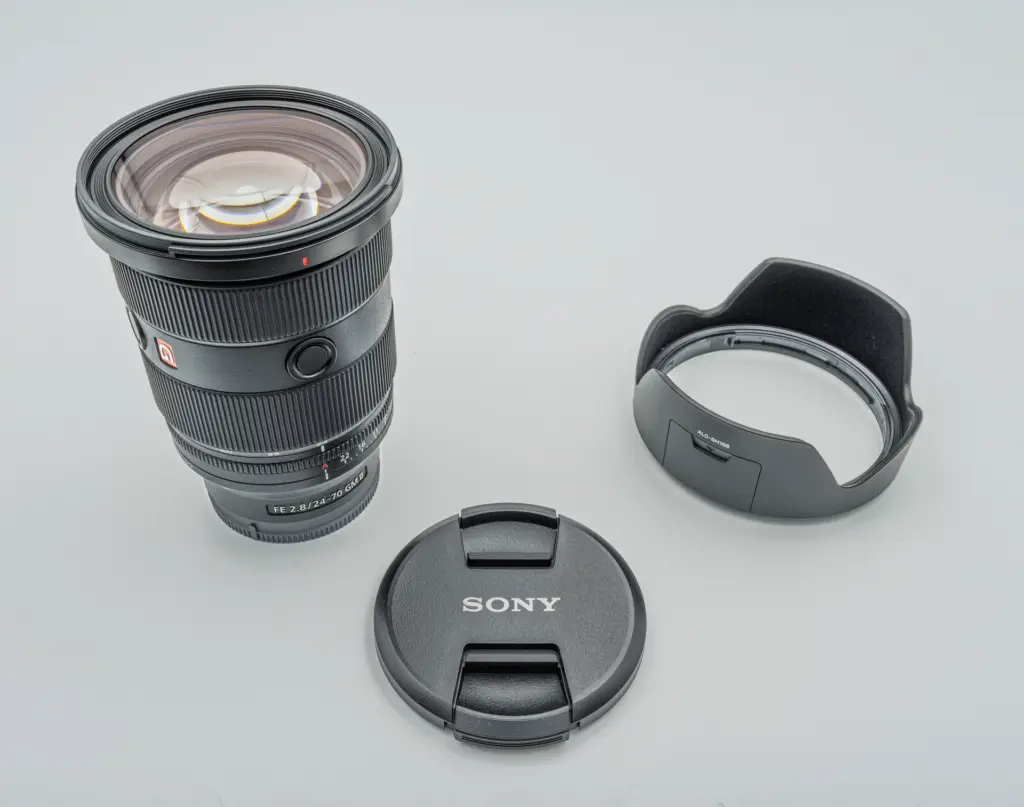
Sony FE 24-70mm F2.8 GM II
According to the manufacturer, Sony’s own top zoom tips the scales at 695 grams, has an aperture with eleven blades and focuses down to 0.21 meters at 24 millimeters. The filter diameter is 82 millimeters. If you earn money with it, you get full support for all camera functions and the wide-angle range. As a hobbyist, you pay a lot here for differences that rarely show up in the finished image.
Sigma 18-50mm F2.8 DC DN Contemporary
On APS-C, the Sigma corresponds roughly to a 27-75-millimeter zoom on full frame, at a constant F2.8. Sigma states 290 grams and a minimum focusing distance of 12.1 centimeters at the wide end, which results in a magnification of 1:2.8. The filter thread is small at 55 millimeters. Sigma does not list optical image stabilization in the lens, and on cameras without sensor stabilization you should plan for that when shooting handheld video.
Samyang AF 35mm F1.8 FE
210 grams. No lens in this comparison is lighter. The manufacturer specifies a minimum focusing distance of 0.29 meters, a 58-millimeter filter thread and weather sealing. 35 millimeters is a classic reportage focal length, wide enough for street scenes and tight enough for an environmental portrait. If you have only ever used a zoom, this lens teaches you to zoom with your feet again. Not a drawback, but an adjustment.
Viltrox AF 56mm F1.4 E
Viltrox made a name for itself with affordable autofocus primes. The 56mm F1.4 is designed for APS-C, where it corresponds to roughly 85 millimeters in full-frame terms, the classic portrait focal length. According to the retailer, it weighs 290 grams, focuses from 60 centimeters and uses a stepping motor. For detail shots, the minimum focusing distance is rather long. On a full-frame camera, it only runs in crop mode.
Sony FE 70-200mm F4 Macro G OSS II
What is unusual about this telephoto zoom is its magnification of up to 0.5x according to Sony, in other words 1:2. It does not quite replace a macro lens, but it is often enough for flowers and insects. Sony states 794 grams, optical stabilization and compatibility with the SEL14TC and SEL20TC teleconverters. In a sports hall, F4 becomes the limit. Outdoors in daylight, it hardly matters.
Which lens for which camera
One lens for almost everything on full frame: here the Tamron 28-75mm F/2.8 G2 comes first, and if you often work in tight spaces, you step up to the Sony 24-70mm GM II. Light and affordable on full frame is the Samyang AF 35mm F1.8 FE, as a second lens or as a deliberate limitation to one focal length. On APS-C, the Sigma 18-50mm F2.8 follows the kit zoom, complemented by the Viltrox 56mm F1.4 for portraits. Animals, sports in daylight and travel are covered by the Sony 70-200mm F4 Macro G OSS II, which also works well on APS-C, where it behaves like a 105-300-millimeter zoom.
Our advice on the order: first a standard zoom, then after a few months a look at the image metadata to see which focal lengths you actually use. Only then the prime.
If you are mainly looking for primes for a Panasonic or Leica camera, you will find the selection in our guide to L-mount primes. If you have not chosen a camera yet, you are better off starting with the mirrorless camera guide, and for carrying several lenses, the overview of camera backpacks will help.
Frequently asked questions
Do full-frame lenses fit a Sony APS-C camera?
Yes, both sensor sizes use the same mount. An FE lens fits any APS-C camera, where the focal length behaves about 1.5 times longer. Conversely, a full-frame camera switches to crop mode with an APS-C-only lens, and part of the resolution is lost. That is why only FE lenses belong on full frame.
What is the difference between the Tamron 28-75mm and the Sony 24-70mm GM II?
According to the manufacturer, the Tamron weighs 540 grams and has a 67-millimeter filter thread, but only starts at 28 millimeters. The Sony offers wide angle from 24 millimeters, weighs 695 grams and has an 82-millimeter filter diameter. As a hobbyist, you pay a lot with the Sony for differences that rarely show up in the finished image.
Do lenses from Sigma, Tamron, Samyang or Viltrox fully work on Sony cameras?
Mostly yes; all four offer autofocus models for both formats. Whether eye detection, tracking and high burst rates fully work with a particular lens on your camera is stated in the manufacturers' compatibility lists. Especially with older camera bodies, it pays to check before buying.
Which lens is suitable for portraits on APS-C?
The Viltrox AF 56mm F1.4 E is designed for APS-C, where it corresponds to roughly 85 millimeters in full-frame terms, the classic portrait focal length. According to the retailer, it weighs 290 grams and focuses from 60 centimeters. For detail shots, the minimum focusing distance is rather long, and on full frame it only runs in crop mode.
Does the Sony 70-200mm F4 Macro G OSS II replace a macro lens?
Not entirely. With a magnification of up to 0.5x according to Sony, it is often enough for flowers and insects. It weighs 794 grams, has optical stabilization and works with the SEL14TC and SEL20TC teleconverters. In a sports hall, F4 becomes the limit; outdoors in daylight, hardly.
In what order should you buy lenses?
Start with a standard zoom. After a few months, a look at the image metadata shows which focal lengths you actually use; only then does the prime follow. As a lightweight addition on full frame, the Samyang AF 35mm F1.8 FE at 210 grams is a good choice, a classic reportage focal length.
Sources
- Tamron: 28-75mm F/2.8 Di III VXD G2 (A063), specifications
- Sony Japan: FE 24-70mm F2.8 GM II (SEL2470GM2), specifications
- Sony Japan: FE 70-200mm F4 Macro G OSS II (SEL70200G2), specifications
- Sigma: 18-50mm F2.8 DC DN Contemporary
- Samyang: AF 35mm F1.8 FE
- Calumet (German retailer): Viltrox 56mm F1.4 AF Sony E-Mount APS-C, specifications
Where to buy
- Tamron 28-75mm F/2.8 Di III VXD G2 Sony ECheck price at Amazon.deCheck price at Amazon.co.ukCheck price at Amazon.nlCheck price at Amazon.com.beCheck price at Amazon.frCheck price at Amazon.itCheck price at Amazon.esCheck price at Amazon.plCheck price at Amazon.seAvailable in Germany: Amazon.de
- Sony FE 24-70mm F2.8 GM IICheck price at Amazon.deCheck price at Amazon.co.ukCheck price at Amazon.nlCheck price at Amazon.com.beCheck price at Amazon.frCheck price at Amazon.itCheck price at Amazon.esCheck price at Amazon.plCheck price at Amazon.seAvailable in Germany: Amazon.de
- Sigma 18-50mm F2.8 DC DN Contemporary Sony ECheck price at Amazon.deCheck price at Amazon.co.ukCheck price at Amazon.nlCheck price at Amazon.com.beCheck price at Amazon.frCheck price at Amazon.itCheck price at Amazon.esCheck price at Amazon.plCheck price at Amazon.seAvailable in Germany: Amazon.de
- Samyang AF 35mm F1.8 FECheck price at Amazon.deCheck price at Amazon.co.ukCheck price at Amazon.nlCheck price at Amazon.com.beCheck price at Amazon.frCheck price at Amazon.itCheck price at Amazon.esCheck price at Amazon.plCheck price at Amazon.seAvailable in Germany: Amazon.de
- Viltrox AF 56mm F1.4 ECheck price at Amazon.deCheck price at Amazon.co.ukCheck price at Amazon.nlCheck price at Amazon.com.beCheck price at Amazon.frCheck price at Amazon.itCheck price at Amazon.esCheck price at Amazon.plCheck price at Amazon.seAvailable in Germany: Amazon.de
- Sony FE 70-200mm F4 Macro G OSS IICheck price at Amazon.deCheck price at Amazon.co.ukCheck price at Amazon.nlCheck price at Amazon.com.beCheck price at Amazon.frCheck price at Amazon.itCheck price at Amazon.esCheck price at Amazon.plCheck price at Amazon.seAvailable in Germany: Amazon.de