Contents11 sections
This guide was first published in German on handgetestet.de.
Six square meters of bathroom, porcelain stoneware in a 60 × 60 format, a 25-kilo bag of flexible adhesive. That is a weekend on which the tools decide the result more than your skill does. Our order is clear: first a proper mixer such as the Collomix XQ1 HF, then a notched trowel with the right notch size, and for large formats a leveling system. Add a grout float and a rubber mallet. Electric tapping tools are for professionals working with thick slabs.
Why the adhesive comes first
Tile adhesive is unforgiving. In its application instructions, Sopro specifies that the mortar must be mixed thoroughly and free of lumps, left to mature for three to five minutes and then stirred vigorously once more. According to the manufacturer, mortar that has started to set must not be made workable again with either water or fresh mortar. A mixer is built for exactly this job. Collomix even prohibits using its machine as a drill because the torque is too high for that.
Next comes the notched trowel. Sopro recommends first spreading a contact layer with the smooth edge and then combing the adhesive bed at an angle of 45 to 60 degrees. Only cover as much area as you can tile within the open time of around 30 minutes. How much adhesive stays on the surface is shown in the manufacturer’s consumption table. With Sopro Classic plus 808, it is about 1.2 kg per square meter with a 4 mm notch, about 2.4 kg with 8 mm and about 3.0 kg with 10 mm. With an 8 mm notch, one bag is therefore enough for a good ten square meters.
For our bathroom, that means two things. Buy the notch size to match the adhesive and the tile, not by feel. And buy two trowels rather than one. Rubi itself advises keeping one with a square notch and one with a U-shaped notch in your toolbox.
Six tools compared
Collomix XQ1 HF
The XQ1 is the lightest mixer in the new XQ series and has a single gear; speed is controlled with the variable-speed trigger. Collomix specifies 1,100 watts, 670 revolutions per minute under load and mixing quantities of up to 40 liters. A matching set is available with the WK 120 HF paddle, which mixes from the bottom up and, according to the data sheet, is designed for 15 to 25 kg of material. That is exactly one bag of tile adhesive. The machine is also sold without a paddle, in which case you need a paddle with a HEXAFIX shank.
Rubi 45° notched trowel Rubiflex
On this 28 cm trowel, the teeth are angled. Rubi says this means less effort and better adhesion of the adhesive to the substrate. The open handle has an aluminum core. It is available with 6, 8, 10 and 12 mm square notches and with an R-10 half-round notch. For 60 cm tiles, we plan with the 10 mm version unless the adhesive’s data sheet says otherwise.
Rubi Delta Level System Kit
Clips under the tile, wedge through the clip, tighten with the pliers. Rubi supplies a pair of pliers, 100 clips and 100 wedges in a bucket in the kit and specifies tile thicknesses of 3 to 12 mm. Once the adhesive has set, the manufacturer says to knock the clips out in the direction of the joint with a rubber mallet; the wedges go on to the next project. Rubi also recommends placing spacers at the tile corners that are slightly thicker than the clips.
Raimondi R.L.S.
Raimondi, based in Modena, makes its wedge system in more variants. The new EVO bases are available for joints of 1, 1.5, 2 and 3 mm with tiles from 3 to 12 mm. For slabs 12 to 20 mm thick, the manufacturer offers dedicated high bases. There is also the R.L.S. Vite screw system with a rotating cap for 3 to 15 mm and in a high version for 14 to 26 mm. If you want to lay patio slabs and wall tiles with the same tool, Raimondi gets you further. For walls, Raimondi offers its own pliers.
Rubi Superpro rubber grout float
A grout float is quickly bought and quickly the wrong one. The Superpro 65970 has a white, abrasion-resistant rubber pad and, according to Rubi, is made for joints up to 3 mm. There are also a solid rubber version and a Termoflex version with a different hardness. For 2 mm joints in a bathroom, the white float is the right fit.
Montolit Battilone
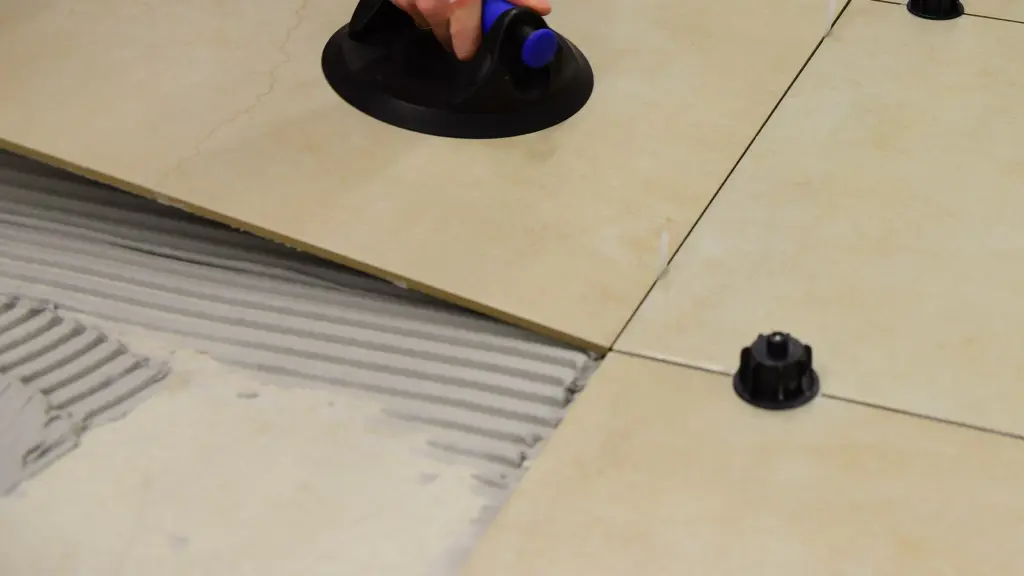
A cordless suction lifter that vibrates the tile so the air underneath can escape. Montolit specifies five settings from 4,000 to 7,000 beats per minute and states that this also works with slabs more than 2 cm thick. For a bathroom with 60 cm tiles, that is too much machine. In our view, tapping with a white rubber mallet is enough there. You need one for the leveling clips anyway.
Skin, knees, eyes
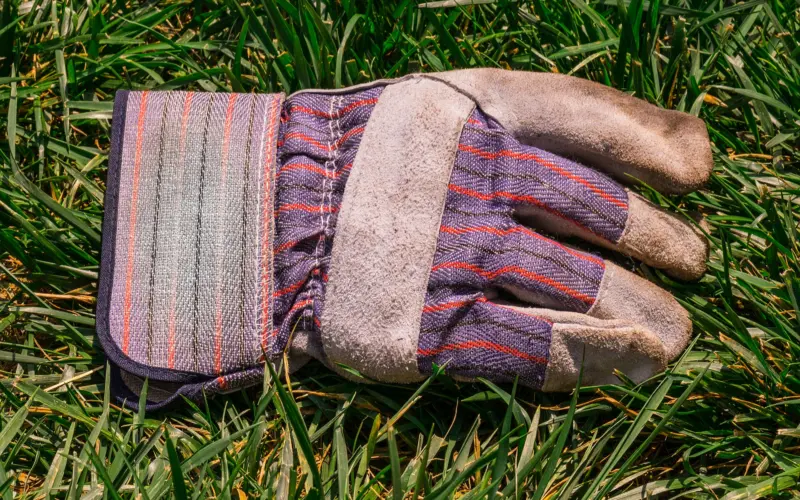
Cement mortar is a strong alkali. That is what the occupational health report for tile setters from BG BAU, the German statutory accident insurer for the construction industry, says. For washing and grouting, the insurer recommends liquid-tight gloves, with cotton liner gloves for longer wear. According to BG BAU, leather gloves offer no protection against moisture; nitrile is more versatile. Barrier cream is no substitute for gloves. With epoxy resin grout, skin contact must be avoided entirely because of the high risk of allergy. You will find suitable models in our guide to work gloves.
Sopro labels its flexible adhesive with the warning „Causes serious eye damage.“ Collomix recommends a dust mask and safety goggles while mixing and requires connection via a residual current device (RCD) rated at no more than 30 mA. And the knees: tile setters should only work on their knees with knee protection, BG BAU advises, and should only use CE-marked, type-examined products. Options include strap-on knee pads, trousers with padded pockets or kneeling mats.
How we would shop
- First bathroom with 30 to 60 cm tiles: Collomix XQ1 HF with WK 120 HF, Rubi 45° notched trowel in 8 or 10 mm, Rubi Superpro 65970, rubber mallet, knee protection.
- Large formats or rectified porcelain stoneware: add the Rubi Delta Level System Kit.
- Very narrow joints, walls and a patio in the same year: Raimondi R.L.S. with the matching bases.
- Slabs over 2 cm thick in professional use: Montolit Battilone.
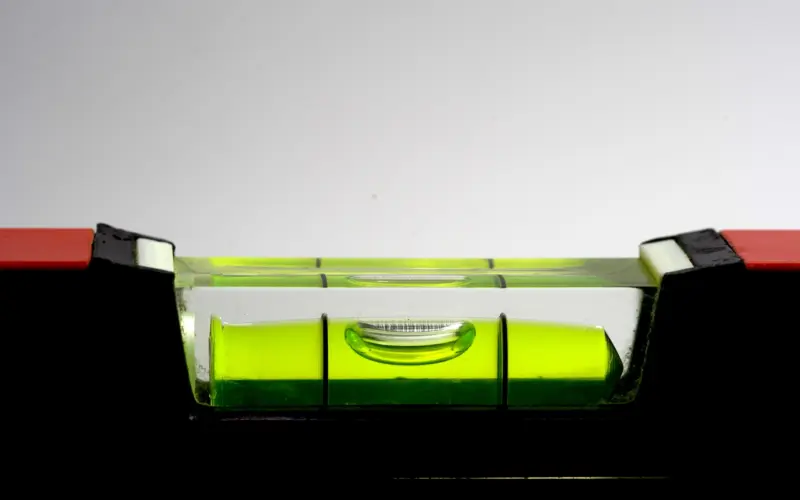
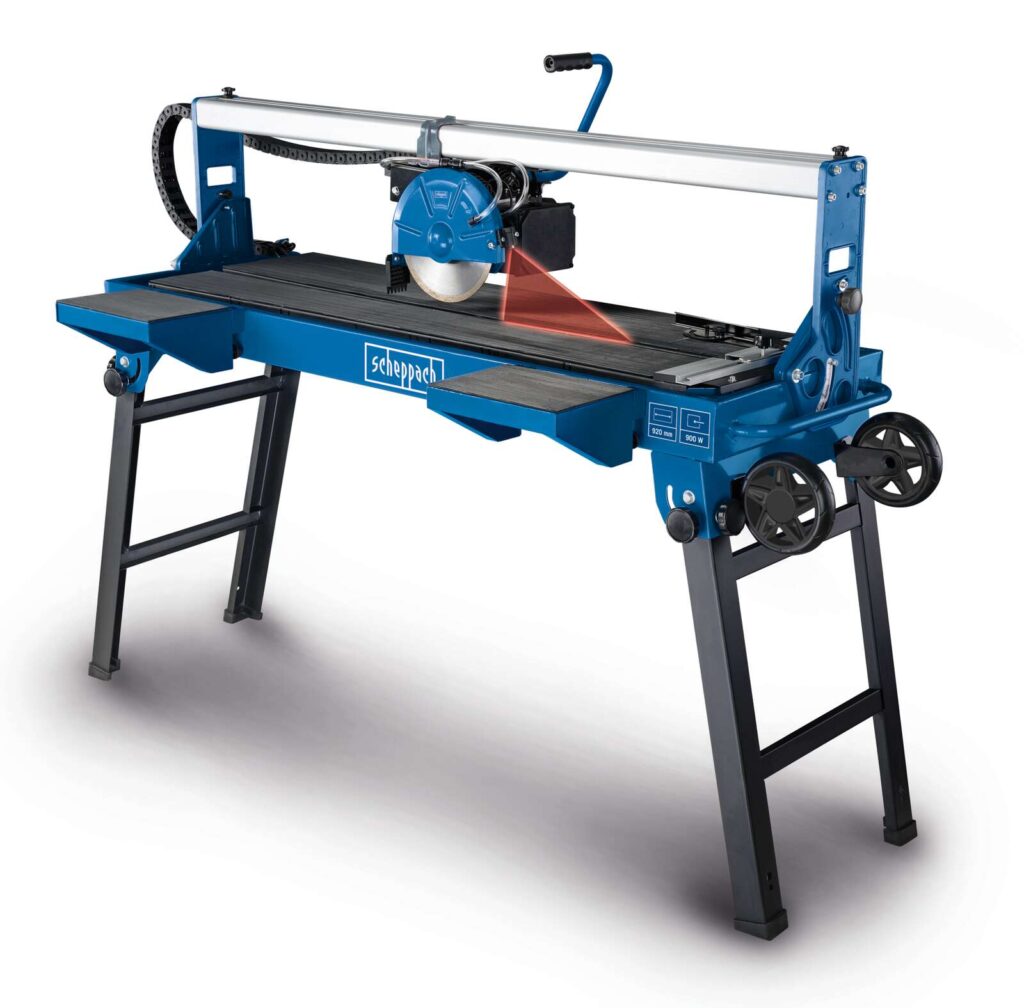
That leaves cutting. Which tile cutter suits which tile is covered in our guide to tile cutters (in German). For the slope in the shower, a good spirit level helps.
Frequently asked questions
Can you mix tile adhesive with a drill?
This guide relies on a proper mixer. Sopro requires the mortar to be mixed thoroughly and free of lumps, left to mature for three to five minutes and then stirred vigorously once more. Conversely, Collomix prohibits using its mixer as a drill because the torque is too high for that.
Which notch size do I need for tile adhesive?
One that matches the adhesive and the tile, not one chosen by feel. With Sopro Classic plus 808, a 4 mm notch leaves about 1.2 kg per square meter, 8 mm about 2.4 kg and 10 mm about 3.0 kg. For 60 cm tiles, this guide plans with the 10 mm notch unless the adhesive's data sheet says otherwise.
How do you apply tile adhesive correctly?
Sopro recommends first spreading a contact layer with the smooth edge and then combing the adhesive bed at an angle of 45 to 60 degrees. Only cover as much area as you can tile within the open time of around 30 minutes. Mortar that has started to set must not be made workable again with water.
When do you need a tile leveling system?
For large formats or rectified porcelain stoneware. The Rubi Delta Level System Kit includes pliers, 100 clips and 100 reusable wedges for tiles from 3 to 12 mm. Raimondi R.L.S. offers more variants, including for very narrow joints and slabs up to 20 mm.
Which grout float for narrow joints?
According to Rubi, the Rubi Superpro 65970 with a white, abrasion-resistant rubber pad is made for joints up to 3 mm. It suits 2 mm joints in a bathroom. There are also a solid rubber version and a Termoflex version with a different hardness.
What protective equipment do you need when laying tile?
According to BG BAU (the German statutory accident insurer for the construction industry), cement mortar is a strong alkali, so wear liquid-tight gloves, nitrile rather than leather. Collomix recommends a dust mask and safety goggles while mixing, and Sopro warns of serious eye damage. BG BAU advises kneeling only with knee protection, using CE-marked products.
Sources
- Collomix: XQ1 mixer
- Collomix: operating instructions XQ1, XQ2, XQ4, XQ6 (PDF)
- Collomix: WK paddle
- Rubi: 45° Notched trowel Rubiflex open handle
- Rubi: Delta Level System Kit
- Rubi: tile leveling systems, how to use them (in German)
- Rubi: the 10 most important tile setting tools (in German)
- Rubi: Grout floats Superpro Wood
- Raimondi: Basi R.L.S. EVO
- Raimondi: R.L.S. bases for 12 to 20 mm
- Raimondi: R.L.S. Vite
- Montolit: Battilone and technical data (PDF)
- Sopro: consumption table for tile and natural stone adhesives (PDF, in German)
- Sopro: technical product information No.1 S1 400 (PDF, in German)
- BG BAU: occupational health report for tile setters (PDF, in German)
- BG BAU: skin protection on construction sites (PDF, in German)
- BG BAU: module E 608 knee protection (PDF, in German)
Where to buy
- Collomix XQ1 HFCheck price at Amazon.deCheck price at Amazon.co.ukCheck price at Amazon.nlCheck price at Amazon.com.beCheck price at Amazon.frCheck price at Amazon.itCheck price at Amazon.esCheck price at Amazon.plCheck price at Amazon.seAvailable in Germany: Amazon.de
- Rubi Zahnkelle 45° Rubiflex 10 × 10Check price at Amazon.deCheck price at Amazon.co.ukCheck price at Amazon.nlCheck price at Amazon.com.beCheck price at Amazon.frCheck price at Amazon.itCheck price at Amazon.esCheck price at Amazon.plCheck price at Amazon.seAvailable in Germany: Amazon.de
- Rubi Delta Level System KitCheck price at Amazon.deCheck price at Amazon.co.ukCheck price at Amazon.nlCheck price at Amazon.com.beCheck price at Amazon.frCheck price at Amazon.itCheck price at Amazon.esCheck price at Amazon.plCheck price at Amazon.seAvailable in Germany: Amazon.de
- Raimondi R.L.S. NivelliersystemCheck price at Amazon.deCheck price at Amazon.co.ukCheck price at Amazon.nlCheck price at Amazon.com.beCheck price at Amazon.frCheck price at Amazon.itCheck price at Amazon.esCheck price at Amazon.plCheck price at Amazon.seAvailable in Germany: Amazon.de
- Rubi Superpro Gummi-Fugbrett 65970Check price at Amazon.deCheck price at Amazon.co.ukCheck price at Amazon.nlCheck price at Amazon.com.beCheck price at Amazon.frCheck price at Amazon.itCheck price at Amazon.esCheck price at Amazon.plCheck price at Amazon.seAvailable in Germany: Amazon.de
- Montolit BattiloneCheck price at Amazon.deCheck price at Amazon.co.ukCheck price at Amazon.nlCheck price at Amazon.com.beCheck price at Amazon.frCheck price at Amazon.itCheck price at Amazon.esCheck price at Amazon.plCheck price at Amazon.seAvailable in Germany: Amazon.de
Still undecided?
Keep comparing at your own pace – every article in this category is checked monthly for new and discontinued models.