Contents12 sections
This guide was first published in German on handgetestet.de.
After buying a new Canon EOS R, many people bring home a second zoom that covers almost the same range as the kit lens. That achieves little. A fast prime such as the Canon RF 50mm F1.8 STM is usually the better second step, with a telephoto after that. And if you still own EF lenses, think about an adapter before buying anything new.
Here the RF system is sorted by use: kit zoom, prime, telephoto, L series, third-party makers and adapter. We did not have any of these lenses on hand; all key specs come from the manufacturers‘ data sheets. If you are still torn between systems, our article on Sony E-mount lenses (in German) shows the alternative; the camera question itself is covered in our overview of mirrorless cameras (in German).
One mount, two sensor sizes
Canon builds two classes of camera with the same mount. Full-frame models such as the EOS R6 or R8 use RF lenses; APS-C models such as the R50, R10 or R7 also take the smaller RF-S lenses. An RF-S lens is designed for the smaller sensor. It does not cover the full-frame area.
This is exactly where many third-party offerings end up, because for RF, Sigma and Samyang currently list only APS-C lenses with autofocus.
Light, stabilization, weight: what the data sheets reveal
Aperture first. F1.8 instead of F4 to 7.1 means considerably more light and visibly softer background blur. With stabilization, it depends on the camera: if it has no in-body stabilizer, IS in the lens is worth a lot at telephoto focal lengths.
In weight, there is a world of difference between 160 and almost 700 grams, especially when traveling. Then the filter thread: if you use ND or polarizing filters, matching diameters are a plus; the kit zoom and the 100-400 share 67 mm. Finally, existing EF lenses remain usable with an adapter and often save you a new purchase.
Six lenses and an adapter for Canon RF
| Model | Type and format | Key specs according to the manufacturer | Best for |
|---|---|---|---|
| Canon RF 24-105mm F4-7.1 IS STM | Standard zoom, full frame | 395 g, 67 mm filter, stabilization up to 5 stops | First all-purpose zoom, travel |
| Canon RF 50mm F1.8 STM | Prime, full frame | 160 g, 43 mm filter, minimum focus distance 0.30 m | Portraits, interiors, low light |
| Canon RF 100-400mm F5.6-8 IS USM | Telephoto zoom, full frame | 635 g, 67 mm filter, Nano USM, stabilizer | Wildlife, sports, outings |
| Canon RF 70-200mm F4 L IS USM | Telephoto zoom, L series, full frame | 695 g, 77 mm filter, 5-stop stabilization | Demanding photographers |
| Sigma 18-50mm F2.8 DC DN Contemporary (RF) | Standard zoom, APS-C | 300 g, 55 mm filter, from 12.1 cm | Owners of the R50, R10, R7 |
| Samyang AF 12mm F2 RF-S | Wide angle, APS-C | 213 g, 62 mm filter, weather-sealed | Landscapes, stars, architecture |
| Canon Mount Adapter EF-EOS R | EF to RF adapter | 110 g, dust- and drip-resistant | Anyone who keeps using EF lenses |
Canon RF 24-105mm F4-7.1 IS STM
The typical kit lens ranges from wide angle to a mild portrait focal length and, according to Canon, weighs about 395 grams. The manufacturer rates the stabilizer at up to 5 stops. One special feature is close-up shooting: with manual focus, it gets as close as 13 cm at 24 mm, which Canon calls „Center Focus Macro.“ The weak point is the F7.1 aperture at the long end. In dark gyms and halls, things get sluggish. If the lens came with the camera, it should be complemented, not replaced.
Canon RF 50mm F1.8 STM
160 grams. That makes it the lightest lens on this list and the classic second purchase. F1.8 lets in roughly five times as much light as F4. It has no stabilizer of its own, but on cameras with in-body stabilization, Canon still quotes up to 7 stops for the EOS R5 and R6. On an APS-C camera, it acts like a short telephoto of around 80 mm, which suits portraits well.
For getting closer, Canon also offers the RF 85mm F2 Macro IS STM with 0.5x magnification, as well as the RF 35mm F1.8 Macro IS STM, which according to the data sheet focuses down to 17 cm.
Canon RF 100-400mm F5.6-8 IS USM
Birds in the garden, the kids‘ soccer game: for that, this telephoto zoom is the sensible entry point. According to Canon, it weighs 635 grams and focuses from 88 cm at 200 mm. According to the manufacturer, the Nano USM drive combines fast focusing with quiet operation for video. F8 at the long end needs light. In dull weather, the ISO rises accordingly.
Canon RF 70-200mm F4 L IS USM
The L in the name stands for Canon’s high-end lens line. The aperture stays at F4 across the entire range. Canon specifies 5 stops of stabilization, and up to 7.5 stops together with the EOS R5 or R6. To keep it compact, the barrel extends when zooming.
It is the right choice for anyone who rarely needs more than 200 mm and wants reserves for indoor sports or evening light. For casual photos in daylight, it offers little over the 100-400. There, it even lacks reach.
Sigma 18-50mm F2.8 DC DN Contemporary for RF
According to Sigma, it makes its RF lenses under license from Canon. The 18-50 is a standard zoom for APS-C with a constant F2.8 and weighs 300 grams in the RF version. Compared with a typical kit zoom, owners of an R50 or R10 gain considerably more light without making the camera heavy. On full frame, it makes no sense.
Samyang AF 12mm F2 RF-S
According to the manufacturer, Samyang’s first RF-S lens offers a 96.8-degree angle of view, autofocus and weather sealing. With F2, it is suited to starry skies and tight interiors. It is intended only for APS-C cameras. Samyang no longer lists older autofocus models for full-frame RF, such as the AF 85mm F1.4 RF, in its current autofocus lineup. It does list the AF 14mm F2.8 and the AF 85mm F1.4 in EF versions, however, which can be mounted on full-frame RF cameras via the adapter.
Canon Mount Adapter EF-EOS R
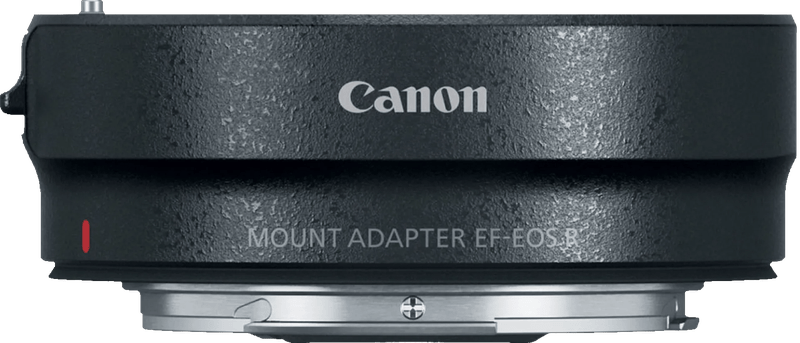
The least conspicuous purchase is often the smartest. Canon’s adapter mounts EF lenses on any RF camera; according to Canon, only EF-M and cine lenses are excluded. 110 grams, designed to resist dust and splashes. An EF L lens or an old Sigma Art for EF stays in use this way.
Viltrox also offers an adapter, the EF-R2, which according to retailer information provides autofocus, aperture control and a freely assignable control ring. We did not include a Viltrox lens for full-frame RF in the table because its availability could not be reliably confirmed.
Which lens next?
With a newly purchased full-frame camera and kit lens, everything points to the RF 50mm F1.8 STM. It complements the zoom instead of repeating it. Wildlife and sports on a modest budget are a case for the RF 100-400mm F5.6-8, as long as there is enough daylight. If indoor sports and evening light come up regularly, the RF 70-200mm F4 L is worth considering.
On an APS-C camera such as the R50 or R10, the Sigma 18-50mm F2.8 is the fast always-on lens, and the Samyang AF 12mm F2 covers wide angle. If there are EF lenses in the cupboard, get the EF-EOS R adapter first. After that, it becomes clear what is really missing.
One final note. For burst shooting with the telephoto, the card’s write speed matters too; which cards are up to the job is covered in our article on camera memory cards.
Frequently asked questions
What is the difference between RF and RF-S lenses?
Canon uses the same mount on its full-frame and APS-C cameras. RF-S lenses are designed for the smaller APS-C sensor of models such as the R50, R10 or R7 and do not cover the full-frame area. Full-frame cameras such as the EOS R6 or R8 use RF lenses.
Is the Canon RF 50mm F1.8 STM worth it as a second lens?
For most people, yes. It weighs 160 grams, and F1.8 lets in roughly five times as much light as F4, with visibly softer background blur. It complements the kit zoom instead of repeating it. On an APS-C camera, it acts like a short telephoto of around 80 mm.
Which telephoto zoom suits wildlife and sports?
The RF 100-400mm F5.6-8 IS USM is the entry point for birds in the garden or sports in daylight and weighs 635 grams. F8 at the long end needs light. If indoor sports and evening light come up regularly, the RF 70-200mm F4 L with a constant F4 is the better fit, though it lacks reach beyond 200 mm.
Can you use EF lenses on a Canon EOS R?
Yes, with the Canon Mount Adapter EF-EOS R. It mounts EF lenses on any RF camera; according to Canon, only EF-M and cine lenses are excluded. The adapter weighs 110 grams and is designed to resist dust and splashes. Only after that does it become clear what is really missing.
Are there third-party lenses for Canon RF?
For RF, Sigma and Samyang currently offer only APS-C lenses with autofocus. The Sigma 18-50mm F2.8 gives owners of an R50 or R10 considerably more light than a kit zoom, and the Samyang AF 12mm F2 is suited to starry skies and tight interiors. On full frame, neither makes sense.
Sources
- Canon: RF24-105mm F4-7.1 IS STM, data sheet
- Canon: RF50mm F1.8 STM, data sheet
- Canon: RF100-400mm F5.6-8 IS USM, data sheet
- Canon: RF70-200mm F4 L IS USM, product page
- Canon: Mount Adapter EF-EOS R, data sheet
- Canon: RF85mm F2 Macro IS STM, data sheet
- Canon: RF35mm F1.8 Macro IS STM, data sheet
- Sigma: 18-50mm F2.8 DC DN Contemporary
- Sigma: lens overview
- Samyang: AF 12mm F2 RF-S
Where to buy
- Canon RF 24-105mm F4-7.1 IS STMCheck price at Amazon.deCheck price at Amazon.co.ukCheck price at Amazon.nlCheck price at Amazon.com.beCheck price at Amazon.frCheck price at Amazon.itCheck price at Amazon.esCheck price at Amazon.plCheck price at Amazon.seAvailable in Germany: Amazon.de
- Canon RF 50mm F1.8 STMView at CoolblueAvailable in Germany: CoolblueCheck price at Amazon.deCheck price at Amazon.co.ukCheck price at Amazon.nlCheck price at Amazon.com.beCheck price at Amazon.frCheck price at Amazon.itCheck price at Amazon.esCheck price at Amazon.plCheck price at Amazon.seAvailable in Germany: Amazon.de
- Canon RF 100-400mm F5.6-8 IS USMCheck price at Amazon.deCheck price at Amazon.co.ukCheck price at Amazon.nlCheck price at Amazon.com.beCheck price at Amazon.frCheck price at Amazon.itCheck price at Amazon.esCheck price at Amazon.plCheck price at Amazon.seAvailable in Germany: Amazon.de
- Canon RF 70-200mm F4 L IS USMCheck price at Amazon.deCheck price at Amazon.co.ukCheck price at Amazon.nlCheck price at Amazon.com.beCheck price at Amazon.frCheck price at Amazon.itCheck price at Amazon.esCheck price at Amazon.plCheck price at Amazon.seAvailable in Germany: Amazon.de
- Sigma 18-50mm F2.8 DC DN Contemporary Canon RFCheck price at Amazon.deCheck price at Amazon.co.ukCheck price at Amazon.nlCheck price at Amazon.com.beCheck price at Amazon.frCheck price at Amazon.itCheck price at Amazon.esCheck price at Amazon.plCheck price at Amazon.seAvailable in Germany: Amazon.de
- Samyang AF 12mm F2 RF-SCheck price at Amazon.deCheck price at Amazon.co.ukCheck price at Amazon.nlCheck price at Amazon.com.beCheck price at Amazon.frCheck price at Amazon.itCheck price at Amazon.esCheck price at Amazon.plCheck price at Amazon.seAvailable in Germany: Amazon.de
- Canon Mount Adapter EF-EOS RView at CoolblueAvailable in Germany: CoolblueCheck price at Amazon.deCheck price at Amazon.co.ukCheck price at Amazon.nlCheck price at Amazon.com.beCheck price at Amazon.frCheck price at Amazon.itCheck price at Amazon.esCheck price at Amazon.plCheck price at Amazon.seAvailable in Germany: Amazon.de