Contents12 sections
This guide was first published in German on handgetestet.de.
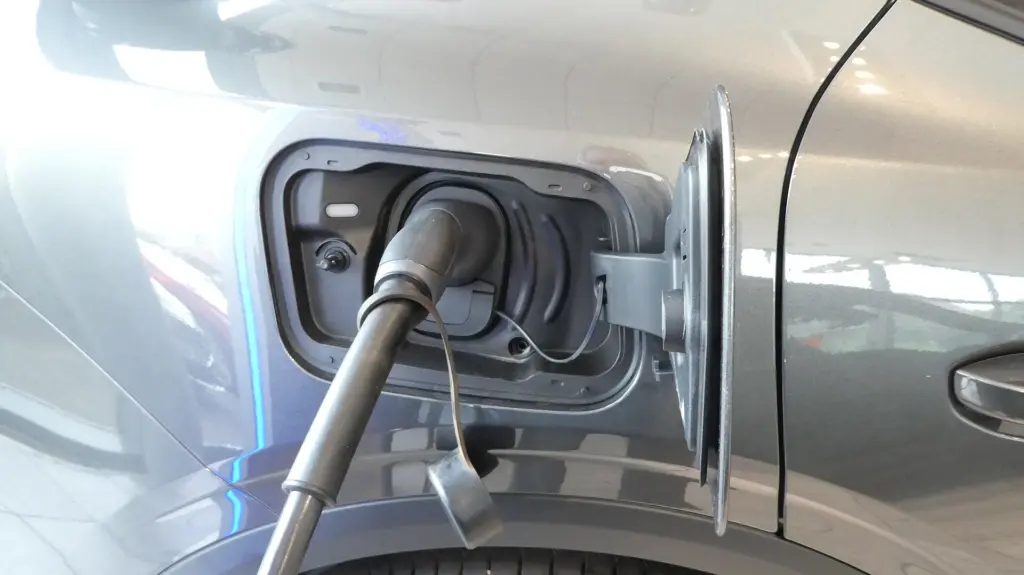
An electric car comes with two cables, and people mix them up all the time. One connects the car to a wall box or a public charging station; the other brings its own charging electronics and plugs into an outlet. For everyday use on the road, we recommend a three-phase Type 2 Mode 3 cable with 7.5 meters, for example the Mennekes 36247. A portable charger only comes into play if you regularly charge where there is no charging station.
Mode 3 or Mode 2: where do you plug in?
A Mode 3 cable is essentially a heavy-duty extension with Type 2 plugs at both ends. The charging station handles the control. That is why it only works at a wall box with a Type 2 socket or at a public AC charging station. The Type 2 plug has been the EU standard since 2013 and, according to the ADAC (German automobile club), handles up to 22 kW at 400 volts and 32 amps. The cars‘ onboard chargers usually take only 11 kW of that.
Mode 2, on the other hand, means the protection and control electronics sit in a box in the cable. The classic emergency charging cable for a household outlet falls into this category, as does the portable charger with adapters for red and blue CEE sockets. go-e and NRGkick assign their devices to the IEC 62752 standard, which governs these in-cable boxes.
A rule of thumb helps. If there is a charging station at your destination, you need Mode 3. If there is only an outlet, you need Mode 2.
Length, phases, weight: the three typical bad buys
First, the cable that is too short. A four-meter cable is enough if the charging flap faces the station. If the station is on the other side or a van is parked in the way, the cable ends in mid-air. The ADAC recommends seven to eight meters.
Second, the single-phase cable for a car that charges on three phases. According to the data sheet, a single-phase 32 A cable such as the Mennekes 36246 delivers no more than 7.4 kW. A car with an 11 kW onboard charger then falls short of its potential. That is why the ADAC recommends three-phase cables, even if a single-phase one may seem sufficient at first.
Third, the weight. More current needs more copper. The three-phase 32 A cable from Mennekes has five conductors of 6 mm² each and weighs 4.43 kilograms at 7.5 meters, 2.7 kilograms at four meters. In the trunk, that makes no difference. At a wet charging station in February, you feel every kilo. Incidentally, a 32 A cable does not charge an 11 kW car any faster than a 16 A cable; the extra weight only pays off if your car accepts 22 kW or your next one is meant to.
Coiled cables look tidy. In the test by the Touring Club Schweiz (Swiss automobile club), reported on by the ADAC, the two coiled cables got the warmest at 34 and 37 degrees, while the straight cables reached no more than 28 degrees. The ADAC did not see a safety risk in this. Six of the eight Type 2 cables tested there were rated „highly recommended,“ and the differences in efficiency were below one percent.
Emergency charging from an outlet: what the manufacturers themselves require
The household outlet is a stopgap. The ADAC cites 1.8 to 3 kW for emergency charging cables and points out that standard Schuko outlets (the German household socket) are not built for high loads over many hours. At the very least, there should be a temperature sensor in the cable that shuts off in case of overheating. According to the ADAC, adapters for the red or blue CEE socket are better, because these are fused for continuous current.
The manuals are more explicit. go-e warns of a fire risk and considers no more than 10 amps advisable on Schuko outlets. Single-phase adapters are limited to 6 amps from the factory. Mathematically, at 230 volts that is around 1.4 kW, and about 2.3 kW at 10 amps. NRGkick explicitly prohibits additional extension cords, including between the charging unit and the car. The installation must be inspected by a qualified electrician, and the circuit needs its own residual current device and circuit breaker. With unfamiliar outlets, the lowest charging current should be selected. So cable reels and power strips have no place on a charging cable.
What that means in everyday life: for 23 kWh, a car mathematically needs ten hours at 2.3 kW and a little over two at 11 kW, not counting charging losses.
And registration? Under Section 19 of the German Low Voltage Connection Ordinance (NAV), charging equipment must be reported to the grid operator before it is put into operation. If the total power exceeds 12 kVA, the operator’s approval is also required. The ADAC explicitly includes portable chargers, so a 22 kW version on your own garage socket requires approval. How to plan a permanent charging station is covered in our guide to buying a wall box.
Six cables and charging boxes according to manufacturer specs
| Model | Design | Power and length | Weight | Best for |
|---|---|---|---|---|
| Mennekes 36247 | Mode 3, Type 2 to Type 2, three-phase, 32 A | up to 22 kW, 7.5 m | 4.43 kg | Charging at stations and other people’s wall boxes |
| Mennekes 36213 | Mode 3, Type 2 to Type 2, three-phase, 32 A | up to 22 kW, 4 m | 2.7 kg | Garage with a short distance |
| Mennekes 36246 | Mode 3, Type 2 to Type 2, single-phase, 32 A | up to 7.4 kW, 7.5 m | 3.1 kg | Cars that only charge on a single phase |
| NRGkick 16A | Mode 2, portable charger with plug attachments | up to 11 kW, 5 / 7.5 / 10 m | approx. 2.55 kg (5 m) | Vacation home, family, camping |
| NRGkick 32A | Mode 2, portable charger with plug attachments | up to 22 kW, 5 / 7.5 / 10 m | approx. 3.5 kg (5 m) | Cars with a 22 kW onboard charger |
| go-e Charger Gemini flex 2.0 11 kW | Mode 2, wall mount and Type 2 socket, red CEE 16 A | up to 11 kW, cable sold separately | 1.63 kg | At home on the CEE socket, occasionally on the go |
Mennekes 36247: the cable for the road
Type 2 on both ends, Mode 3, three-phase at 32 amps and up to 22 kW, plug and coupler rated IP44, approved from minus 40 to plus 50 degrees. At 7.5 meters, it reaches the charging station even when you back in. In return, it weighs 4.43 kilograms, which have to come out of the trunk and go back in at every charging stop.
Mennekes 36213: short and lighter
Technically identical, but four meters long and weighing 2.7 kilograms. That works if the cable hangs on your own wall box without a tethered cable and the car is always parked the same way. We would not buy it as our only travel cable.
Mennekes 36246: single-phase with headroom
Three conductors of 6 mm², 230 volts, 32 amps, no more than 7.4 kW. Sensible for plug-in hybrids and cars whose onboard charger uses only one phase anyway. Check your car’s data sheet or owner’s manual beforehand to see how many phases the onboard charger uses. If it says three-phase, the 36247 is the better choice.
NRGkick 16A: the portable box for changing outlets
The charging unit from Austria charges at up to 11 kW and comes with five, seven and a half or ten meters of cable. According to the data sheet, residual current protection for AC (30 mA) and DC (6 mA) is built in, the housing achieves IP67 and IP69K, and it is considered drive-over proof. Interchangeable attachments fit CEE sockets and Schuko, and with a Type 2 attachment also the charging station, then in Mode 3 operation. The Schuko attachment is rated for 13 amps. If the box hangs from a household outlet, its weight must not pull on the outlet, according to the manual. The Light version comes without an app but, according to the manufacturer, can be unlocked later.
NRGkick 32A: only with the right car
Same design, up to 22 kW, around 3.5 kilograms in the five-meter version. Only this variant accepts the attachments for the 32 A CEE socket. If your car charges at 11 kW, the bigger box saves no time; instead you get more weight and the grid operator’s approval requirement as soon as it is meant to run at 22 kW at home.
go-e Charger Gemini flex 2.0: a wall box you can take down
A hybrid. The 11 kW box hangs in a wall mount and plugs into a red 16 A CEE socket with a short 30-centimeter cable. To take it along, you lift it off. A Type 2 cable is not included, so you also need a Mode 3 cable like the ones above. According to the data sheet, TÜV Rheinland has confirmed compliance with IEC 62752, protection rating IP65, DC fault protection built in. App, scheduling and meter run over Wi-Fi or the built-in SIM card, for which go-e states at least five years of mobile service at no extra cost. On the building side, go-e requires a Type A residual current device and a circuit breaker.
As another option, EVDANCE offers, according to the seller, Type 2 cables with 11 or 22 kW and a portable box for the red CEE socket. We did not have access to the manual, data sheet or declaration of conformity, which is why we do not list the brand as a recommendation. Review these documents before buying and, as the ADAC advises, check for the manufacturer and address on the rating plate.
How we would decide
- You charge at home on a wall box with a tethered cable and at stations on the road: a three-phase Type 2 cable with 7.5 meters, for example the Mennekes 36247.
- Your car only charges on a single phase: Mennekes 36246, which saves a good kilo.
- You regularly drive to a vacation home or to family where there is a CEE socket in the garage: NRGkick 16A with the matching attachments.
- You do not have a wall box yet, but you do have a red CEE socket: go-e Gemini flex 2.0 plus a Type 2 cable. Notify the grid operator beforehand and have the socket inspected by a qualified electrician.
- The emergency charging cable supplied with the car is enough for exceptions. It is not intended for continuous use on a Schuko outlet.
The ADAC advises caution with charging boxes from unknown brands on platforms such as eBay, AliExpress or Temu. Check whether a manufacturer with an address is listed on the rating plate and whether a declaration of conformity is available.
With a wall box or heat pump, you can lower your grid fees in Germany. How the three modules under Section 14a work is explained in the guide Electricity for heat pumps and wall boxes (in German).
Dedicated guides go deeper: buying a portable charger (in German), charging an EV from a Schuko outlet, extending or replacing a Type 2 cable and CEE adapters for EVs (in German).
Whether a stolen or damaged charging cable is covered by insurance is explained in the guide to car insurance for electric cars (in German).
Frequently asked questions
What is the difference between Mode 2 and Mode 3?
A Mode 3 cable is a heavy-duty extension with Type 2 plugs at both ends; the charging station handles the control. With Mode 2, the protection and control electronics sit in a box in the cable. If there is a charging station at your destination, you need Mode 3; if there is only an outlet, Mode 2.
How long should a Type 2 charging cable be?
The ADAC (German automobile club) recommends seven to eight meters. A four-meter cable is only enough if the charging flap faces the station. If the station is on the other side, the cable ends in mid-air. The longer version of the Mennekes cable does weigh 4.43 kilograms, though.
Is a single-phase charging cable enough?
Only for cars whose onboard charger uses a single phase anyway, such as some plug-in hybrids. According to the data sheet, a single-phase 32 A cable such as the Mennekes 36246 delivers no more than 7.4 kW. A car with an 11 kW onboard charger falls short of its potential with it; the ADAC recommends three-phase cables.
Can I charge an EV from a Schuko outlet?
As a stopgap. According to the ADAC, standard Schuko outlets (the German household socket) are not built for high loads over many hours; adapters for CEE sockets are better. go-e considers no more than 10 amps advisable on Schuko, and NRGkick prohibits additional extension cords. Cable reels and power strips have no place on a charging cable.
Does a portable charger have to be registered with the grid operator?
Under Section 19 of the German Low Voltage Connection Ordinance (NAV), charging equipment must be reported to the grid operator before it is put into operation. Above 12 kVA, the operator's approval is also required. The ADAC explicitly includes portable chargers, so a 22 kW version on your own garage socket requires approval.
Does a 32 A cable charge faster than a 16 A cable?
Not with an 11 kW car. The extra weight of the thicker cable only pays off if your car accepts 22 kW or your next one is meant to. According to the ADAC, Type 2 handles up to 22 kW, but the cars' onboard chargers usually take only 11 kW of that.
Sources
- ADAC: Plug types and charging cables (08/07/2025)
- ADAC: Portable chargers tested (07/04/2024)
- Section 19 of the German Low Voltage Connection Ordinance (NAV)
- Mennekes: data sheet for charging cable 36247
- Mennekes: data sheet for charging cable 36213
- Mennekes: data sheet for charging cable 36246
- NRGkick: product data sheet 16A and 32A
- NRGkick: user manual
- go-e: Gemini flex 2.0 data sheet
- go-e: Gemini flex installation and operating manual
Where to buy
- Mennekes 36247Check price at Amazon.deCheck price at Amazon.co.ukCheck price at Amazon.nlCheck price at Amazon.com.beCheck price at Amazon.frCheck price at Amazon.itCheck price at Amazon.esCheck price at Amazon.plCheck price at Amazon.seAvailable in Germany: Amazon.de
- Mennekes 36213Check price at Amazon.deCheck price at Amazon.co.ukCheck price at Amazon.nlCheck price at Amazon.com.beCheck price at Amazon.frCheck price at Amazon.itCheck price at Amazon.esCheck price at Amazon.plCheck price at Amazon.seAvailable in Germany: Amazon.de
- Mennekes 36246Check price at Amazon.deCheck price at Amazon.co.ukCheck price at Amazon.nlCheck price at Amazon.com.beCheck price at Amazon.frCheck price at Amazon.itCheck price at Amazon.esCheck price at Amazon.plCheck price at Amazon.seAvailable in Germany: Amazon.de
- NRGkick 16A mobile WallboxCheck price at Amazon.deCheck price at Amazon.co.ukCheck price at Amazon.nlCheck price at Amazon.com.beCheck price at Amazon.frCheck price at Amazon.itCheck price at Amazon.esCheck price at Amazon.plCheck price at Amazon.seAvailable in Germany: Amazon.de
- NRGkick 32A mobile WallboxCheck price at Amazon.deCheck price at Amazon.co.ukCheck price at Amazon.nlCheck price at Amazon.com.beCheck price at Amazon.frCheck price at Amazon.itCheck price at Amazon.esCheck price at Amazon.plCheck price at Amazon.seAvailable in Germany: Amazon.de
- go-e Charger Gemini flex 2.0 11 kWCheck price at Amazon.deCheck price at Amazon.co.ukCheck price at Amazon.nlCheck price at Amazon.com.beCheck price at Amazon.frCheck price at Amazon.itCheck price at Amazon.esCheck price at Amazon.plCheck price at Amazon.seAvailable in Germany: Amazon.de
- EVDANCE Typ-2-LadekabelView at EVDANCEAvailable in Germany: EVDANCE
- EVDANCE Mobile Wallbox 11 kWView at EVDANCEAvailable in Germany: EVDANCE