Contents13 sections
This guide was first published in German on handgetestet.de.
Garden tools come as ready-made sets, five pieces in shrink wrap. It makes more sense to go the other way round: look at the soil first, then choose the spade, then the fork, and only at the end the rake and handle. For normal garden soil, we recommend a stainless steel spade such as the Spear & Jackson Neverbend Stainless; on stony ground, a hardened steel blade with stiffening ribs.
What kind of soil is under your lawn?
Clay sticks. If you dig in heavy soil, after three cuts with the spade you have a clump on the blade that makes every further cut harder. That is exactly the point of polished stainless steel. For its Neverbend Stainless tools, Spear & Jackson gives two reasons for the mirror-polished blade: protection against rust and as little soil adhesion as possible.
On stony soil, something else matters. Here the blade is levered against pebbles and roots, and it should not bend in the process. That is why Wolf-Garten uses an induction-hardened boron steel blade with embossed ribs on the AS-D spade, which according to the manufacturer prevent the blade from bending in hard ground. Rust here is a question of care.
Sandy soil forgives almost any tool. There, handle length and grip matter more.
Spade, fork or shovel: three tools, three jobs
A spade cuts into the soil, a shovel moves material. That sounds trivial, but it is the most important difference when buying. For its hand-forged spades, Sneeboer explicitly writes that the shape and angle of the blade are made for cutting into the ground, not for shoveling. For gravel, mulch and compost, you will therefore need a shovel too.
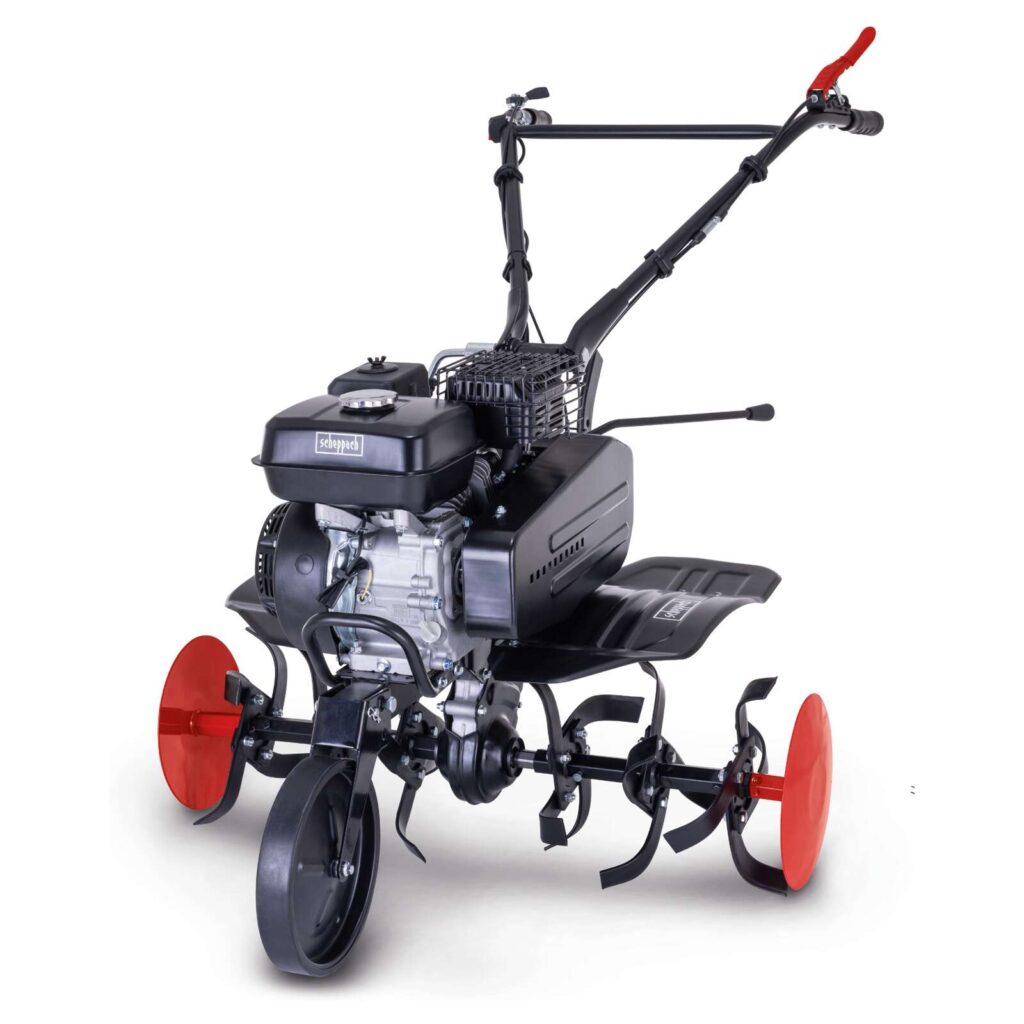
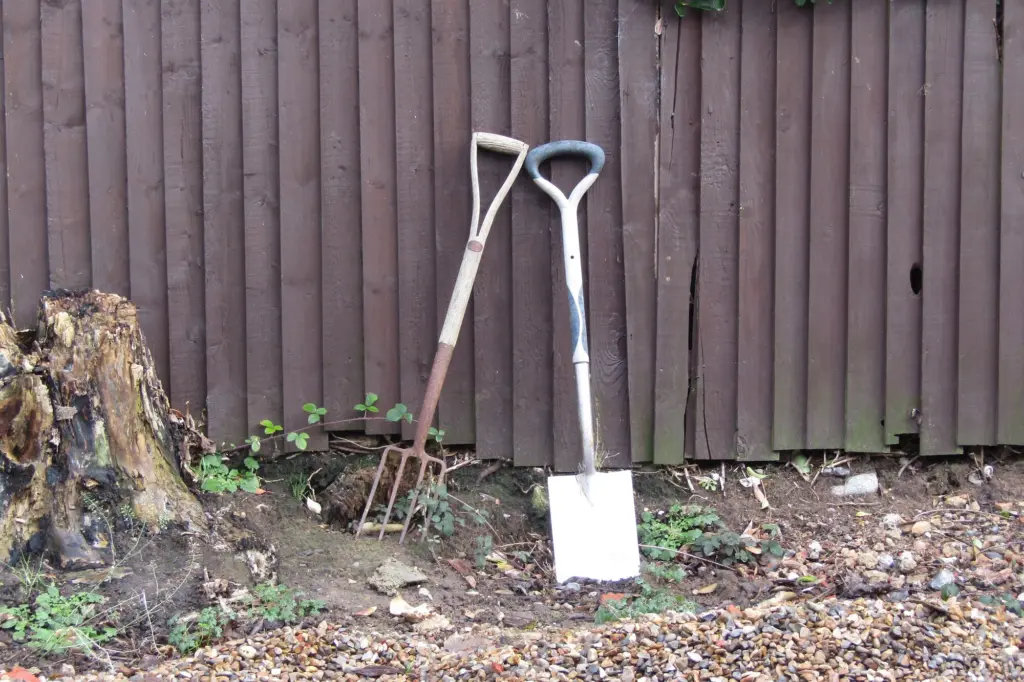
The digging fork is not a second spade. It has a job of its own. The Bayerische Gartenakademie (Bavarian state garden academy) recommends it for soil riddled with perennial root weeds such as couch grass, field bindweed or ground elder, because the tines do not chop up the roots, which would otherwise sprout again. According to the same source, rotary tillers all too often act as a „transplanting and propagation machine“ in such beds; more on this in our guide to garden tillers (in German). In spring, the garden academy also advises against digging over and recommends instead loosening the soil with a digging fork or cultivator as soon as it is no longer too wet.
For the basic kit of a vegetable garden, that means: a spade, a digging fork, a rake. You do not need more to start with.
Six tools for beds and lawn edges
Spear & Jackson Neverbend Stainless Digging Spade
This is the spade we recommend for normal home gardens. The head is made of mirror-polished stainless steel, the socket is extra long according to the manufacturer, and the weatherproof hardwood handle ends in a grip that is angled forward, which is meant to improve the digging angle. Spear & Jackson gives a ten-year guarantee. If you are very tall, check the handle length before buying.
Spear & Jackson Neverbend Stainless Digging Fork
The counterpart to the spade: same construction, same material, same ten-year guarantee. According to the manufacturer, the fork is intended for heavy digging and for breaking up the soil. If you have ground elder in your bed, reach for it rather than the spade.
Wolf-Garten AS-D Spaten
A spade for soil in which stone clinks more often than earth crumbles. Boron steel blade, reinforced steel shaft with a non-slip surface, D-grip for two hands. With a working length of 123 cm, Wolf-Garten promotes an upright, back-friendly posture. At two years, the guarantee is considerably shorter than for the stainless steel tools.
Sneeboer Damenspaten mit Tritt
Sneeboer has been forging its garden tools by hand in Bovenkarspel in the Netherlands since 1913. The border spade (Damenspaten) has a shorter blade than a normal spade, 15 by 22 cm, ground on the underside and curved lengthwise so that it does not break. The ash handle is available in 85, 90, 100 and 110 cm; the manufacturer advises choosing the length according to your height so that you can work upright. The tread protects the sole of your shoe when you push it in. Sneeboer explicitly describes the version without tread as having a stainless steel blade.
For large vegetable beds, the blade is too small. For a perennial bed where you plant and divide between roots, on the other hand, it is a very good fit. The guarantee is remarkable: 50 years on the steel parts, one year on the wooden handle. According to Sneeboer, exclusions include misuse, such as using the spade as a crowbar, and tools stored wet all year round.
Gardena combisystem-Rechen 41 cm
A wide rake with 16 tines made of coated steel, intended for raking, leveling and working beds. It slots onto a combisystem handle and is screwed tight. Gardena recommends a handle length of 150 cm and adds that the choice varies depending on the task and your height. The handle comes separately, for example the wooden handle made of FSC-certified ash. The 25-year guarantee applies only after registration within three months of purchase.
We use the combisystem ourselves. In our hands-on review of the Gardena combisystem, the telescopic handle, leaf rake, fruit picker and snow shovel proved themselves over several seasons; the heads sit firmly and can be swapped in a few seconds.
Wolf-Garten multi-star Rechen DR-M 35 with aluminum handle
The rake has a working width of 35 cm and, according to the manufacturer, tines with particularly thick material so that even dry, firm bed soil can be loosened. The ZM-A 150 aluminum handle goes with it. If you prefer wood in your hand, you can get the ash handle in 140, 150 or 170 cm. Wolf-Garten makes both in Germany and gives a 35-year guarantee.
One system or many handles?
Click-on systems save space in the shed. Wolf-Garten counts more than 70 heads and 15 handles for multi-star, and Gardena likewise promotes combisystem as a family of interchangeable tools. Both manufacturers, however, name only their own handles as compatible. Once you have decided, you stay with the system.
For spades and digging forks, we do not think a click-on system is necessary. These tools are used as levers, and a continuous handle with a fixed socket is the simpler design for that.
What the guarantee does not cover: care
In its care instructions, Sneeboer gives advice that applies to any tool with a wooden handle. Oil the handle and blade before first use; according to the manufacturer, linseed oil is also suitable for stainless steel, because less soil sticks afterwards. Remove dirt and rust with a stiff brush. Sharpen only the beveled edge, and never with a power grinder. Store tools with wooden handles dry and out of the sun.
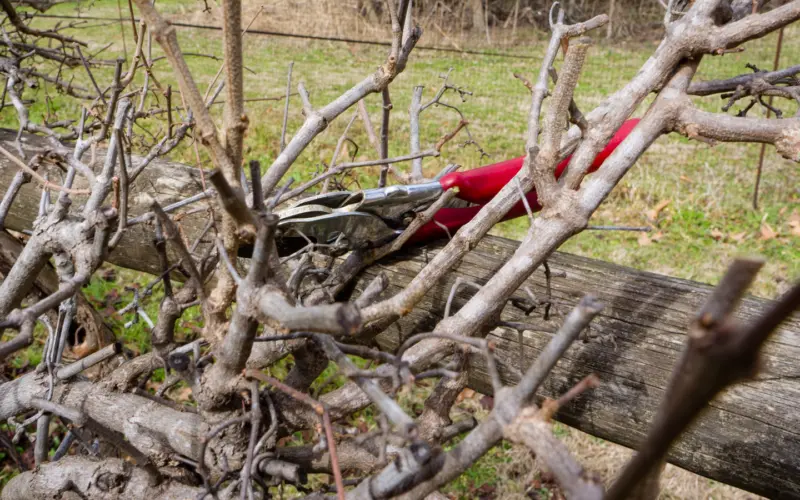
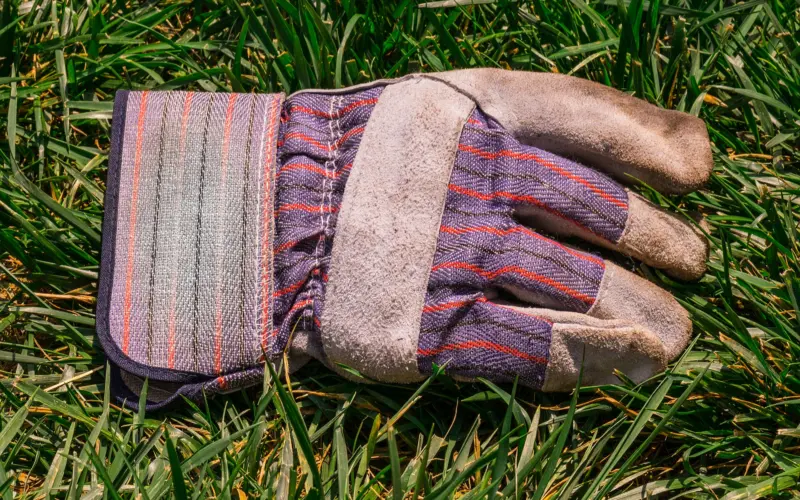
When digging, sturdy gloves are a must, especially around roots and stones; what to look for is covered in our guide to work gloves. For pruning shrubs and trees, our guide to pruning shears (in German) will help.
How we would put together the basic kit
- Loamy or normal garden soil: Spear & Jackson Neverbend Stainless spade, plus the matching digging fork.
- Stony, compacted, rubble in the subsoil: Wolf-Garten AS-D with boron steel blade and steel shaft.
- Perennial bed, planting and dividing, little strength: Sneeboer border spade with the handle length that suits your height.
- Leveling large beds: Gardena combisystem rake 41 cm if you already own combisystem tools; otherwise Wolf-Garten multi-star DR-M 35 with handle.
You do not need a five-piece set for this. Three good tools are enough.
Frequently asked questions
Which spade is suitable for clay soil?
In heavy clay, soil quickly sticks to the blade. That is what polished stainless steel is for: for its mirror-polished Neverbend Stainless blade, Spear & Jackson cites protection against rust and as little soil adhesion as possible. The manufacturer gives a ten-year guarantee.
What is the difference between a spade and a shovel?
A spade cuts into the soil, a shovel moves material. Sneeboer writes that the shape and angle of a spade blade are made for cutting into the ground, not for shoveling. For gravel, mulch and compost, a shovel therefore belongs in the shed as well.
When is a digging fork better than a spade?
In soil with perennial root weeds such as couch grass, field bindweed or ground elder. The Bayerische Gartenakademie (Bavarian state garden academy) recommends the digging fork here, because the tines do not chop up the roots, which would otherwise sprout again. In spring, it also advises loosening the soil with a digging fork or a cultivator instead of digging it over.
Is a click-on handle system for garden tools worth it?
For rakes and other heads, it saves space: Wolf-Garten counts more than 70 heads and 15 handles for multi-star, and Gardena offers combisystem. Both name only their own handles as compatible, so you stay within one system. For spades and digging forks, we consider a continuous handle with a fixed socket the simpler design.
How do you care for garden tools with wooden handles?
Sneeboer advises oiling the handle and blade before first use; according to the manufacturer, linseed oil is also suitable for stainless steel. Remove dirt and rust with a stiff brush, sharpen only the beveled edge and never use a power grinder. Store tools dry and out of the sun.
Who is a border spade (ladies' spade) for?
The Sneeboer border spade has a shorter blade of 15 by 22 cm and an ash handle from 85 to 110 cm. It is too small for large vegetable beds but well suited to perennial beds, where you plant and divide between roots. Sneeboer gives 50 years on the steel parts.
Sources
- Spear & Jackson: Neverbend Stainless Digging Spade
- Spear & Jackson: Neverbend Stainless Digging Fork
- Wolf-Garten: Spaten AS-D
- Wolf-Garten: multi-star Rechen DR-M 35
- Wolf-Garten: aluminum handle ZM-A 150
- Wolf-Garten: ash handle ZM 150
- Sneeboer: border spade with steps
- Sneeboer: border spade without steps
- Sneeboer: care and guarantee
- Gardena: combisystem rake 41 cm
- Gardena: combisystem wooden handle 130 cm
- Bayerische Gartenakademie (Bavarian state garden academy): planting new trees and shrubs
- Bayerische Gartenakademie: starting the new gardening season
Where to buy
- Spear & Jackson Neverbend Stainless Spaten 1160SPCheck price at Amazon.deCheck price at Amazon.co.ukCheck price at Amazon.nlCheck price at Amazon.com.beCheck price at Amazon.frCheck price at Amazon.itCheck price at Amazon.esCheck price at Amazon.plCheck price at Amazon.seAvailable in Germany: Amazon.de
- Spear & Jackson Neverbend Stainless Grabegabel 1560SFCheck price at Amazon.deCheck price at Amazon.co.ukCheck price at Amazon.nlCheck price at Amazon.com.beCheck price at Amazon.frCheck price at Amazon.itCheck price at Amazon.esCheck price at Amazon.plCheck price at Amazon.seAvailable in Germany: Amazon.de
- Wolf-Garten AS-D SpatenCheck price at Amazon.deCheck price at Amazon.co.ukCheck price at Amazon.nlCheck price at Amazon.com.beCheck price at Amazon.frCheck price at Amazon.itCheck price at Amazon.esCheck price at Amazon.plCheck price at Amazon.seAvailable in Germany: Amazon.de
- Sneeboer Damenspaten mit Tritt 3051Check price at Amazon.deCheck price at Amazon.co.ukCheck price at Amazon.nlCheck price at Amazon.com.beCheck price at Amazon.frCheck price at Amazon.itCheck price at Amazon.esCheck price at Amazon.plCheck price at Amazon.seAvailable in Germany: Amazon.de
- Gardena combisystem-Rechen 41 cm 3179-20Check price at Amazon.deCheck price at Amazon.co.ukCheck price at Amazon.nlCheck price at Amazon.com.beCheck price at Amazon.frCheck price at Amazon.itCheck price at Amazon.esCheck price at Amazon.plCheck price at Amazon.seAvailable in Germany: Amazon.de
- Wolf-Garten multi-star Rechen DR-M 35Check price at Amazon.deCheck price at Amazon.co.ukCheck price at Amazon.nlCheck price at Amazon.com.beCheck price at Amazon.frCheck price at Amazon.itCheck price at Amazon.esCheck price at Amazon.plCheck price at Amazon.seAvailable in Germany: Amazon.de
- Wolf-Garten multi-star Aluminium-Stiel ZM-A 150Check price at Amazon.deCheck price at Amazon.co.ukCheck price at Amazon.nlCheck price at Amazon.com.beCheck price at Amazon.frCheck price at Amazon.itCheck price at Amazon.esCheck price at Amazon.plCheck price at Amazon.seAvailable in Germany: Amazon.de
Still undecided?
Keep comparing at your own pace – every article in this category is checked monthly for new and discontinued models.