Contents11 sections
This guide was first published in German on handgetestet.de.
There is no hole saw for everything. If you drill wood, sheet metal and drywall, a bi-metal set with a quick-change adapter will take you furthest; for brick walls and tile, on the other hand, you need diamond. This exact boundary is where most bad purchases happen. Bosch and Milwaukee do not list masonry among the applications for their bi-metal saws.
Material decides first, then the diameter
Bi-metal hole saws have a tooth edge made of high-speed steel with cobalt, welded onto a tough steel body. Bosch and Milwaukee each state 8 percent cobalt for their series. They cut wood, plastic, drywall, pipes and sheet metal. They are not made for tiles, brick and concrete; that is where diamond-tipped core bits do the work.
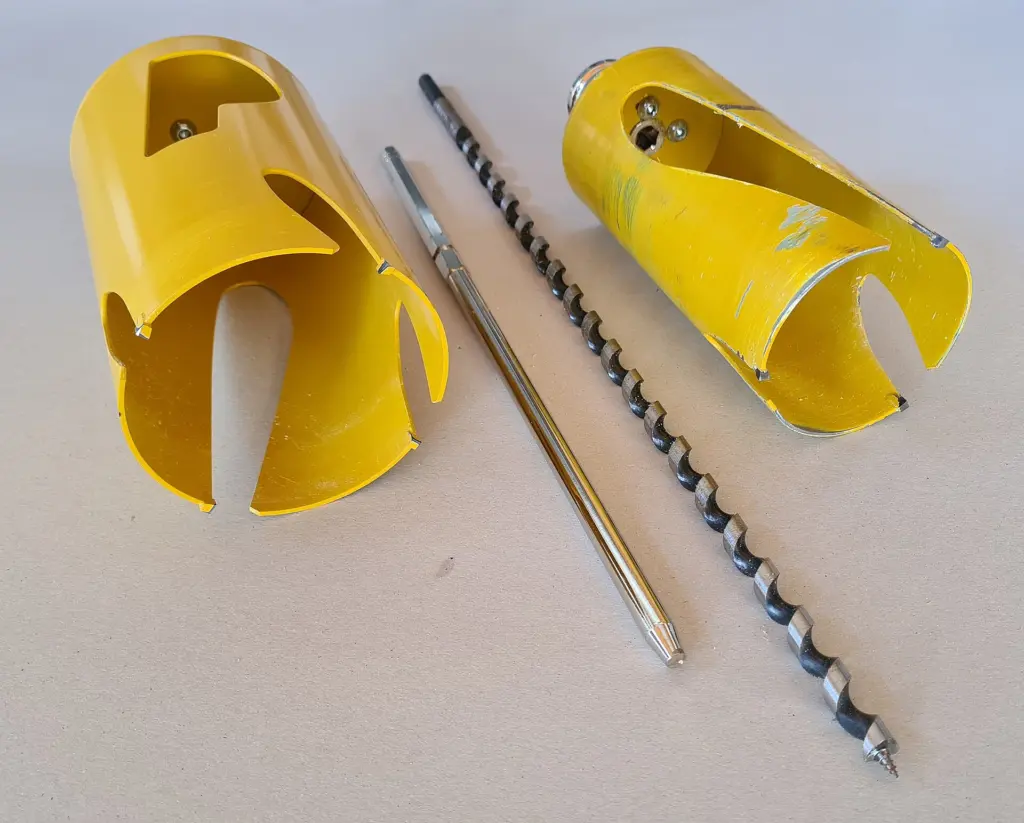
For a flush-mounted electrical box, 68 mm is the usual size. In a drywall partition, a bi-metal saw with this diameter is enough. In masonry walls, a diamond socket cutter with an M16 thread belongs in a rotary hammer; Bosch explicitly lists its model as a dry core bit for brick and reinforced concrete.
Speed is underestimated. In Bosch’s hole saw catalog (edition 09/10), a 68 mm bi-metal saw is listed at 1,800 revolutions per minute in wood and PVC, only 130 in steel and 65 in stainless steel. At 25 mm, the same table allows 350 in steel. So the larger and harder, the slower. Starrett warns that teeth running too fast no longer cut but rub over the material, get hot and chip; for metal, the manufacturer recommends cutting oil. A cordless drill/driver with two gears helps more here than raw power.
Six hole saws and core bits compared
Bosch PRO Multi Material PC Plus Set, 9-piece
Six saws from 19 to 83 mm, including the 68 mm for electrical boxes. Bosch lists softwood, drywall partitions, plastic, pipes, profiles and non-ferrous metals as applications. According to the retailer, the hex adapter and two centering drills are included. With the Power Change Plus system, the saw and pilot drill change without screws.
Bosch PRO Multi Material PC Plus Starter-Set 68 mm
The same saw, just one diameter, plus an HSS-G centering drill with 7.15 mm. If you are installing a dozen cavity wall boxes in the attic and otherwise do not saw any holes, you do not need more.
Milwaukee Hole Dozer 68 mm
Milwaukee specifies steel up to 1,000 N/mm², stainless steel, cast iron, aluminum, wood, MDF and drywall. The teeth have a positive angle of 10 degrees. Order a matching adapter along with it; four pin holes in the back lock the saw onto it. For wood alone, that is more saw than you need.
Starrett Deep Cut
With a cutting depth of 51 mm, it gets through both walls of a pipe or a thick plank without you having to break out the core along the way. For this, Starrett requires an arbor with an extended pilot drill, such as the A1E or A2E. The manufacturer recommends the series for metal with a wall thickness of 3 mm or more.
Bosch PRO Socket Core Cutter dry 68 mm
The socket cutter for masonry walls. Four diamond segments 10 mm high, M16 thread, built for rotary hammers and dry drilling in brick and reinforced concrete. The arbor and centering drill are not included and must match the thread. More on the tool itself is in the rotary hammer guide.
Bosch PRO Ceramic dry 68 mm, X-Lock
For tiles, including hard tiles, used dry on a small angle grinder. Check the spindle beforehand. The core bit fits X-Lock; for tools with an M14 thread, Bosch offers the same series with a thread, as a set from 20 to 68 mm.
Set or single saw?
A set makes sense if you regularly need three or more sizes. If you only install electrical boxes, buy the 68 mm saw individually along with an adapter and save case space for saws that never run. For small holes under 14 mm, you are better off with a twist drill bit; more on this in the guide to drill bit sets.
- Wood, drywall, occasionally sheet metal: Bosch PRO Multi Material Set, 9-piece.
- Cavity wall boxes only: Bosch Starter-Set 68 mm.
- Lots of stainless steel and sheet metal: Milwaukee Hole Dozer.
- Pipes and thick material: Starrett Deep Cut.
- Masonry wall: Bosch Socket Core Cutter on a rotary hammer.
- Tile: Bosch PRO Ceramic dry, check the mount beforehand.
Before the core bit touches the wall
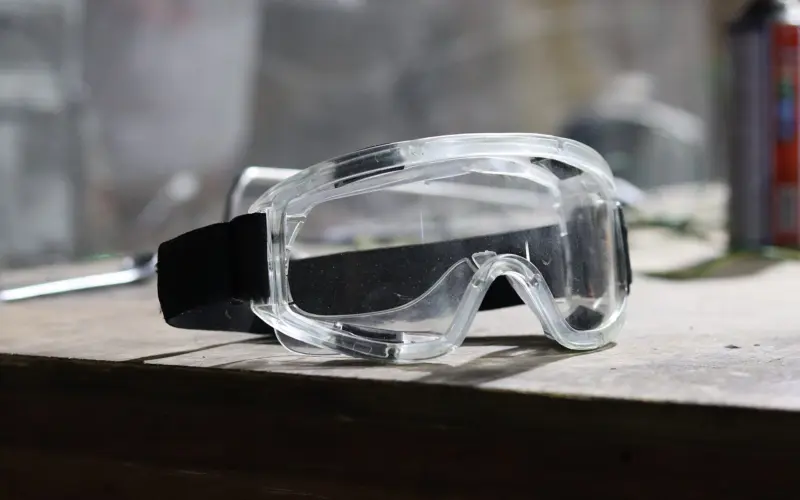
Bosch puts it in the manuals of its drill/drivers: locate hidden electrical, gas and water lines beforehand with a suitable detector, hold the tool by the insulated gripping surfaces, and always wear safety glasses. If the saw jams, switch off immediately. Bosch warns of high reaction torques that cause kickback. So keep both hands on the tool.
Frequently asked questions
Which hole saw for which material?
Bi-metal hole saws with a tooth edge made of high-speed steel with cobalt cut wood, plastic, drywall, pipes and sheet metal. They are not made for tiles, brick and concrete; that is where diamond-tipped core bits do the work. This exact boundary is where most bad purchases happen.
Which hole saw do I need for electrical outlets?
For a flush-mounted electrical box, 68 mm is the usual size. In a drywall partition, a bi-metal saw with this diameter is enough, for example from the Bosch Starter-Set 68 mm. In masonry walls, a diamond socket cutter with an M16 thread belongs in a rotary hammer; the arbor and centering drill are sold separately.
At what speed do you work with a hole saw?
The larger and harder, the slower. The Bosch catalog lists 1,800 revolutions per minute for a 68 mm bi-metal saw in wood, only 130 in steel and 65 in stainless steel. According to Starrett, teeth that run too fast just rub over the material, get hot and chip. For metal, the manufacturer recommends cutting oil.
Is a hole saw set worth it?
If you regularly need three or more sizes. If you only install electrical boxes, buy the 68 mm saw individually along with an adapter and save case space for saws that never run. For small holes under 14 mm, a twist drill bit is the better choice.
What do you use to drill holes in tiles?
A diamond dry core bit such as the Bosch PRO Ceramic dry on a small angle grinder. Check the spindle beforehand: the core bit fits X-Lock, and for tools with an M14 thread Bosch offers the same series with a thread, as a set from 20 to 68 mm.
What should you keep in mind when drilling with a hole saw?
Bosch advises locating hidden electrical, gas and water lines beforehand with a detector, holding the tool by the insulated gripping surfaces and always wearing safety glasses. If the saw jams, switch off immediately, because high reaction torques cause kickback. So keep both hands on the tool.
Sources
- Bosch Professional: PRO Multi Material PC Plus hole saw set
- Bosch Professional: PRO Multi Material PC Plus Starter-Set
- Bosch Professional: PRO Socket Core Cutter dry
- Bosch Professional: PRO Ceramic dry core bits, X-Lock
- Bosch Professional: PRO Ceramic dry core bit set, M14
- Bosch: hole saw catalog 09/10 with speed table (PDF)
- Bosch: GSR Professional operating instructions, safety notes (PDF)
- Milwaukee: Hole Dozer bi-metal hole saws
- Starrett: DCH Deep Cut
- Starrett: Tips for successful hole sawing
Where to buy
- Bosch PRO Multi Material PC Plus Set, 9-tlg.Check price at Amazon.deCheck price at Amazon.co.ukCheck price at Amazon.nlCheck price at Amazon.com.beCheck price at Amazon.frCheck price at Amazon.itCheck price at Amazon.esCheck price at Amazon.plCheck price at Amazon.seAvailable in Germany: Amazon.de
- Bosch PRO Multi Material PC Plus Starter-Set 68 mmCheck price at Amazon.deCheck price at Amazon.co.ukCheck price at Amazon.nlCheck price at Amazon.com.beCheck price at Amazon.frCheck price at Amazon.itCheck price at Amazon.esCheck price at Amazon.plCheck price at Amazon.seAvailable in Germany: Amazon.de
- Milwaukee Hole Dozer Bi-Metall-Lochsäge 68 mmCheck price at Amazon.deCheck price at Amazon.co.ukCheck price at Amazon.nlCheck price at Amazon.com.beCheck price at Amazon.frCheck price at Amazon.itCheck price at Amazon.esCheck price at Amazon.plCheck price at Amazon.seAvailable in Germany: Amazon.de
- Starrett Deep Cut (DCH)Check price at Amazon.deCheck price at Amazon.co.ukCheck price at Amazon.nlCheck price at Amazon.com.beCheck price at Amazon.frCheck price at Amazon.itCheck price at Amazon.esCheck price at Amazon.plCheck price at Amazon.seAvailable in Germany: Amazon.de
- Bosch PRO Socket Core Cutter dry 68 mm M16Check price at Amazon.deCheck price at Amazon.co.ukCheck price at Amazon.nlCheck price at Amazon.com.beCheck price at Amazon.frCheck price at Amazon.itCheck price at Amazon.esCheck price at Amazon.plCheck price at Amazon.seAvailable in Germany: Amazon.de
- Bosch PRO Ceramic dry Trockenbohrkrone 68 mm X-LockCheck price at Amazon.deCheck price at Amazon.co.ukCheck price at Amazon.nlCheck price at Amazon.com.beCheck price at Amazon.frCheck price at Amazon.itCheck price at Amazon.esCheck price at Amazon.plCheck price at Amazon.seAvailable in Germany: Amazon.de
Still undecided?
Keep comparing at your own pace – every article in this category is checked monthly for new and discontinued models.