Contents13 sections
This guide was first published in German on handgetestet.de.
A travel router solves a very specific problem: the hotel allows two devices per room on its Wi-Fi, and the family has six. The small router logs into the hotel network once and sets up its own encrypted network behind it, which laptops, tablets and streaming sticks join as if they were at home. In most cases we recommend the GL.iNet Beryl AX (GL-MT3000), because according to the manufacturer it handles WireGuard at up to 300 Mbps and runs on any USB-C power adapter with 5 volts and 3 amps. If you find no hotel Wi-Fi but are sitting in a vacation home without an internet connection, you need a device with a SIM card instead.
Isn’t the hotspot on my phone enough?
For one evening, yes. Over a week, it gets tedious. The phone gets warm, the battery drains, and every time it leaves the room, the laptop loses its connection. A travel router, on the other hand, stays plugged in on the desk. It can even use the phone as its uplink: GL.iNet’s manual describes tethering via USB cable for iPhone and Android, and TP-Link and ASUS list the same operating mode for their models.
What a travel router has to handle in a hotel
- Pass the hotel’s login page through cleanly. TP-Link does this in one step via the Tether app; GL.iNet has a dedicated login mode for public hotspots.
- VPN directly on the router, so every device behind it is protected. In GL.iNet’s datasheets, WireGuard is clearly faster than OpenVPN on both models.
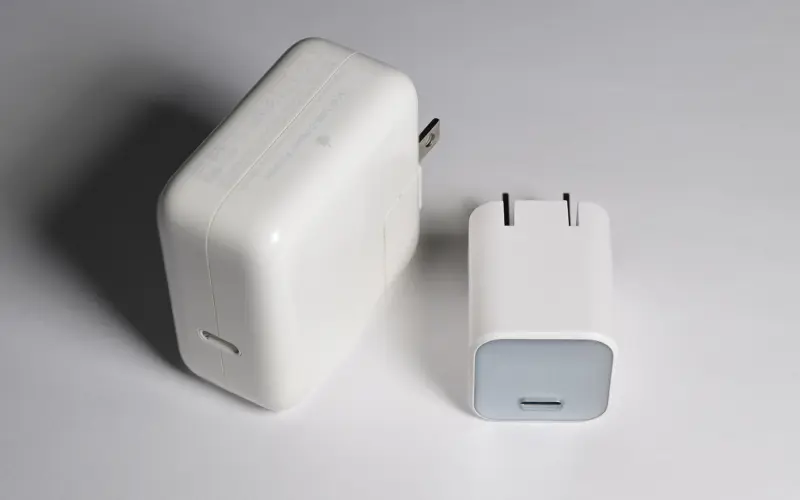
- Power via USB-C. Then the laptop charger is enough, and a second power adapter can stay at home.
- At least one Ethernet port for the wired connection that some hotel rooms still have.
- For vacation homes, RVs and trains: a SIM slot or at least USB tethering.
One detail from the GL.iNet manual shows how much is hidden in the fine print. In hotspot login mode, the router sets DNS to automatic and suspends some services; the manufacturer itself warns that the hotspot operator may be able to see traffic as a result. Logging in first and then switching on the VPN is therefore the right order.
How secure is hotel Wi-Fi with your own router?
More secure than without one, but not automatically. The German Federal Office for Information Security (BSI) advises not accessing confidential data over third-party Wi-Fi at all if possible and, if it cannot be avoided, doing so only via a VPN whenever possible. A travel router without an active VPN does separate your own devices from the neighboring rooms, but the route into the hotel network stays the same.
A VPN has its limits, too. According to the BSI, the connection is only encrypted up to the VPN server, and choosing a provider remains a matter of trust, because all traffic runs through its servers. If you run a FRITZ!Box or your own server at home, you can also connect the travel router to it. Then everything flows through your own connection.
And if there is no Wi-Fi at all?
Then the SIM card is what counts. Within the EU as well as in Iceland, Liechtenstein and Norway, roaming is charged at domestic rates, as the EU portal „Your Europe“ explains. With plans that include a large data allowance, however, the provider may throttle the volume abroad under fair use rules, and the regulation does not cover other countries. Before a trip to Switzerland or the UK, checking your own plan is therefore part of the preparation. Mobile 5G routers for longer stays are covered in more detail in our guide to 5G routers for home, RV and vacation rental.
Six travel routers and hotspots compared
The Wi-Fi figures are gross rates according to the standard. In a hotel, it is usually the building’s connection that decides how fast things really get.
GL.iNet Beryl AX (GL-MT3000)
According to the datasheet, the Beryl AX weighs 196 grams, measures 120 × 83 × 34 millimeters and draws less than 8 watts. An ordinary USB-C power adapter with 5 volts and 3 amps can handle that without having to negotiate fast charging. GL.iNet states up to 300 Mbps over WireGuard and half that over OpenVPN. The firmware is based on OpenWrt; if you like, you can run a VPN client and a VPN server at the same time.
GL.iNet Slate 7 (GL-BE3600)
The Slate 7 is the bigger edition: Wi-Fi 7, two 2.5-gigabit ports and a small touchscreen that, according to GL.iNet, shows the status and can display a QR code for the Wi-Fi. At 295 grams and up to 18 watts, it requires a USB-C power adapter with Power Delivery. The extra speed only pays off if the local connection can deliver it, such as fiber in a vacation rental. For a weekend in a city hotel, it is too much device.
TP-Link TL-WR1502X
With TP-Link, setup runs through the Tether app, and according to the manufacturer, the hotel login should work in a single step. At AX1500, the Wi-Fi is considerably smaller, and the port for USB storage only works at USB 2.0. Power requires some care. For running on a power bank, TP-Link explicitly specifies a model with 9 or 12 volts via PD or QC; a simple 5-volt power bank is therefore not enough.
ASUS RT-AX57 Go
ASUS builds the same Wi-Fi 6 speed into the RT-AX57 Go as GL.iNet does into the Beryl AX, i.e. 2402 Mbps on 5 GHz. At 120 × 120 × 21.5 millimeters, the housing is flatter but wider, and it weighs 210 grams. WISP mode for public Wi-Fi and tethering via the USB port are on board. It is interesting for households that already use ASUS routers, because according to the manufacturer the little one can be added as an AiMesh node and stays useful after the vacation.
Netgear Nighthawk M3 (MH3150)
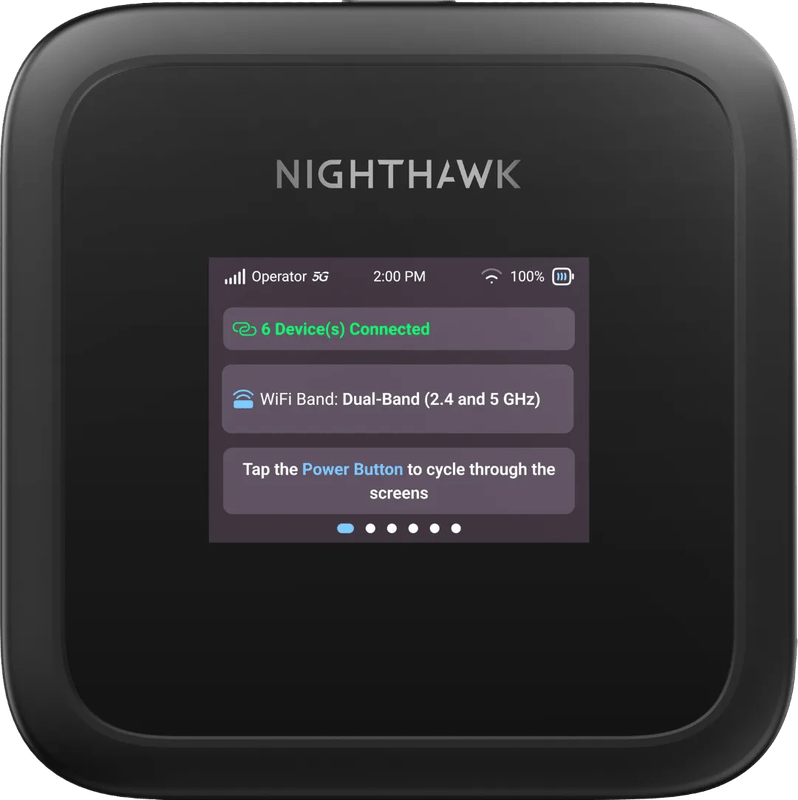
Not a travel router in the strict sense, but a 5G hotspot with its own battery. Netgear states up to 2.5 Gbps on the 5G network, Category 19 LTE and a replaceable 5185 mAh battery for up to 13 hours. The frequencies used in Germany, such as band 20 for LTE and n78 for 5G, are in the band list. Two TS-9 ports take external antennas, which can make the difference in an RV at the edge of a forest. The manufacturer does not list VPN; that is left to the end devices.
Huawei 4G Mobile WiFi 3 (E5783-230a)
At 87 grams, the little Huawei fits in any jacket pocket. It connects to the 4G network at up to 300 Mbps and sets up a Wi-Fi 5 network. Two things seem outdated in 2026: it charges via micro USB, and the battery holds only 1500 mAh. For a vacation week with occasional surfing, that is enough. As a permanent solution, it is not.
Which router for which trip?
- Hotels, trade fairs and business trips with VPN: GL.iNet Beryl AX. Light, efficient and runs on a USB-C power adapter from the laptop bag.
- Long stays with a fast connection or a lot of work over a company VPN: GL.iNet Slate 7.
- If setup via app matters more than speed: TP-Link TL-WR1502X, with a suitable power bank.
- If you have an ASUS network at home: RT-AX57 Go.
- Vacation home without internet or an RV: Netgear Nighthawk M3 with a SIM card, ideally with an external antenna.
- Only a few hours of connectivity for a tablet and phone now and then: Huawei E5783-230a.
One more tip on packing. Before you leave, check whether your laptop power adapter delivers the required voltage: 5 V and 3 A for the Beryl AX, 9 V and 2 A for the ASUS, 9 or 12 V via PD or QC for the TP-Link, Power Delivery with up to 12 V for the Slate 7. Which power adapters can do that is covered in our guide to USB-C chargers (in German).
Frequently asked questions
Isn't the hotspot on my phone enough?
For one evening, yes; over a week it gets tedious: the phone gets warm, the battery drains, and whenever it leaves the room, the laptop loses its connection. A travel router stays plugged in and can even use the phone as its uplink via USB tethering.
What should I look for when buying a travel router?
What matters is a mode that passes the hotel's login page through, VPN directly on the router, power via USB-C and at least one Ethernet port for wired connections. For vacation homes, RVs and trains, add a SIM slot or at least USB tethering.
How secure is hotel Wi-Fi with your own router?
More secure than without one, but not automatically. Without a VPN, the router only separates your own devices from the neighboring rooms. The German Federal Office for Information Security (BSI) advises accessing confidential data on third-party networks only via a VPN whenever possible. The order is: log in at the hotel first, then switch on the VPN.
What power adapter does a travel router need?
It varies by model: 5 V and 3 A for the Beryl AX, 9 V and 2 A for the ASUS RT-AX57 Go, 9 or 12 V via PD or QC for the TP-Link TL-WR1502X, and Power Delivery with up to 12 V for the Slate 7. A simple 5-volt power bank is not enough for the TP-Link.
What if there is no Wi-Fi at all in the vacation home?
Then the SIM card is what counts, for example in the Netgear Nighthawk M3 with 5G and ports for external antennas. Within the EU as well as Iceland, Liechtenstein and Norway, roaming is charged at domestic rates. For Switzerland or the UK, checking your own plan is part of the preparation.
Sources
- GL.iNet: Beryl AX (GL-MT3000) datasheet
- GL.iNet: Slate 7 (GL-BE3600) datasheet
- GL.iNet: Guide to repeater mode and public hotspots
- GL.iNet: Tethering guide
- TP-Link: TL-WR1502X
- ASUS: RT-AX57 Go, technical specifications
- Netgear: Nighthawk M3 (MH3150)
- Huawei: 4G Mobile WiFi 3 (E5783), technical specifications
- BSI (German Federal Office for Information Security): Security tips for private and public Wi-Fi
- BSI: What is a virtual private network (VPN)?
- Your Europe: Roaming in the EU
Where to buy
- GL.iNet Beryl AX (GL-MT3000)Check price at Amazon.deCheck price at Amazon.co.ukCheck price at Amazon.nlCheck price at Amazon.com.beCheck price at Amazon.frCheck price at Amazon.itCheck price at Amazon.esCheck price at Amazon.plCheck price at Amazon.seAvailable in Germany: Amazon.de
- GL.iNet Slate 7 (GL-BE3600)Check price at Amazon.deCheck price at Amazon.co.ukCheck price at Amazon.nlCheck price at Amazon.com.beCheck price at Amazon.frCheck price at Amazon.itCheck price at Amazon.esCheck price at Amazon.plCheck price at Amazon.seAvailable in Germany: Amazon.de
- TP-Link TL-WR1502XCheck price at Amazon.deCheck price at Amazon.co.ukCheck price at Amazon.nlCheck price at Amazon.com.beCheck price at Amazon.frCheck price at Amazon.itCheck price at Amazon.esCheck price at Amazon.plCheck price at Amazon.seAvailable in Germany: Amazon.de
- ASUS RT-AX57 GoCheck price at Amazon.deCheck price at Amazon.co.ukCheck price at Amazon.nlCheck price at Amazon.com.beCheck price at Amazon.frCheck price at Amazon.itCheck price at Amazon.esCheck price at Amazon.plCheck price at Amazon.seAvailable in Germany: Amazon.de
- Netgear Nighthawk M3 (MH3150)€368.90≈ £307.26≈ CHF 340.97≈ PLN 1,627.51≈ SEK 4,110.65≈ DKK 2,757.31≈ NOK 3,912.00≈ CZK 8,996.00≈ HUF 135,903≈ RON 1,972.40≈ ISK 50,539≈ $404.61≈ CA$578.80 at Coolblue · As of 19.11.View at CoolblueAvailable in Germany: CoolblueCheck price at Amazon.deCheck price at Amazon.co.ukCheck price at Amazon.nlCheck price at Amazon.com.beCheck price at Amazon.frCheck price at Amazon.itCheck price at Amazon.esCheck price at Amazon.plCheck price at Amazon.seAvailable in Germany: Amazon.de
- Huawei 4G Mobile WiFi 3 (E5783-230a, weiß)Check price at Amazon.deCheck price at Amazon.co.ukCheck price at Amazon.nlCheck price at Amazon.com.beCheck price at Amazon.frCheck price at Amazon.itCheck price at Amazon.esCheck price at Amazon.plCheck price at Amazon.seAvailable in Germany: Amazon.de
Still undecided?
Keep comparing at your own pace – every article in this category is checked monthly for new and discontinued models.