Contents11 sections
This guide was first published in German on handgetestet.de.
In winter, the window in the home office tends to stay shut, and after two hours the air feels stuffy. Whether that is just your imagination, a CO2 monitor with an NDIR sensor will tell you in numbers. For most homes, a battery-powered device such as the Aranet4 Home is enough; the TFA AirCO2ntrol Mini is the simple, inexpensive traffic light for the desk, and if you already have Homematic IP in the house, you can integrate eQ-3’s CO2 sensor into the system.
A monitor does not air the room. It only tells you when it is time to do so.
What the number on the display means
CO2 is measured in ppm, or parts per million. The benchmark for indoor spaces is set by the Committee on Indoor Air Guide Values at the German Environment Agency (Umweltbundesamt), with its guideline values for carbon dioxide from 2008. Below 1,000 ppm, indoor air is considered hygienically harmless. Between 1,000 and 2,000 ppm, it is hygienically conspicuous; more outdoor air should then get into the room, and your own ventilation habits deserve a closer look. Above 2,000 ppm, the committee classifies the air as hygienically unacceptable and advises also checking whether the room can be ventilated adequately.
In living spaces, CO2 is above all an indicator of how stale the air is, because every person exhales it. A device that sounds its first alarm at 1,400 ppm therefore only speaks up when the air has long been conspicuous according to the guideline values. Several of the models below are set exactly that way at the factory. Set the warning threshold to 1,000 ppm after unpacking.
Measuring principle first, app second
A common bad buy is a cheap air monitor that displays „air quality“ but does not detect carbon dioxide at all. A VOC sensor reacts to emissions and odors, not to the CO2 in exhaled air. The NDIR method is reliable: carbon dioxide absorbs infrared light at a wavelength of 4.26 µm, and the sensor measures how much of it reaches the detector. If NDIR is not in the data sheet, leave the device on the shelf.
- Accuracy: Good devices state a tolerance such as ±30 ppm plus 3% of the reading. If there is no figure at all, that is a bad sign.
- Calibration: Many sensors recalibrate themselves by treating the lowest value of a week as fresh air. That only works if you air the room thoroughly on a regular basis.
- Power: USB devices need a cable to the outlet; battery devices can also move into the bedroom or the kids‘ room.
- Connectivity: Bluetooth is enough for the history on your phone. For push notifications when you are away, or for automations, you need Wi-Fi or a hub.
Almost all devices measure temperature and humidity on the side. If you only want to keep an eye on those two values, you will find much cheaper solutions in our guide to smart thermometers and hygrometers.
Six CO2 monitors side by side
Aranet4 Home
According to the manufacturer, the small square with its E Ink display measures between 0 and 9,999 ppm via NDIR, plus temperature, humidity and air pressure. The batteries last up to four years according to the manufacturer, because the display uses hardly any power. The app shows you the history, but only within Bluetooth range. Out of the box, the buzzer only sounds at 1,400 ppm; that can be changed, and it should be.
TFA AirCO2ntrol Mini 31.5006.02
The simplest traffic light in the selection. TFA specifies an NDIR dual-beam sensor with a measuring range up to 3,000 ppm; an LED switches from green to yellow to red, and the display alternates between CO2 and room temperature. Power comes via Micro-USB from the computer or from a plug-in power adapter, which according to the manufacturer you have to supply yourself. No app, no history.
TFA AirCO2ntrol Coach 31.5009.02
The bigger sibling colors the entire display and shows a graph of the last 24 hours, along with the time, temperature and humidity. According to the manual, the traffic light stays green up to 800 ppm, yellow up to 1,400 ppm and red above that. The alarm limit can be set in steps of 100 between 400 and 3,000 ppm, and TFA states the accuracy as ±7% or ±100 ppm, whichever is greater. For a meeting room where everyone looks at the same color, this is the more tangible solution.
Homematic IP CO2-Sensor HmIP-SCTH230
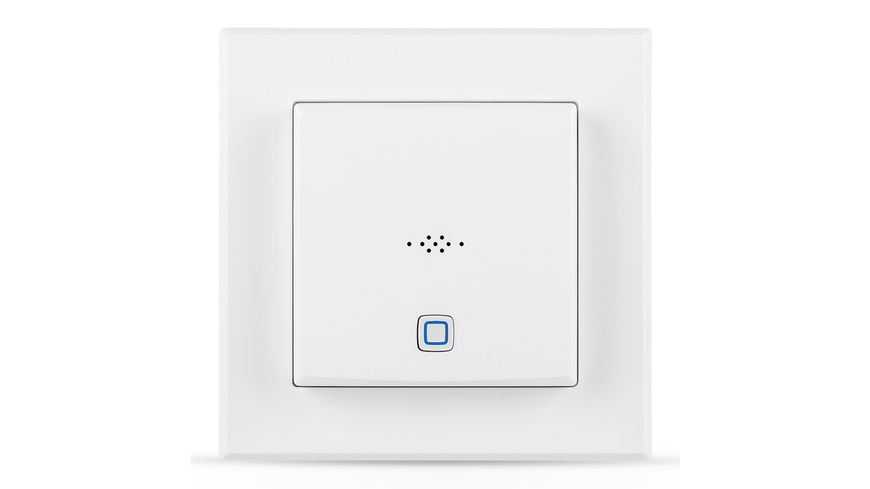
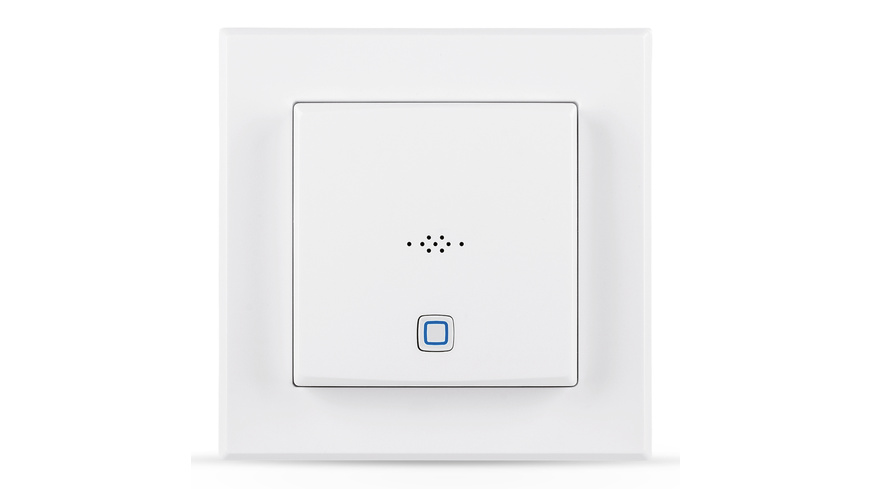
eQ-3 builds the sensor as an in-wall device in the standard 55 mm format, so it sits where a light switch would otherwise be. Five LEDs show the levels from below 600 to above 1,500 ppm, and according to ELV (German electronics retailer), an NDIR sensor from Senseair works inside. A built-in relay can switch a light, and via the Homematic IP app or the CCU3 hub you can trigger actions from a threshold of your choice. The device recalibrates itself every eight days, which is why the manual requires thorough airing at least that often.
Two hurdles remain. According to the manual, connecting it to 230 V with a neutral conductor belongs in the hands of a qualified electrician, and for the wireless connection and the app you need an access point or a hub. How to get one is explained in our guide to the smart home hub. ELV also sells the sensor as a kit.
Netatmo Home Coach NHC-DE
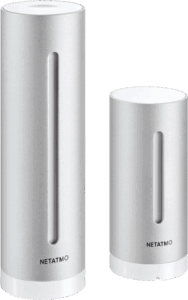
Netatmo now lists the device as „Smarter Raumluftsensor“ (smart indoor air quality sensor). It measures CO2, temperature, humidity and noise, runs on mains power and sends the readings to your Netatmo account via Wi-Fi. In return, warnings reach your phone even when you are not at home, and the device can be integrated into Apple Home. The manufacturer gives no information online about the sensor type or accuracy. For a measuring device in this price range, that is thin.
Airthings Wave Plus
A special case. In addition to CO2 via NDIR, the Wave Plus detects radon, volatile organic compounds, air pressure, temperature and humidity. For CO2, Airthings states a measuring range of 400 to 5,000 ppm and about seven days until the sensor has settled. According to the manufacturer, two AA batteries last about 16 months. This is mainly interesting for houses where radon is an issue; as a pure CO2 device, you are paying for sensors you do not need.
Which device for which home?
- One home, one device that sometimes sits in the home office and sometimes in the bedroom: the Aranet4 Home. NDIR, documented accuracy, no cable.
- Just a traffic light by the computer: the TFA AirCO2ntrol Mini, with a USB power adapter you already have.
- A room where several people sit: the TFA AirCO2ntrol Coach, because the color is visible from a distance.
- Homematic IP is already installed and a switch box is free: the HmIP-SCTH230, ideally linked to a light or a notification.
- Warnings while you are away, without a hub: the Netatmo Home Coach, with the caveat about the data sheet information.
If you also want to get rid of fine dust or pollen in addition to stale air, you need a second device. More on that in the guide to the air purifier.
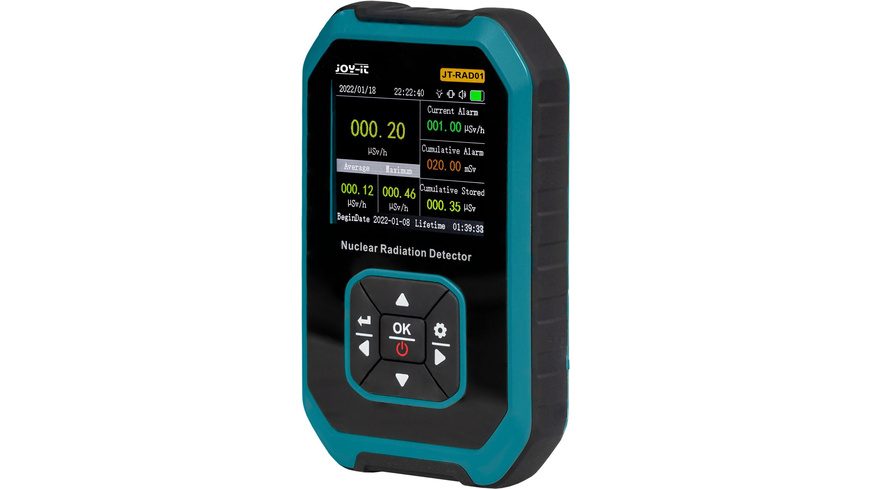
A CO2 device does not measure radon; what works for that and what a handheld device can do is explained in the guide to the Geiger counter.
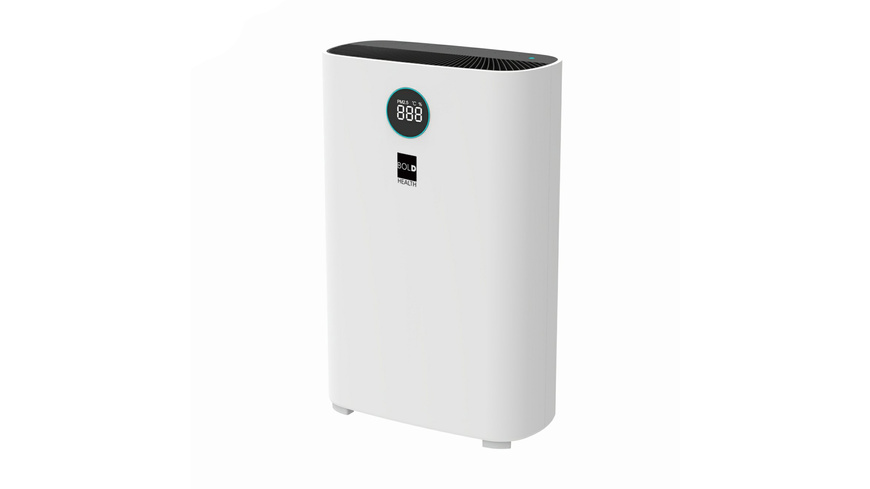
What a connected air purifier measures and what it does not is covered in the guide smart air purifiers.
Frequently asked questions
At what CO2 level should you air the room?
According to the guideline values of the German Environment Agency (Umweltbundesamt), indoor air below 1,000 ppm is considered hygienically harmless, between 1,000 and 2,000 ppm conspicuous, and above 2,000 ppm unacceptable. Many devices only warn at 1,400 ppm out of the box. Set the warning threshold to 1,000 ppm after unpacking.
What is the difference between an NDIR and a VOC sensor?
A VOC sensor reacts to emissions and odors, not to the CO2 in exhaled air. An NDIR sensor measures how much infrared light carbon dioxide absorbs and therefore detects it directly. If NDIR is not in the data sheet, leave the device on the shelf.
Does a CO2 monitor need to be calibrated?
Many sensors recalibrate themselves by treating the lowest value of a week as fresh air. That only works if you air the room thoroughly on a regular basis. The Homematic IP sensor recalibrates every eight days, which is why its manual requires thorough airing at least that often.
Which CO2 monitor also alerts you when you are away?
For that you need Wi-Fi or a hub; Bluetooth is only enough for the history within range. The Netatmo Home Coach sends warnings to your phone via Wi-Fi and can be integrated into Apple Home. However, the manufacturer gives no information online about the sensor type or accuracy.
Which device is suitable for a meeting room?
The TFA AirCO2ntrol Coach colors its entire display, so everyone sees the same color from a distance. It shows a graph of the last 24 hours, and the alarm limit can be set between 400 and 3,000 ppm. Power comes via Micro-USB.
Sources
- German Environment Agency (Umweltbundesamt), Committee on Indoor Air Guide Values: Hygienic guideline values for indoor air
- Aranet: Aranet4 Home
- TFA Dostmann: AIRCO2NTROL MINI
- TFA Dostmann: AIRCO2NTROL COACH
- TFA Dostmann: AIRCO2NTROL COACH user manual (PDF)
- eQ-3: Homematic IP CO2-Sensor HmIP-SCTH230 user manual (PDF)
- ELV: Homematic IP CO2-Sensor HmIP-SCTH230, technology and kit (PDF)
- Netatmo: Smarter Raumluftsensor (smart indoor air quality sensor)
- Airthings: Wave Plus
- Airthings: Wave Plus, technical specifications
Where to buy
- Aranet4 HomeCheck price at Amazon.deCheck price at Amazon.co.ukCheck price at Amazon.nlCheck price at Amazon.com.beCheck price at Amazon.frCheck price at Amazon.itCheck price at Amazon.esCheck price at Amazon.plCheck price at Amazon.seAvailable in Germany: Amazon.de
- TFA AirCO2ntrol Mini 31.5006.02Check price at Amazon.deCheck price at Amazon.co.ukCheck price at Amazon.nlCheck price at Amazon.com.beCheck price at Amazon.frCheck price at Amazon.itCheck price at Amazon.esCheck price at Amazon.plCheck price at Amazon.seAvailable in Germany: Amazon.de
- TFA AirCO2ntrol Coach 31.5009.02Check price at Amazon.deCheck price at Amazon.co.ukCheck price at Amazon.nlCheck price at Amazon.com.beCheck price at Amazon.frCheck price at Amazon.itCheck price at Amazon.esCheck price at Amazon.plCheck price at Amazon.seAvailable in Germany: Amazon.de
 Homematic IP CO2-Sensor HmIP-SCTH230€199.95≈ £166.54≈ CHF 184.81≈ PLN 882.14≈ SEK 2,228.04≈ DKK 1,494.51≈ NOK 2,120.37≈ CZK 4,875.98≈ HUF 73,662≈ RON 1,069.07≈ ISK 27,393≈ $219.31≈ CA$313.72 at ELV · As of 18.11.View at ELVAvailable in Germany: ELVCheck price at Amazon.deCheck price at Amazon.co.ukCheck price at Amazon.nlCheck price at Amazon.com.beCheck price at Amazon.frCheck price at Amazon.itCheck price at Amazon.esCheck price at Amazon.plCheck price at Amazon.seAvailable in Germany: Amazon.de
- Netatmo Home Coach NHC-DECheck price at Amazon.deCheck price at Amazon.co.ukCheck price at Amazon.nlCheck price at Amazon.com.beCheck price at Amazon.frCheck price at Amazon.itCheck price at Amazon.esCheck price at Amazon.plCheck price at Amazon.seAvailable in Germany: Amazon.de
- Airthings Wave PlusCheck price at Amazon.deCheck price at Amazon.co.ukCheck price at Amazon.nlCheck price at Amazon.com.beCheck price at Amazon.frCheck price at Amazon.itCheck price at Amazon.esCheck price at Amazon.plCheck price at Amazon.seAvailable in Germany: Amazon.de
Still undecided?
Keep comparing at your own pace – every article in this category is checked monthly for new and discontinued models.