Contents14 sections
This guide was first published in German on handgetestet.de.
A small wind turbine on the property of a single-family home almost never pays off in Germany. That is not scaremongering but the assessment of the German consumer advice centers (Verbraucherzentralen) and of an Austrian research project that measured building-mounted turbines over several years. If you still want electricity from wind, think of it as a battery charger for a garden shed, workshop or motorhome, not as a replacement for photovoltaics. There are solid devices for that. For everything else, please read on.
Why so little wind reaches the garden
A rotor’s output rises with the cube of the wind speed. The consumer advice center sums it up in a simple formula: twice the wind, eight times the yield. Half the wind, one eighth. That is exactly the problem at a residential house. Houses, hedges and fruit trees slow the air down and make it turbulent, and even one meter per second less on the annual average costs a large share of the yield.
How large this effect is can be seen in the SmallWindPower@Home project by FH Technikum Wien, published in 2022 by the Austrian Ministry for Climate Action. Behind a house with a gabled roof, the researchers measured a turbulent zone extending at least 3.5 times the building height downwind. With a neighboring house 9 meters high, that is a good 30 meters. If your mast stands in this shadow, it will turn, but deliver hardly anything. Between gabled roofs in the prevailing wind direction, the authors recommend a distance of at least five times the building height.
Height helps. The more open and higher the rotor stands, the steadier and stronger the wind. In a residential area, however, this calculation quickly runs into the building authority; more on that below. And even a good location does not rescue the numbers: at the Lichtenegg test site, which the authors describe as an above-average wind location, the measured mean values were mostly between 4 and 5.6 meters per second. Even so, none of the four turbines reached profitability within 20 years. The calculated levelized cost of electricity was around 60 cents per kilowatt-hour and higher.
Propeller or vertical rotor?
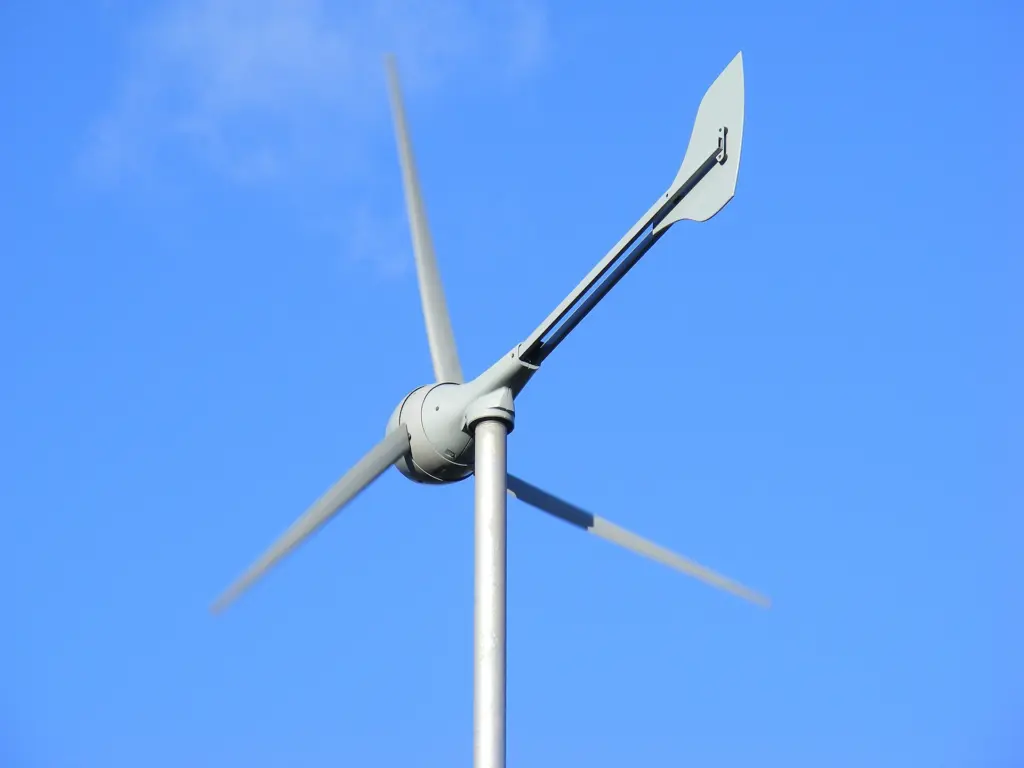
The classic design is the three-blade rotor with a horizontal axis and a tail vane. According to the Austrian report, this design achieves the highest conversion efficiency, namely 40 to 50 percent, and is less prone to vibration thanks to its evenly distributed load. Its drawback: it has to realign itself every time the wind changes direction, and the fast-moving blade tips make noise.
Vertical rotors, such as Darrieus or Savonius designs, catch wind from any direction and look calmer on a house. In the measurements, however, they tended toward stronger vibrations. For a residential house, we would therefore go with the horizontal axis, provided the wind reaches the site reasonably evenly.
Mast in the garden or bracket on the roof
At first glance, the roof sounds tempting. It is high, and it is already there. The consumer advice center nonetheless calls your own roof an unfavorable and barely predictable location, because noise and vibrations are transmitted to the building. The Austrian measurements confirm the risk: structure-borne noise of around 60 dB(A) was measured inside the building, a level the authors classify as harmful to health under continuous exposure. No turbine should go on a roof without vibration isolation.
Then there is the structure. In a storm, a rotor pulls on its mount with considerable force, and a roof truss is not built for that. This belongs in the hands of a structural engineer. A freestanding mast with its own foundation keeps the house isolated, but it needs space and usually stands lower than the wind would like. For both options, check whether your building and liability insurance will cover the turbine.
What the wattage in the listing leaves out
According to the consumer advice center, manufacturer figures without testing by an independent body are practically meaningless. What matters is what a rotor delivers in light wind, because that is what blows on the vast majority of days. The rated output, by contrast, almost always applies only at 11 to 15 meters per second. That corresponds to wind force 6 to 7 on the Beaufort scale.
How large the gap is can be seen, of all places, in the honest data sheets. According to the manufacturer, the Rutland 914i delivers 143 watts at 11 m/s, but only 24 watts at a light 5 m/s. Among the listings on Amazon, on the other hand, there are many no-name wind turbines rated at 400, 600 or 1,200 watts, often with rotors just a few dozen centimeters across. According to the physical Betz limit, a propeller 60 centimeters in diameter can extract at most about 140 watts from the wind at 11 m/s, and considerably less in practice. We consider such listings dubious and have not included them. Brand-name manufacturers miss their figures too: in the Austrian project, a turbine rated at 1,000 watts at 13 m/s reached no more than about 700 to 800 watts in any type of mounting.
Five wind chargers with verifiable specifications
All of the following devices charge batteries with direct current. According to the manufacturers, they are intended for boats, cabins and off-grid systems, not for feeding into the household grid. The output values are manufacturer figures with the respective wind speed.
Marlec Rutland 504
The smallest in the range. With a 51-centimeter rotor and 3.5 kilograms, it fits on a caravan or the gable of a garden shed. The manufacturer states 3 watts at 5 m/s; it is intended for maintenance charging of a 12-volt battery over the winter. Do not expect more than that.
Marlec Rutland 914i
According to the manufacturer, it is designed mainly for boats. The 914i has a built-in MPPT controller and, according to the manufacturer, starts up from 3 m/s. It is sold as a bundle with the HRSi or HRDi charge controller. One Amazon listing advertises it at 300 watts; the data sheet states 262 watts at 15 m/s.
Marlec Rutland 1200
With a 1.2-meter rotor, it sweeps around 1.7 times the area of the 914i, and that shows in light wind: 40 watts at 5 m/s. The included hybrid controller has an input for solar panels and can charge two battery banks. For a cabin meant to combine sun and wind, we consider it the most coherent candidate.
AIR 40
Formerly known under Primus Windpower, now sold by AIR Wind Power, part of Ryse Energy. The controller sits in the housing, and the turbine weighs just 5.9 kilograms. The figure of about 40 kilowatt-hours per month refers to an average wind speed of 5.5 m/s. That corresponds to the upper end of what was measured at the Lichtenegg test site; in a garden in a residential area, it is likely to be considerably less.
ECO-WORTHY 400 W
A three-blade rotor that the manufacturer also offers in sets with solar panels and an inverter. At around 1.2 meters, the rotor is large enough for 400 watts in strong wind to be physically possible. The shop listings, however, contradict each other on blade material, rotor diameter and rated wind speed. So request a binding data sheet before buying.
Battery, inverter and registration
A wind charger charges a battery with direct current. For appliances in the house, you add an inverter. The moment this system is connected to the household grid, the legal situation changes. The Market Master Data Register (Marktstammdatenregister) of Germany’s Federal Network Agency requires all stationary power generators to be registered, explicitly including wind turbines and regardless of size. The only exceptions are off-grid systems that are technically and legally disconnected from the grid on a permanent basis. A household grid connected to the public grid counts as an indirect connection.
The deadline is short: under Section 5 (5) of the German Market Master Data Register Ordinance, registration must take place within one month of commissioning. In addition, the grid operator must be informed. If you want to combine wind with an existing solar system, according to the consumer advice center you need additional meters, which come at a cost. Wind power fed into the grid earns only 8 to 12 cents per kilowatt-hour. So ask the grid operator beforehand which certificates it wants to see for the inverter and the system.
Building authority, setbacks, noise
In Germany, building law is a matter for the federal states, and the differences are large. We analyzed the building codes of Bavaria and North Rhine-Westphalia as examples. In Bavaria, small wind turbines with a free height of up to 15 meters are exempt from approval procedures (Art. 57 (1) No. 3 (b) BayBO). In North Rhine-Westphalia, the exemption applies only up to a total height of 10 meters and explicitly not in purely residential, general residential and special residential areas or in mixed-use areas (Section 62 (1) No. 3 (c) BauO NRW). For a single-family home in a typical residential area in NRW, a building procedure is therefore required; the building authority will tell you which one.
Exempt from procedures does not mean exempt from rules. Both building codes make clear that all public-law requirements still apply, such as setback areas or the zoning plan. Then there is noise. The German Technical Instructions on Noise Abatement (TA Lärm) set a guideline value of 40 dB(A) at night in general residential areas and 35 dB(A) in purely residential areas, measured between 10 p.m. and 6 a.m. In the Austrian measurements, the turbines mostly stayed below the limits but exceeded them in winds above 6 m/s. Our clear advice: check with the building authority and the grid operator before buying. And talk to your neighbors.
Wind or sun? How we would decide
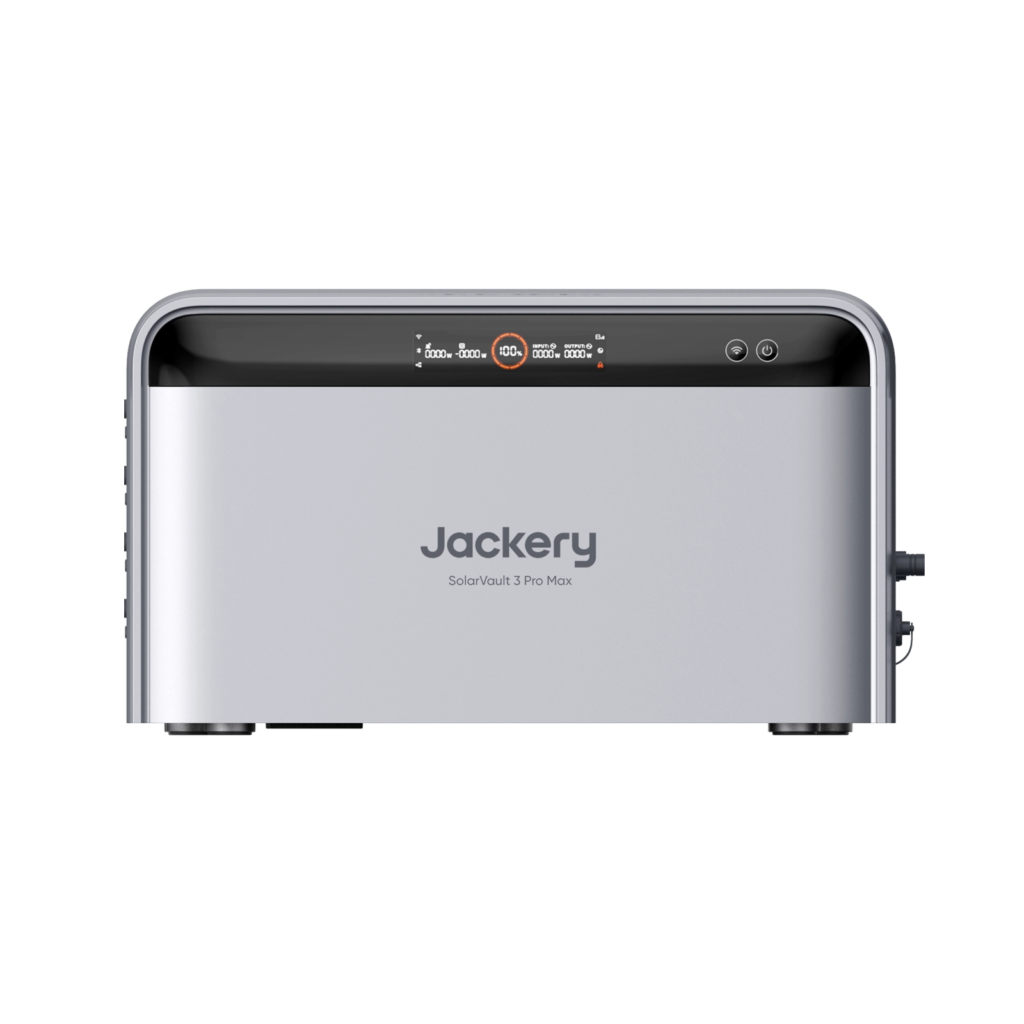
For electricity at a single-family home, the comparison clearly favors photovoltaics. For a wind turbine with a one-meter rotor diameter in an optimistically good rooftop location, the consumer advice center calculates about 96 kilowatt-hours per year, and a solar system of the same area usually delivers a similar amount or more, more reliably and over 20 years and longer. A plug-in balcony solar system with storage (in German) is the more sensible choice in most gardens.
- Saving electricity at a residential house: photovoltaics or a plug-in balcony solar system instead of a wind turbine.
- Garden shed or cabin in a windy, open location: Rutland 1200 together with a solar panel on the same controller.
- Keeping the caravan battery topped up over winter: Rutland 504.
- Off-grid operation at 24 or 48 volts in an open location: AIR 40.
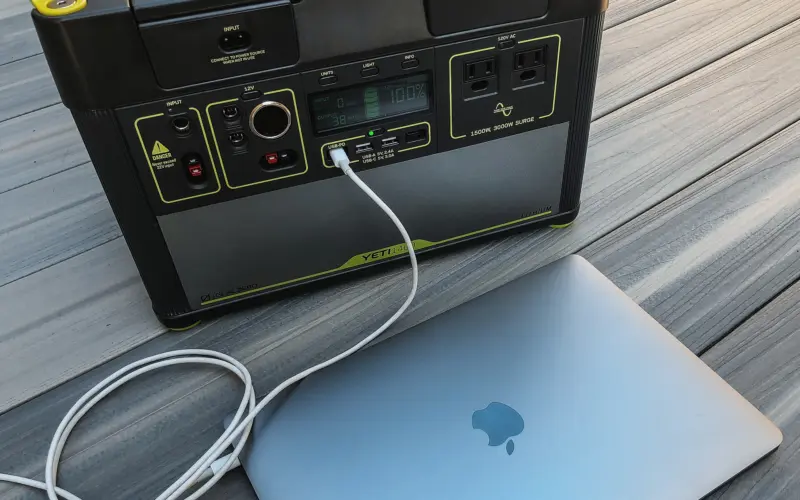
- Backup power for the house: a portable power station (in German) is simpler and needs no permit.
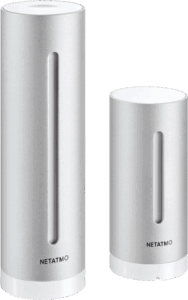
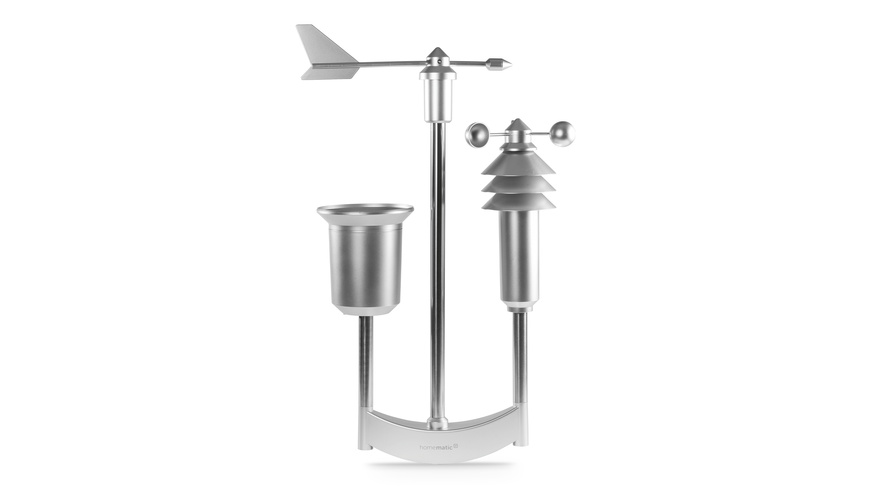
If you want to assess the wind at your own location before spending money, you can start with a weather station with an anemometer. A year of data from the planned height tells you more than any brochure.
Frequently asked questions
Why does a wind turbine in the garden produce so little electricity?
Output rises with the cube of the wind speed: twice the wind, eight times the yield; half the wind, one eighth. Houses, hedges and trees slow down the air and make it turbulent. Behind a house with a gabled roof, according to FH Technikum Wien, the turbulent zone extends at least 3.5 times the building height downwind.
Can you put a wind turbine on the roof of a house?
The German consumer advice center calls your own roof an unfavorable and barely predictable location, because noise and vibrations are transmitted to the building. In Austrian measurements, structure-borne noise of around 60 dB(A) was recorded inside the building. No turbine should go on a roof without vibration isolation and a structural check by a structural engineer.
How meaningful is the wattage of a small wind turbine?
Not very. The rated output almost always applies only at 11 to 15 meters per second, which is wind force 6 to 7 on the Beaufort scale. What matters is the yield in light wind: according to the manufacturer, the Rutland 914i delivers 143 watts at 11 m/s, but only 24 watts at 5 m/s. According to the consumer advice center, manufacturer figures without independent testing carry little weight.
Do you have to register a small wind turbine?
Yes, as soon as it is connected to the household grid. The German Market Master Data Register requires all stationary power generators, including small wind turbines, to be registered within one month of commissioning. The only exceptions are off-grid systems that are permanently disconnected from the grid. In addition, the grid operator must be informed.
Does a small wind turbine need a building permit?
That depends on the German federal state. In Bavaria, small wind turbines up to 15 meters of free height are exempt from approval procedures; in North Rhine-Westphalia only up to 10 meters and not in residential or mixed-use areas. Exempt from procedures does not mean exempt from rules: setback areas, the zoning plan and the noise guideline values of the German TA Lärm still apply. Check with the building authority beforehand.
Propeller or vertical rotor for a small wind turbine?
According to the Austrian report, the three-blade rotor with a horizontal axis achieves the highest efficiency of 40 to 50 percent and is less prone to vibration, but it has to realign itself every time the wind changes direction. Vertical rotors catch wind from any direction, but in the measurements they tended toward stronger vibrations.
Sources
- Verbraucherzentrale: Small wind turbines, as of March 2026
- BMK Austria / FH Technikum Wien: SmallWindPower@Home, report 10/2022
- Federal Network Agency, Market Master Data Register: systems subject to registration
- Market Master Data Register Ordinance, Section 5
- Bavarian Building Code, Art. 57 and Art. 55
- NRW State Building Code, as of September 1, 2026, Sections 60 and 62
- TA Lärm, No. 6.1 and 6.4
- Marlec: Rutland 504, Rutland 914i, Rutland 1200
- AIR Wind Power: AIR 40
- ECO-WORTHY: Manufacturer website
Where to buy
- Marlec Rutland 1200Check price at Amazon.deCheck price at Amazon.co.ukCheck price at Amazon.nlCheck price at Amazon.com.beCheck price at Amazon.frCheck price at Amazon.itCheck price at Amazon.esCheck price at Amazon.plCheck price at Amazon.seAvailable in Germany: Amazon.de
- Marlec Rutland 914iCheck price at Amazon.deCheck price at Amazon.co.ukCheck price at Amazon.nlCheck price at Amazon.com.beCheck price at Amazon.frCheck price at Amazon.itCheck price at Amazon.esCheck price at Amazon.plCheck price at Amazon.seAvailable in Germany: Amazon.de
- Marlec Rutland 504Check price at Amazon.deCheck price at Amazon.co.ukCheck price at Amazon.nlCheck price at Amazon.com.beCheck price at Amazon.frCheck price at Amazon.itCheck price at Amazon.esCheck price at Amazon.plCheck price at Amazon.seAvailable in Germany: Amazon.de
- AIR 40 WindturbineCheck price at Amazon.deCheck price at Amazon.co.ukCheck price at Amazon.nlCheck price at Amazon.com.beCheck price at Amazon.frCheck price at Amazon.itCheck price at Amazon.esCheck price at Amazon.plCheck price at Amazon.seAvailable in Germany: Amazon.de
- ECO-WORTHY 400 W WindturbineCheck price at Amazon.deCheck price at Amazon.co.ukCheck price at Amazon.nlCheck price at Amazon.com.beCheck price at Amazon.frCheck price at Amazon.itCheck price at Amazon.esCheck price at Amazon.plCheck price at Amazon.seAvailable in Germany: Amazon.de
Still undecided?
Keep comparing at your own pace – every article in this category is checked monthly for new and discontinued models.