Contents6 sections
This guide was first published in German on handgetestet.de.
An electric car is insured no differently from a gasoline car. Liability insurance is mandatory, partial and full comprehensive cover are optional, and the premium depends on the vehicle type class, the regional class and the no-claims class. The difference lies in the fine print of the comprehensive cover. A battery costs a lot of money, high-voltage cables are more expensive than ignition cables, and part of the protection hinges on the charging cable and the wallbox in the garage. That is exactly where policies that look identical at first glance part ways.
We do not recommend any insurer or any policy. What follows is based on the model terms of the GDV, the German Insurance Association, on information from the association itself and on guidance from the ADAC, Germany’s largest automobile club. Your contract may differ.
Is the battery insured at all?
Yes, as part of the vehicle. The GDV writes that the battery is included in comprehensive insurance as part of the vehicle (as of 18.12.2023). Without comprehensive cover, nobody but you bears the damage to your own battery. Liability insurance only pays for what you do to others.
It gets interesting when it comes to which events are insured. For partial comprehensive cover, the AKB 2015 (the German model terms for motor insurance, as of 13.10.2026) list: fire and explosion, theft, storm, hail, lightning and flooding, collisions with furred game, glass breakage and short-circuit damage to the wiring. That last item comes with a short sentence that means a lot for electric cars: consequential damage is not insured. If a short circuit spreads from the cable into the electronics or the battery, the model terms do not apply.
Many insurers go beyond the model terms. According to the GDV, depending on the policy, batteries can be insured against fire, power surges and lightning, short circuits, theft, hacker attacks and consequential damage from animal bites. Only the policy terms tell you whether that is in your offer. Ask specifically rather than relying on a heading such as „EV protection.“
What comprehensive cover does not pay for
Normal defects. According to the GDV, full comprehensive cover pays for accident-related damage, but not for ordinary failures. The model terms also exclude damage from full comprehensive cover whose sole cause is material fatigue, overstress or wear. If you are worried that the battery’s capacity will decline over the years, the answer lies in the manufacturer’s warranty, not in the insurance.
The question of value is just as important. The GDV advises checking whether the new value or the current value of the battery is reimbursed in the event of a claim. For a three-year-old car, there can be a large gap between the two. After a total loss, some insurers also cover disposal of the lithium-ion battery if the manufacturer does not.
Leased? Then separate rules apply. For a leased car, the lessor generally requires full comprehensive cover. If only the battery is leased, the compensation for the battery goes to the lessor, according to the GDV.
| Type of claim | Partial comprehensive under the model terms | What to look out for |
|---|---|---|
| Battery catches fire | yes, as fire | Costs for extinguishing and storage in a water container included? |
| Marten bites a high-voltage cable | only if the policy includes animal bites | Consequential damage to the battery explicitly mentioned? |
| Short circuit in the wiring | yes, without consequential damage | Consequential damage to electronics and battery included? |
| Power surge from lightning while charging | Lightning yes, power surge depending on the policy | Power surge covered to a sufficient amount? |
| Charging cable stolen | not explicitly covered in the model terms | Charging cable listed as covered accessory? |
| Accident damages the battery | no, that is a case for full comprehensive | New or current value, costs of the condition check |
| Battery loses capacity | no | Check the manufacturer’s warranty |
A hypothetical case makes the difference tangible. At night, a marten bites a cable in the engine bay, and in the morning the car reports a fault in the high-voltage system. With partial comprehensive cover based purely on the model terms, the bite itself would not be an insured event, because animal bites are not on the list there at all. A policy that includes animal bites pays for the cable. Whether it also covers the diagnosis and a damaged battery is decided solely by the sentence on consequential damage. That is exactly the sentence you should read before signing.
Charging cable and wallbox: who pays for what?
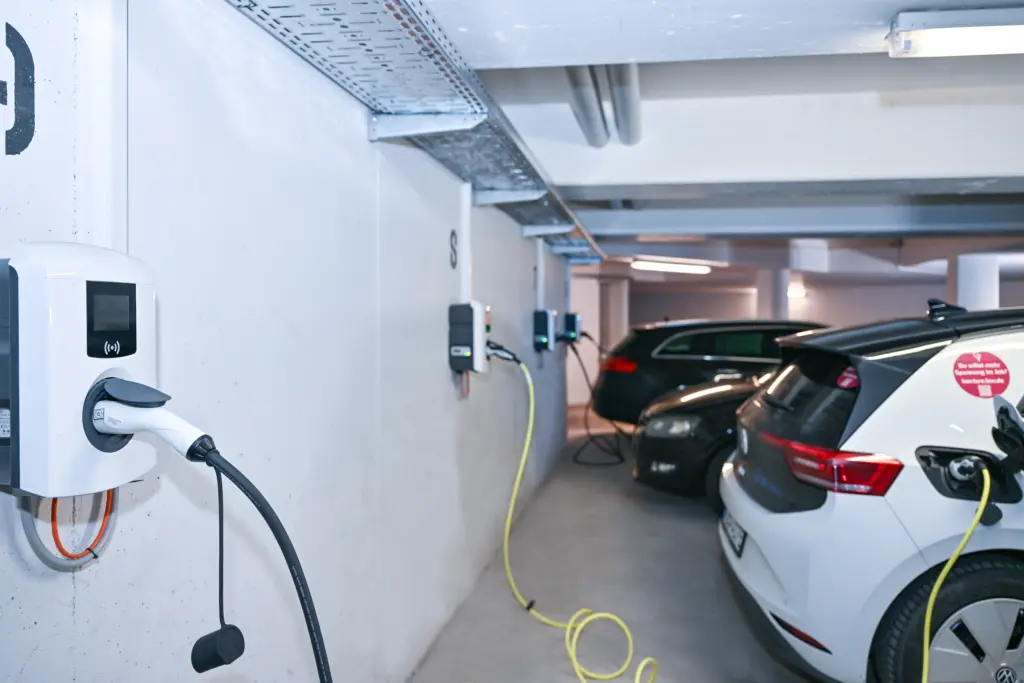
The charging cable is a borderline case. In comprehensive cover, the model terms insure accessories that are locked inside the vehicle and serve exclusively for using the vehicle. They do not mention a charging cable explicitly, and at the roadside it is precisely not locked away. The ADAC therefore recommends explicitly including theft of the charging cable in your cover (03.12.2024). Thefts do happen, but according to the club there are no reliable statistics yet.
The wallbox usually doesn’t belong under car insurance at all. If it is permanently attached to the house, according to the GDV (03.05.2024) it is a case for homeowners‘ building insurance, depending on the contract against storm, hail, lightning, power surges, fire, water from pipes and explosion. As an alternative, the association mentions household contents insurance. If you share the wallbox with neighbors, the GDV recommends personal liability insurance. And if a marten bites the cable during charging, according to the association, full comprehensive cover pays. Some car insurance policies now also cover damage to your own wallbox, for example from incorrect use. That is an add-on, not standard.
What the insurers say clearly: charging from a household outlet is not a long-term solution. The GDV strongly advises against it, because such outlets are not built for high continuous loads and smoldering fires can result. In addition, under Section 19 of the German Low Voltage Connection Ordinance (NAV), every wallbox must be registered with the grid operator, not only those from 11 kW; this is usually handled by the electrician. If you rent, Section 554 of the German Civil Code (BGB) gives you the right to have the landlord permit the installation. More on this in our guides to the wallbox and to charging in an apartment building; details on the building side are in our guide to homeowners‘ building insurance (in German).
Are electric cars more expensive to insure?
Not necessarily. According to the GDV, the type of drive plays no role in the calculation. The vehicle type class is based on the model’s claims record, that is, on how often and how expensively it is involved in claims. Two effects partly cancel each other out. According to a GDV study, electric cars cause 5 to 10 percent fewer accidents in liability insurance than comparable combustion cars, and around 20 percent fewer claims in full comprehensive cover. Their repairs, however, cost 30 to 35 percent more on average. Both feed into the vehicle type class.
Why more expensive? After an accident, the car first has to be de-energized, which requires trained specialists. The heavy weight of the battery increases damage. And the GDV considers replacing high-voltage cables after a marten bite a costly item. The association does not, however, see a higher fire risk.
Good news for people switching: according to the GDV, you can take the no-claims discount from your previous combustion car with you. Exactly how the transfer works is explained in our guide to the no-claims class (in German).
Partial or full comprehensive?
For a new or financed electric car, the GDV and the ADAC favor full comprehensive cover. The GDV cites the higher purchase costs, and the ADAC adds that electric cars are often newer and more expensive than comparable combustion cars. For an older used car with a low residual value, the math looks different. Then partial comprehensive cover may be enough, provided it covers the typical EV risks such as animal bites and consequential damage.
Our checklist for every offer, in no particular order: consequential damage after short circuits and animal bites affecting the battery, power surges, theft of the charging cable, new or current value of the battery, costs of a battery condition check after a claim, and extinguishing costs and water container in case of fire. If one of these points is missing, the policy isn’t bad. But you then know what you will be covering yourself.
For an overview of the German market, a calculator such as the one from our partner Tarifcheck helps. It does not replace advice and does not necessarily show all providers. By its own account, Tarifcheck is neither a broker nor an agent. If a contract is concluded through our link, we may receive a commission. If you want to switch at the end of the year, with an insurance year ending December 31 you must cancel by November 30; the details are in our guide to switching car insurance. If your premium was increased, the special termination right after a premium increase may help.
And the charging cable itself? Which types exist and what to look for when buying one is covered in our guide to charging cables for electric cars.
If the electric car is your first car of your own, our guide to car insurance for new drivers helps you get started with the no-claims class.
Frequently asked questions
Is an EV battery covered by comprehensive insurance?
Yes, according to the GDV, as part of the vehicle. Which events are covered depends on the policy. Under the model terms, partial comprehensive cover pays for fire, theft or lightning strikes, for example, but pays for short circuits in the wiring without consequential damage. Accident damage to the battery is only covered by full comprehensive insurance.
Does insurance pay if the battery loses capacity?
No. According to the GDV, comprehensive cover does not pay for normal defects, and the model terms exclude wear and material fatigue. Only the manufacturer's warranty helps here.
Who pays if the charging cable is stolen?
Policies handle this differently. The model terms do not mention the charging cable explicitly. The ADAC recommends explicitly including theft of the charging cable in your cover.
Which insurance pays for damage to the wallbox?
If it is permanently attached to the house, usually the homeowners' building insurance, depending on the contract for lightning strikes, power surges or fire, for example. As an alternative, the GDV mentions household contents insurance. If the wallbox is shared with neighbors, it recommends personal liability insurance.
Is insurance more expensive for an electric car?
Not necessarily. According to the GDV, the type of drive does not count; the vehicle type class is based on the model's claims record. According to a GDV study, electric cars cause fewer claims, but repairs cost 30 to 35 percent more on average.
Can I keep the no-claims discount from my combustion car?
Yes, according to the GDV this is possible if you insure the electric car in place of your previous car. What counts is your actual claims history; special classifications do not carry over.
Sources
- GDV: AKB 2015, as of 13.10.2026 (A.2 comprehensive insurance)
- GDV: Insuring electric cars (18.12.2023)
- GDV: Are repair costs for electric cars higher? (13.12.2021)
- GDV: Installing and insuring a wallbox (03.05.2024)
- ADAC: Car insurance for electric cars (03.12.2024)
- Tarifcheck: Car insurance
Where to buy
- Vergleich bei Tarifcheck: Akku brenntView at TarifcheckAvailable in Germany: Tarifcheck
- Vergleich bei Tarifcheck: Marder beißt HochvoltkabelView at TarifcheckAvailable in Germany: Tarifcheck
- Vergleich bei Tarifcheck: Kurzschluss an der VerkabelungView at TarifcheckAvailable in Germany: Tarifcheck
- Vergleich bei Tarifcheck: Überspannung durch Blitz beim LadenView at TarifcheckAvailable in Germany: Tarifcheck
- Vergleich bei Tarifcheck: Ladekabel gestohlenView at TarifcheckAvailable in Germany: Tarifcheck
- Vergleich bei Tarifcheck: Unfall beschädigt den AkkuView at TarifcheckAvailable in Germany: Tarifcheck
- Vergleich bei Tarifcheck: Akku verliert KapazitätView at TarifcheckAvailable in Germany: Tarifcheck