Price range around 560–820 € · as of 05.11.2026
Contents15 sections
This guide was first published in German on handgetestet.de.
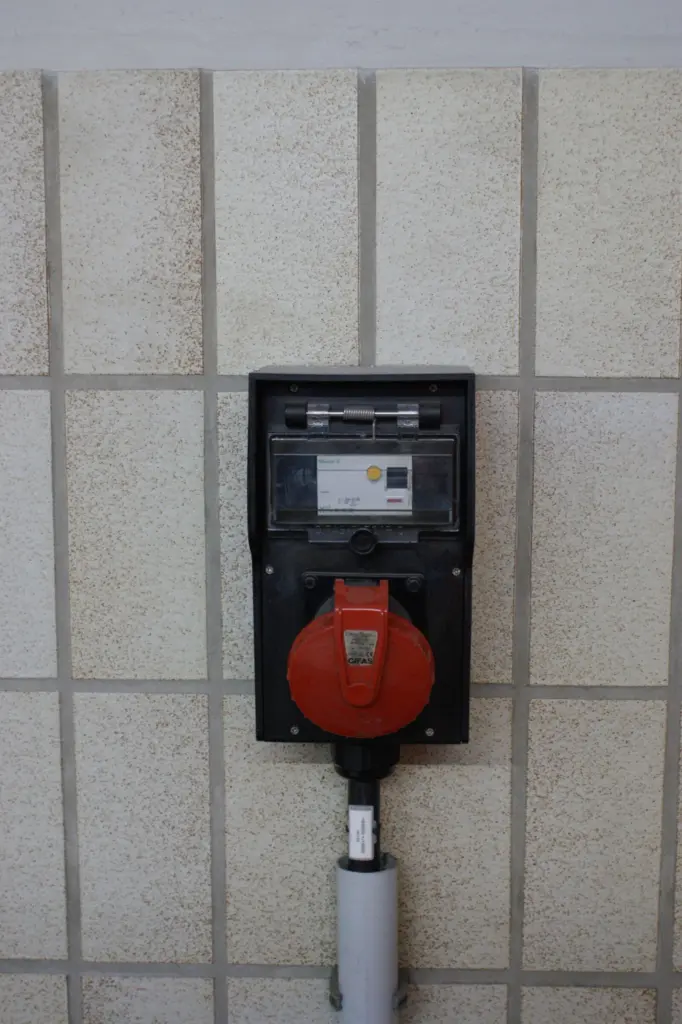
The red outlet in your parents‘ garage, the blue one at the campsite, only Schuko (the standard German household outlet) at the vacation home: a portable EV charger is built for exactly this kind of switching. Our pick is the NRGkick 16A with matching plug attachments, because it detects the attachments itself and, according to the manufacturer, is waterproof and can withstand being driven over. If, on the other hand, the unit almost always hangs on the same red outlet, something simpler will do. And 22 kW? That only helps if both the car and the outlet are up to it.
What Mode 2 and Mode 3 mean is explained in our guide to EV charging cables. This one is only about choosing the device.
Count the outlets first, then choose the unit
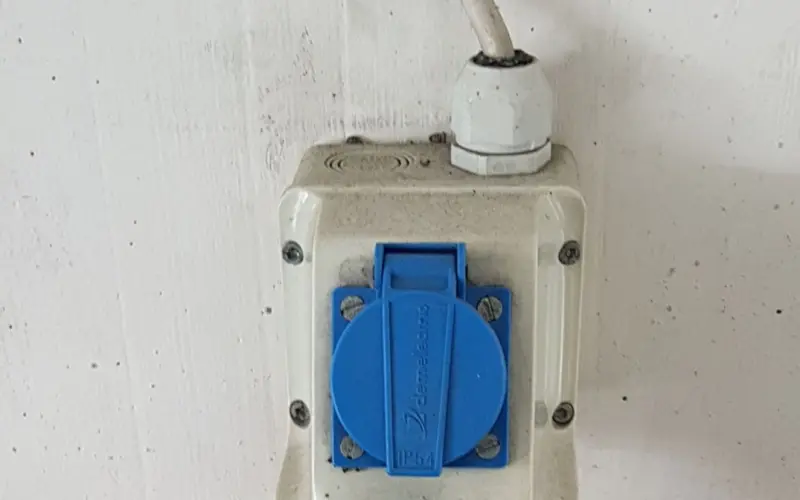
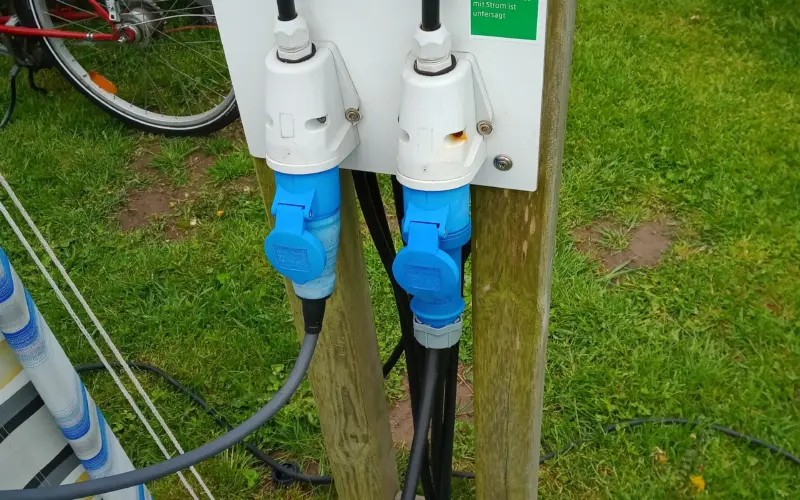
The connection determines the power, not the device. The German automobile club ADAC calculates it like this: at a red 16-amp CEE outlet, 11 kW is possible, and at a red 32-amp one, up to 22 kW. The blue camping outlet delivers 3.7 kW at 16 amps, provided it is fused accordingly and the site operator allows charging. A Schuko outlet leaves you with 1.8 to 3 kW, even with the most expensive unit.
So write down where you will really be charging over the next two years. Three places are enough. Only this list decides the model.
11 or 22 kW?
For the vast majority of drivers, 11 kW. The 22 kW version needs three things at once: an onboard charger that accepts that much, a red 32 A outlet and the grid operator’s approval. If any one of these is missing, you carry around one kilogram more in the trunk without charging any faster.
There is one trap, though. The 32 A attachments only fit the NRGkick 32A. So the NRGkick 16A cannot charge at a red 32 A outlet in a workshop or farmyard. go-e solves this differently: for the 11 kW unit there is an adapter to red 32 A, and the unit then limits itself to 16 amps.
Why adapter detection is more than convenience
A portable unit has to know what it is plugged into. NRGkick describes automatic detection that sets the permissible maximum current of each attachment; on the Schuko attachment, that is 13 amps. With Juice, the adapters report the current themselves, and the household plugs in the Celsius series also monitor the temperature.
The detection only knows the plug, though, not the wiring behind it. That is why NRGkick and go-e require you to set the lowest charging current at unfamiliar outlets. The current should always be adjustable, which the ADAC also demands. All three manufacturers rule out third-party adapters.
What the unit protects against and what the building must provide
According to the manufacturers, NRGkick, go-e, Juice and Green Cell all come with detection for DC fault currents from 6 milliamps. That does not replace the protective device in the building: go-e requires a Type A residual current device (RCD) and a circuit breaker on the building side, and Juice recommends a Type A RCD for every kind of outlet. NRGkick goes furthest. The installation must be inspected by a qualified electrician, the circuit needs its own protective switches, and extension cords are prohibited. And according to NRGkick, the Renault ZOE, Twingo or Kangoo may only be charged at CEE outlets with their own residual current circuit breaker.
In 2024, the ADAC dropped seven devices from a height of one meter and submerged those that lie on the ground. There were no problems. Still, the protection rating shows what a device is intended for: IP67 for the NRGkick and the Juice, IP65 for go-e, IP55 for Green Cell. go-e also specifies that the unit must be operated hanging vertically.
Does the notification requirement also apply to the portable device?
Yes. Under Section 19 of the German Low Voltage Connection Ordinance (NAV), charging equipment must be reported to the grid operator before it is put into operation, and above 12 kVA per installation its approval is required. The ADAC explicitly applies this to portable devices and recommends registering at your home address and at frequently used charging locations. According to the grid operator Netze BW, this must be done by a qualified electrician.
When a fixed wallbox makes more sense after all
If you almost always charge at home, the portable solution is usually a detour. A red outlet also has to be installed by a qualified electrician, and the registration applies just the same. What matters with a fixed station is covered in the guide to buying a wallbox, and the reduced grid fee is explained in the article Electricity for heat pump and wallbox (in German). One in-between solution is the go-e Charger Gemini flex 2.0, which hangs in its wall bracket at home and comes along when needed.
Six portable EV chargers by connection and protection
NRGkick 16A
The unit from Austrian manufacturer DiniTech takes attachments for red 16 A, blue 16 A and Schuko, and with the Type 2 attachment it serves as a Mode 3 cable at a charging station. The data sheet cites the IEC 62752 standard and validation by the German VDE and Austrian ÖVE. In 2024, the ADAC gave the DiniTech unit a grade of 1.8 (on the German school scale, where 1 is best). The attachments are not included, so look straight at the sets.
NRGkick 32A
Same design, double the current. Only this variant, with the 32 A attachments, fits all common CEE outlets. That matters for drivers who often find themselves at red 32 A outlets, even if the car only accepts 11 kW.
go-e Charger Gemini flex 2.0 11 kW
Light and connected. A short 30-centimeter cable leads to the red outlet, the wall bracket is included, and you buy the Type 2 cable separately. Single-phase adapters are limited to 6 amps out of the box. At household outlets, go-e considers 10 amps the maximum advisable.
Juice Booster 3 air
It came out on top in the 2024 ADAC test with a grade of 1.6, partly because of the adapter selection: the manual lists more than 30 variants. The unit itself weighs 700 grams, and the total length of around five meters is on the short side. Original extensions are available, but Juice states openly that the standard does not provide for them and that they therefore carry no CE mark. In the ADAC field, the Booster was the most expensive device.
Green Cell Habu
The simple solution without interchangeable adapters, rated 1.8 by the ADAC. The cable measures seven meters, and three current levels can be selected. For that one familiar outlet in the garage, this is enough, and it is among the less expensive devices on this list. Green Cell does not mention interchangeable adapters.
EVDANCE Mobile Wallbox 11 kW
According to the seller, the unit has a red 16 A plug, detection for 6 mA DC fault current and, depending on the version, a Schuko adapter. Whether it detects this adapter is not known to us. We did not have a manual or data sheet, so we are not making a recommendation. Review the manual and test marks before buying. For lesser-known brands, the ADAC advises checking the manufacturer and address on the rating plate and looking for the declaration of conformity. On Trustpilot, the seller stands at 3.9 out of 5 from 37 reviews in November 2026; almost one in four gives one star, often because of shipping, cancellations and service.
Which unit suits which charging location
- Changing destinations with red 16 A, blue and Schuko: NRGkick 16A with attachment set.
- Red 32 A outlets on the list or a 22 kW car: NRGkick 32A.
- Your own red outlet and the occasional trip: go-e Charger Gemini flex 2.0, plus a Type 2 cable.
- Many countries with unfamiliar outlets: Juice Booster 3 air.
- Always the same red 16 A outlet: Green Cell Habu.
Only charge at a Schuko outlet in exceptional cases and with reduced current. Skip a cable reel (in German) entirely: the technical guideline of the German standards body DKE advises against it.
More on the adapters themselves is in the guide CEE adapters for electric cars (in German), and on traveling in the guide Charging an electric car on vacation and abroad.
Frequently asked questions
What charging power can a portable EV charger deliver?
The connection determines that, not the device. At a red 16-amp CEE outlet, 11 kW is possible, and up to 22 kW at 32 amps. The blue camping outlet delivers 3.7 kW, and a Schuko outlet leaves you with 1.8 to 3 kW, even with the most expensive unit.
Do I need a portable EV charger with 11 or 22 kW?
For the vast majority of drivers, 11 kW. The 22 kW version needs an onboard charger that accepts that much, a red 32 A outlet and the grid operator's approval. If any one of these is missing, you carry around one kilogram more without charging any faster.
Why is adapter detection important?
The unit has to know what it is plugged into. Through its detection, NRGkick sets the maximum current of the attachment, 13 amps on the Schuko attachment. The detection only knows the plug, though, not the wiring behind it, which is why the lowest charging current applies at unfamiliar outlets.
Does a portable EV charger have to be registered?
Yes. Under Section 19 of the German Low Voltage Connection Ordinance (NAV), charging equipment must be reported to the grid operator in advance, and above 12 kVA its approval is required. The German automobile club ADAC explicitly applies this to portable devices. According to the grid operator Netze BW, the notification must be submitted by a qualified electrician.
Which portable EV charger suits travel to many countries?
The Juice Booster 3 air, which came out on top in the 2024 ADAC test with a grade of 1.6, partly thanks to its selection of more than 30 adapter variants. Its total length of around five meters is on the short side, however, and it was the most expensive device in the ADAC field.
When is a fixed wallbox the better choice?
When you almost always charge at home. A red outlet also has to be installed by a qualified electrician, and the registration applies just the same. One in-between solution is the go-e Charger Gemini flex 2.0, which hangs in its wall bracket at home and comes along when needed.
Sources
- ADAC: Portable wallboxes tested (07/04/2024)
- ADAC: Plug types and charging cables (08/07/2025)
- Section 19 German Low Voltage Connection Ordinance (NAV)
- DKE and partners: Technical guideline for electric vehicle charging infrastructure, version 4.1 (PDF)
- NRGkick: Product data sheet 16A and 32A (PDF)
- NRGkick: Operating manual (PDF)
- go-e: Gemini flex installation and operating manual (PDF)
- go-e: Gemini flex 2.0 data sheet (PDF)
- Juice Technology: Juice Booster 3 air manual (PDF)
- Green Cell: GC Habu
- Trustpilot: Reviews of EVDANCE
Where to buy
- NRGkick 16ACheck price at Amazon.deCheck price at Amazon.co.ukCheck price at Amazon.nlCheck price at Amazon.com.beCheck price at Amazon.frCheck price at Amazon.itCheck price at Amazon.esCheck price at Amazon.plCheck price at Amazon.seAvailable in Germany: Amazon.de
- NRGkick 32ACheck price at Amazon.deCheck price at Amazon.co.ukCheck price at Amazon.nlCheck price at Amazon.com.beCheck price at Amazon.frCheck price at Amazon.itCheck price at Amazon.esCheck price at Amazon.plCheck price at Amazon.seAvailable in Germany: Amazon.de
- go-e Charger Gemini flex 2.0 11 kWCheck price at Amazon.deCheck price at Amazon.co.ukCheck price at Amazon.nlCheck price at Amazon.com.beCheck price at Amazon.frCheck price at Amazon.itCheck price at Amazon.esCheck price at Amazon.plCheck price at Amazon.seAvailable in Germany: Amazon.de
- Juice Booster 3 airCheck price at Amazon.deCheck price at Amazon.co.ukCheck price at Amazon.nlCheck price at Amazon.com.beCheck price at Amazon.frCheck price at Amazon.itCheck price at Amazon.esCheck price at Amazon.plCheck price at Amazon.seAvailable in Germany: Amazon.de
- Green Cell HabuCheck price at Amazon.deCheck price at Amazon.co.ukCheck price at Amazon.nlCheck price at Amazon.com.beCheck price at Amazon.frCheck price at Amazon.itCheck price at Amazon.esCheck price at Amazon.plCheck price at Amazon.seAvailable in Germany: Amazon.de
- EVDANCE Mobile Wallbox 11 kWView at EVDANCEAvailable in Germany: EVDANCE
Still undecided?
Keep comparing at your own pace – every article in this category is checked monthly for new and discontinued models.