Contents9 sections
This guide was first published in German on handgetestet.de.
Tuesday, just after seven. In the fridge: a block of firm tofu, six eggs and an opened jar of gochujang that has been sitting in the door since the last bibimbap. That turns into a dinner with plenty of protein. Everyday Korean home cooking has worked with exactly these ingredients for generations: tofu, eggs, lean meat, plus a few fermented pastes that bring a lot of flavor in small amounts. Buy three staple ingredients and you can cook the five dishes below. Everything else is convenience.
Where the protein comes from and how we calculated
Nobody needs a shaker for this cuisine. The protein is in the tofu, the eggs, the beef or chicken and, along the coast, in clams as well. Our figures per serving are based on FoodData Central, the nutrient database of the US Department of Agriculture (USDA), and apply to the raw main ingredients. Vegetables, seasoning pastes and rice were left out. The actual values therefore tend to be somewhat higher. All figures are rounded.
Tofu is the least certain number. FoodData Central lists firm tofu at 9 to just over 17 grams of protein per 100 grams, depending on how it is made, and silken tofu at just under 5 grams. Use the figure from your own block if you want it to be exact.
And the salt? Korean seasoning pastes are strong. Sempio states 480 milligrams of sodium for 18 grams of its classic gochujang, which works out to around 1.2 grams of salt. The recipes add soy sauce on top. If you want to eat less salt, use a reduced-sodium soy sauce and only adjust the seasoning at the end.
Dubu-jorim: tofu braised in sauce
Strictly speaking a side dish. With rice, it becomes a main course. Two servings, around 35 g of protein per serving (with tofu at 17 g per 100 g).
- 400 g firm tofu
- 10 g neutral oil
- 30 g soy sauce, 80 g water
- 5 g sugar, 3 g gochugaru, 5 g toasted sesame oil
- 5 g garlic, 30 g scallions, 5 g sesame seeds
Press the tofu for 15 minutes, cut it into slices a good 1 cm thick and fry them in the oil until golden brown on both sides. Stir together the soy sauce, water, sugar, gochugaru, chopped garlic and sesame oil and pour it over the tofu. Braise over medium heat until the sauce has almost cooked away, turning once in between. Top with scallions and sesame seeds. Ready in about 25 minutes.
Bulgogi made with top round
Traditionally, bulgogi is often made with marbled meat. Lean beef top round works just as well if the meat is sliced paper-thin. Two servings, around 35 g of protein per serving; 150 g of cooked rice adds just under 4 g.
- 300 g beef top round
- 80 g Asian pear or apple, finely grated
- 40 g soy sauce, 8 g sugar, 8 g toasted sesame oil
- 10 g garlic, 100 g onion, black pepper
- 10 g neutral oil
Put the meat in the freezer for 30 to 40 minutes. Partially frozen, it can be cut across the grain with a sharp knife into slices 2 to 3 millimeters thin. Mix the pear, soy sauce, sugar, sesame oil, garlic and pepper, and let the meat marinate in it with the onion strips for half an hour. Then fry it in a very hot pan in two batches. Too much meat at once stews in its own juices instead of browning.
Dakgalbi from the big pan
In Chuncheon, dakgalbi comes to the table on a huge iron griddle. At home, a wide pan or a wok is enough. Three servings, around 30 g of protein per serving. Heat level: noticeable, adjustable via the amount of gochugaru.
- 450 g boneless, skinless chicken thighs
- 45 g gochujang, 6 g gochugaru, 20 g soy sauce, 10 g sugar
- 10 g garlic, 5 g ginger
- 250 g white cabbage, 200 g sweet potato, 100 g onion, 40 g scallions
- 15 g neutral oil
Cut the meat into bite-size pieces and marinate it with the paste, gochugaru, soy sauce, sugar, garlic and ginger for at least 20 minutes. Cut the sweet potato into thin slices and the cabbage into coarse pieces. Heat the oil, add the sweet potato and onion first, then the meat and cabbage. Cook for about 15 minutes, turning, until the chicken is cooked through and the sweet potato is soft. The paste burns easily, so keep the heat at medium and add a splash of water if necessary.
Gyeran-jjim, steamed egg from the pot
Fluffy, almost like a soufflé, and ready in ten minutes. Two servings as a side dish, around 16 g of protein per serving.
- 250 g egg (about five size M eggs, European sizing, weighed without shell)
- 250 g water or mild broth
- 2 g salt, 10 g scallion, 2 g toasted sesame oil
Whisk the eggs with the water and salt until smooth. Heat in a small saucepan or a dolsot over medium heat, stirring constantly, until the mixture starts to set on the bottom. Scatter the scallion over it, put the lid on and turn the heat to the lowest setting. After three to four minutes, the egg has puffed up. Add a few drops of sesame oil and serve immediately. It collapses quickly.
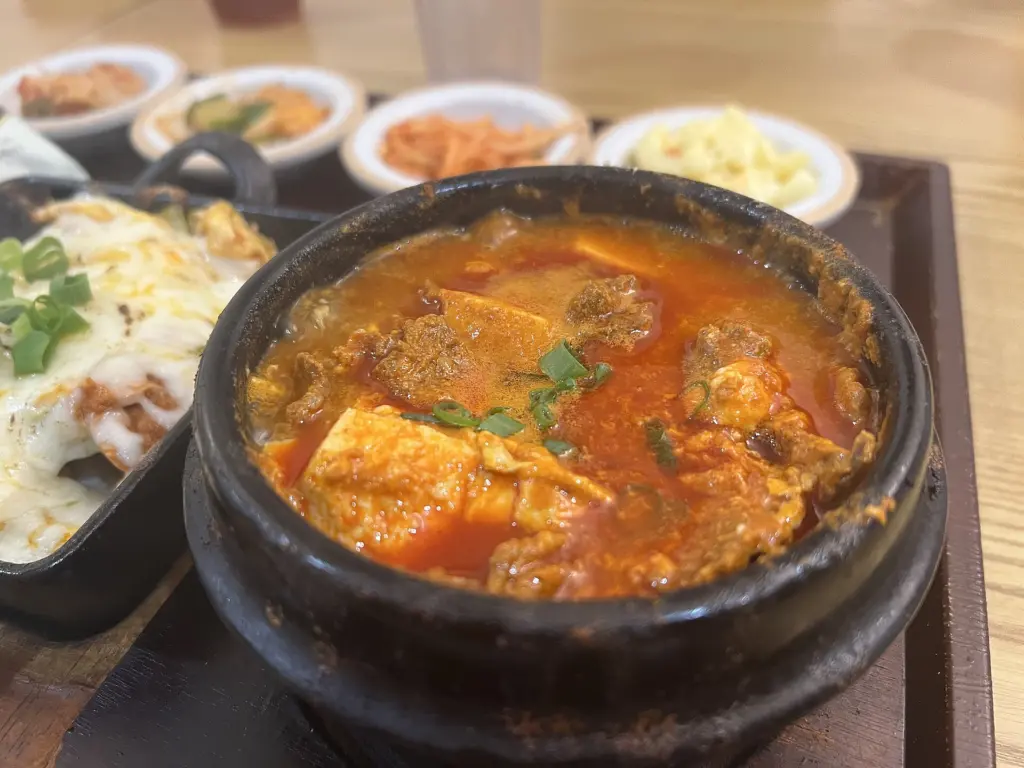
Sundubu-jjigae for cold evenings
The spicy stew with silken tofu is the dish many people know from Korean restaurants, bubbling in a black stone pot. Two servings, around 17 g of protein per serving. Add clams or shrimp and you get significantly more.
- 400 g silken tofu (sundubu)
- 2 eggs (around 100 g)
- 50 g shiitake, 60 g onion, 80 g zucchini, 20 g scallions
- 10 g gochugaru, 10 g sesame oil, 10 g garlic
- 400 g broth, 10 g soy sauce
Sweat the onion and garlic in the sesame oil, then briefly toast the gochugaru with them until the oil turns red. Add the broth, soy sauce, mushrooms and zucchini and simmer for five minutes. Spoon the silken tofu into the pot in large pieces; do not stir. After another three minutes, crack the eggs into the pot and let them set in the hot stew. A teaspoon of doenjang in the broth adds more depth, but it is not a must for the first attempt.
What belongs in the Korean pantry
Gochujang, gochugaru and toasted sesame oil carry all five recipes. Start with these three ingredients. Everything in the table is available on Amazon.de, the German Amazon store; the details come from the sellers.
| Product | Key facts according to the seller | Used for | Who it is for |
|---|---|---|---|
| Sempio Gochujang, 500 g | Chili paste made from rice and dried chilies, contains wheat and soy; also 170 g and 1 kg | Dakgalbi, bibimbap | anyone getting started |
| EasyCookAsia Gochugaru, 100 g | coarsely ground Korean chili flakes | Dubu-jorim, dakgalbi, sundubu-jjigae | if you want to control the heat yourself |
| Ottogi toasted sesame oil, 500 ml | toasted sesame oil, intended as a seasoning oil | all five recipes | everyone |
| Sempio Doenjang, 460 g | fermented soybean paste, 32% soybeans, contains wheat flour | Broths, doenjang-jjigae | if you want to go deeper |
| FTYSXP stainless steel tofu press | Stainless steel, with drip tray and cloth, dishwasher-safe | firm tofu | if you pan-fry tofu several times a week |
| Honfitat Dolsot, 16 cm | Stoneware bowl with trivet | Gyeran-jjim, sundubu-jjigae, bibimbap | gas or ceramic glass cooktop |
| Jina Jung: Koreanische Küche | DK Verlag, 100 recipes, with step-by-step photos | the next dishes | if you are looking for a basic cookbook |
Sempio Gochujang
The red paste is the core. Sweet, salty, medium-hot. Sempio sells it in five sizes, from 170 grams up to the restaurant tub. For two people, the 500-gram jar lasts many weeks; once opened, it belongs in the fridge. According to the manufacturer, the classic paste contains wheat and soy.
Gochugaru from EasyCookAsia
Korean chili flakes taste fruitier and less sharp than European chili flakes. The heat varies noticeably from brand to brand. Check the origin in the listing, because not every product advertised as Korean actually comes from Korea.
Ottogi sesame oil
Toasted sesame oil is a flavoring, not a frying fat. A few grams at the end are enough. The half-liter bottle lasts correspondingly long, but it should be stored in a cool, dark place.
Sempio Doenjang
Doenjang can be skipped at first. By your first doenjang-jjigae at the latest, though, you will miss it. The standard paste contains wheat flour. According to retailer information, Sempio also offers a gluten-free version called „100 Days“ in a 450-gram size.
Tofu press from FTYSXP
To be honest: if you pan-fry tofu once a month, you do not need a press. Two cutting boards, a kitchen towel and a full pot on top do the same job. If you cook dubu-jorim regularly, the stainless steel press saves space and patience. The seller states that it is dishwasher-safe.
Dolsot from Honfitat
The stone pot keeps stew and steamed egg hot for a long time and gives bibimbap its crispy rice crust at the bottom. Stoneware does not work on induction. Heat it slowly, never put it cold on a hot burner and never plunge it hot into cold water, otherwise it may crack.
Jina Jung: Koreanische Küche
A basic cookbook („Korean Cooking“) with 100 recipes and step-by-step photos, published in German by DK Verlag. If you prefer locally available ingredients, also take a look at „Korea Küche“ by Ae Jin Huys from Prestel. Further titles are covered in our cookbook guide (in German).
Where we would start
With gochujang, gochugaru and sesame oil, and dubu-jorim as the first dish. It forgives mistakes, needs only one pan and delivers around 35 grams of protein per plate. After that, bulgogi and dakgalbi. Only add the dolsot once sundubu-jjigae has become a regular dish. Until then, a small saucepan will do.
Rice goes with all five dishes. How to get it right without keeping an eye on it is explained in our rice cooker guide (in German). And if you also want to cover your protein needs with powder, you will find background information in our protein powder guide (in German).
Frequently asked questions
Where does the protein in Korean cooking come from?
From tofu, eggs, beef or chicken and, along the coast, from clams as well; no shaker required. The figures per serving are based on the US nutrient database FoodData Central and apply only to the raw main ingredients. Vegetables, pastes and rice were left out, so the actual values tend to be somewhat higher.
How much protein does tofu have?
That varies widely. FoodData Central lists firm tofu at 9 to just over 17 grams of protein per 100 grams, depending on how it is made, and silken tofu at just under 5 grams. If you want to calculate precisely, use the figure on your own package.
How salty are Korean seasoning pastes?
Very. Sempio states 480 milligrams of sodium for 18 grams of its classic gochujang, which works out to around 1.2 grams of salt, and the recipes add soy sauce on top. If you want to eat less salt, use a reduced-sodium soy sauce and only adjust the seasoning at the end.
Do you need a tofu press?
If you only pan-fry tofu once a month, you can do without one: two cutting boards, a kitchen towel and a full pot on top do the same job. If you cook dubu-jorim regularly, a stainless steel press such as the one from FTYSXP saves space and patience.
Does a dolsot work on an induction cooktop?
No, stoneware does not work on induction; the Honfitat dolsot is meant for gas or ceramic glass cooktops. Heat the pot slowly, never put it cold on a hot burner and never plunge it hot into cold water, otherwise it may crack. A small saucepan will also do to start with.
What is the difference between gochujang and doenjang?
Gochujang is a sweet-salty, medium-hot chili paste made from rice and dried chilies and the core of the recipes. Doenjang is a fermented soybean paste for broths and doenjang-jjigae and can be skipped at first. Both of Sempio's standard pastes contain wheat.
Sources
- USDA FoodData Central: Tofu, firm (172475)
- USDA FoodData Central: Tofu, firm, prepared with nigari (172448)
- USDA FoodData Central: Silken tofu (174292)
- USDA FoodData Central: Beef, top round, lean (171759)
- USDA FoodData Central: Chicken thigh, skinless (173627)
- USDA FoodData Central: Egg, raw (171287)
- USDA FoodData Central: Rice, cooked (168930)
- Sempio: Gochujang Classic, ingredients and nutrition facts
Where to buy
- Sempio Gochujang 500 gCheck price at Amazon.deCheck price at Amazon.co.ukCheck price at Amazon.nlCheck price at Amazon.com.beCheck price at Amazon.frCheck price at Amazon.itCheck price at Amazon.esCheck price at Amazon.plCheck price at Amazon.seAvailable in Germany: Amazon.de
- EasyCookAsia Gochugaru 100 gCheck price at Amazon.deCheck price at Amazon.co.ukCheck price at Amazon.nlCheck price at Amazon.com.beCheck price at Amazon.frCheck price at Amazon.itCheck price at Amazon.esCheck price at Amazon.plCheck price at Amazon.seAvailable in Germany: Amazon.de
- Ottogi Sesamöl geröstet 500 mlCheck price at Amazon.deCheck price at Amazon.co.ukCheck price at Amazon.nlCheck price at Amazon.com.beCheck price at Amazon.frCheck price at Amazon.itCheck price at Amazon.esCheck price at Amazon.plCheck price at Amazon.seAvailable in Germany: Amazon.de
- Sempio Doenjang 460 gCheck price at Amazon.deCheck price at Amazon.co.ukCheck price at Amazon.nlCheck price at Amazon.com.beCheck price at Amazon.frCheck price at Amazon.itCheck price at Amazon.esCheck price at Amazon.plCheck price at Amazon.seAvailable in Germany: Amazon.de
- FTYSXP Tofupresse EdelstahlCheck price at Amazon.deCheck price at Amazon.co.ukCheck price at Amazon.nlCheck price at Amazon.com.beCheck price at Amazon.frCheck price at Amazon.itCheck price at Amazon.esCheck price at Amazon.plCheck price at Amazon.seAvailable in Germany: Amazon.de
- Honfitat Dolsot 16 cmCheck price at Amazon.deCheck price at Amazon.co.ukCheck price at Amazon.nlCheck price at Amazon.com.beCheck price at Amazon.frCheck price at Amazon.itCheck price at Amazon.esCheck price at Amazon.plCheck price at Amazon.seAvailable in Germany: Amazon.de
- Jina Jung: Koreanische KücheCheck price at Amazon.deCheck price at Amazon.co.ukCheck price at Amazon.nlCheck price at Amazon.com.beCheck price at Amazon.frCheck price at Amazon.itCheck price at Amazon.esCheck price at Amazon.plCheck price at Amazon.seAvailable in Germany: Amazon.de